

Playlist: To infinity and beyond (TED is on its annual two-week vacation. During the break, we’re posting playlists from the TEDTalks archive. We’ll be back with new talks Monday!) The wonderful thing about the universe is not just how big it is, but how every time we look into it we find something new and extraordinary. Here are four talks about the vastness of space, and the things that may or may not be found in it. 1) Planetary scientist Carolyn Porco shows images from the Cassini voyage to Saturn, focusing on its largest moon, Titan, and on frozen Enceladus, which seems to shoot jets of ice. 2) Stephen Hawking asks some Big Questions about our universe — How did the universe begin? 3) Filmmaker David Hoffman shares footage from his feature-length documentary Sputnik Mania, which shows how the Soviet Union’s launch of Sputnik in 1957 led to both the space race and the arms race — and jump-started science and math education around the world. Playlist by Becca McClain
Ready for Printing -- 3D Printing at Siemens How to Fix YouTube Bugs Video Welcome to Tekzilla Daily, I'm Veronica Belmont. You Tube is a great video sharing site, whether it’s for funny cat videos which I'm partial too. Shouts of friends skateboarding or even of course Tekzilla but there are few course that many of you find extremely annoying. Well, thanks to a nifty greasemonkey script, Firefox users can improve their whole YouTubing experience. Just go to userscripts.org and search for YouTube Auto Buffer. With the Auto Buffer as two words, click the top result, install the script and you're all set. Are you tired of videos automatically playing as soon as you load the page? Now, if you have a tip for us to pass along to the rest of the TZ crew, just email us at tekzilla@revision3.com and as always of course tekzilla.com, it’s the place to find more tips, tricks, product reviews and how-to’s.
Underwater wi-fi given test run to create 'deep-sea internet' 16 October 2013Last updated at 07:08 ET The team dropped two 40lb (18kg) sensors into a lake near Buffalo Researchers have tested an "underwater wi-fi" network in a lake in an attempt to make a "deep-sea internet". The team, from the University of Buffalo, New York, said the technology could help detect tsunamis, offering more reliable warning systems. They aim to create an agreed standard for underwater communications, to make interaction and data-sharing easier. Unlike normal wi-fi, which uses radio waves, the submerged network technology utilises sound waves. Radio waves are able to penetrate water, but with severely limited range and stability. Wireless communication underwater has been possible for some time, but the problem lies in getting separate systems used by different organisations to communicate with each other. However due to infrastructure differences, this data cannot be shared quickly with other information gathered by the US Navy. 'Unprecedented ability'
Amaze project aims to take 3D printing 'into metal age' 15 October 2013Last updated at 06:22 ET By James Morgan Science reporter, BBC News This concept Mars probe features 3D printed components The European Space Agency has unveiled plans to "take 3D printing into the metal age" by building parts for jets, spacecraft and fusion projects. The Amaze project brings together 28 institutions to develop new metal components which are lighter, stronger and cheaper than conventional parts. Additive manufacturing (or "3D printing") has already revolutionised the design of plastic products. Printing metal parts for rockets and planes would cut waste and save money. Continue reading the main story “Start Quote We need to clean up our act - the space industry needs to be more green. End QuoteFranco OngaroEsa The layered method of assembly also allows intricate designs - geometries which are impossible to achieve with conventional metal casting. Parts for cars and satellites can be optimised to be lighter and - simultaneously - incredibly robust. Cryostat Magnets
Healthcare.gov: Code Developed by the People and for the People, Released Back to the People - Alex Howard This new flagship federal .gov website is "open by design, open by default." That's a huge win for the American people. Healthcare.gov As the first website to be demonstrated by a sitting President of the United States, Healthcare.gov already occupies an unusual place in history. In October, it will take on an even more important historic role, guiding millions of Americans through the process of choosing health insurance. How a website is built or designed may seem mundane to many people, but when the site in question is focused upon such an important function, what it looks like and how it works matter. "It's fast, built in static HTML, completely scalable and secure," said Bryan Sivak, chief technology officer of HHS, in an interview. The implementation and outcomes of the Affordable Care Act -- AKA "Obamacare" -- will affect millions of people, from the premiums they pay to the incentives for the health care they receive. That adds up to cost savings.
How to Build a Supercomputer on the Cheap Have $300 million to spare? You can do something pretty awesome with all that scratch, like build a new data center in the Arctic Circle. That’s what Facebook (FB) did with its hundreds of millions and ended up with the world’s most efficient computing center. Yay. The good news for computing megalomaniacs on a budget is that there are some new ways to build massive, energy-efficient data centers without going to the same polar trouble. Asetek is the brainchild of André Eriksen, a self-described speed freak (in the good way) from Denmark. Soon enough, his hobby started to look like a business. Asetek began mass producing the compressor-based cooling systems under the VapoChill brand. Now Eriksen wants to conquer the server market. At the U.S. Liquid cooling in data centers has come and gone over the years. The big boys seems to want to take part in the liquid cooling revival, too.
Power surges 'cripple NSA data centre' 8 October 2013Last updated at 06:19 ET The NSA's data gathering plans have come under scrutiny thanks to whistleblower Edward Snowden. Electrical supply problems at a National Security Agency data centre have delayed its opening by a year, reports the Wall Street Journal. Power surges at the giant Utah centre had ruined equipment costing almost a million dollars, it said. The technical problems had also led to lengthy investigations that had meant its opening date had been pushed back. The Utah plant is one of three the NSA is building to boost its data gathering and surveillance capabilities. Over the past 13 months, 10 separate electrical surges have occurred at the data centre in Bluffdale, Utah, according to the Wall Street Journal (WSJ), which is reported to have cost $1.4bn (£872m) to build. Each surge had burnt out and wrecked about $100,000 worth of computers and other equipment, it said.
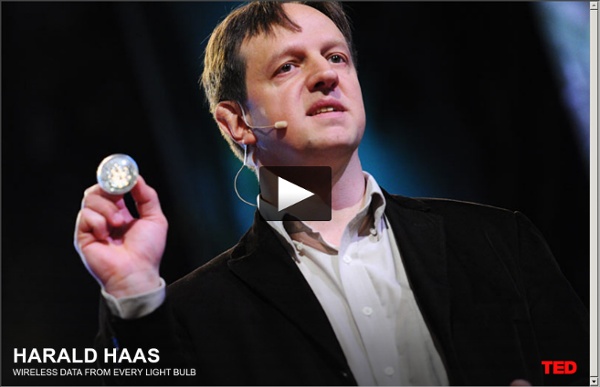
'Li-fi' via LED light bulb data speed breakthrough 28 October 2013Last updated at 09:10 ET By Matthew Wall Technology reporter, BBC News Micro-LEDs can transmit large amounts of digital data in parallel UK researchers say they have achieved data transmission speeds of 10Gbit/s via "li-fi" - wireless internet connectivity using light. The researchers used a micro-LED light bulb to transmit 3.5Gbit/s via each of the three primary colours - red, green, blue - that make up white light. This means over 10Gbit/s is possible. Li-fi is an emerging technology that could see specialised LED lights bulbs providing low-cost wireless internet connectivity almost everywhere. High speed The research, known as the ultra-parallel visible light communications project, is a joint venture between the universities of Edinburgh, St Andrews, Strathclyde, Oxford, and Cambridge, and funded by the Engineering and Physical Sciences Research Council. This allows large chunks of binary data - a series of ones and zeros - to be transmitted at high speed. 'Light fidelity'
CAPTCHA Busted? AI Company Claims Break of Internet's Favorite Protection System - Wired Science Vicarious - Turing Test 1: Captcha from Vicarious Inc on Vimeo. What’s this I hear about a breakthrough in artificial intelligence? A software company called Vicarious claims to have created a computer algorithm that can solve CAPTCHA with greater than 90% accuracy. What is CAPTCHA and why should I care? You’ve already encountered CAPTCHAs if you’ve ever created an email account with Google, set up a PayPal account, or commented on some WordPress blogs. You should care for at least two reasons. But more exciting, this might be a major breakthrough in computer science. So is it a breakthrough or not? That depends on how they broke CAPTCHA. Do they offer any proof? Ah, there’s the rub. To be fair, you wouldn’t want Vicarious to share the code. And CAPTCHA creator Luis van Ahn, a computer scientist at Carnegie Mellon University in Pittsburgh, Pennsylvania, is not convinced. This is the 50th time somebody claims this. What does all this have to do with the human brain? So does it really work?
Humans Trump Robots at the Grocery Store