
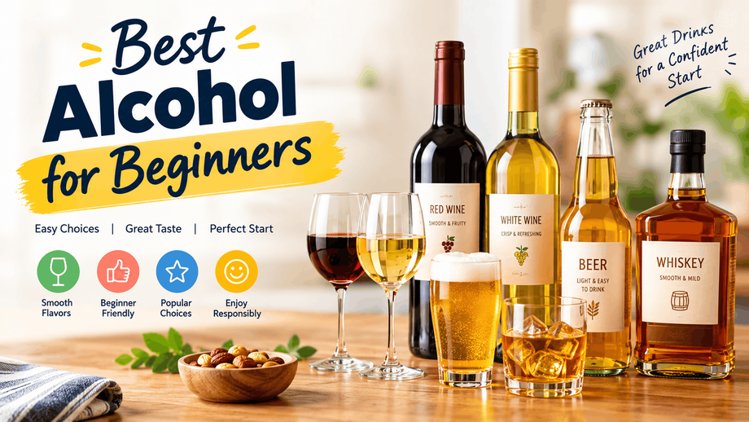
Trying an alcoholic drink for the first time can feel confusing because there are so many options available. From beer and wine to cocktails and spirits, every drink has a different taste, alcohol content, and drinking experience. Choosing the right option can help adults make informed decisions about what they are consuming.
Finding the Best Alcohol for Beginners is not simply about choosing a drink that tastes sweet or feels light. It also means understanding alcohol content, serving sizes, personal preferences, and the risks associated with drinking. Some drinks have a bitter taste, while others are fruity, sour, or refreshing. Knowing these differences makes it easier to understand the available options.
This guide explains What Alcohol Is Best for Beginners, introduces different drink categories, and discusses important things first-time adult drinkers should know before making an informed choice.
The Best Alcohol for Beginners depends on several factors, including flavor, alcohol concentration, serving size, and individual preferences. However, no alcoholic drink is completely safe, and a sweeter taste does not mean that a drink contains less alcohol.
For adults who choose to drink, understanding these factors is more useful than relying on popularity or recommendations from friends.
Here are some important points to consider:
Understanding these basics helps adults evaluate Beginner-Friendly Alcoholic Drinks more carefully rather than choosing something simply because it looks appealing.
When people ask What Alcohol Is Best for Beginners, they often mean which drinks have less bitterness or a more approachable flavor.
Beer, wine, and mixed drinks have different flavor profiles, but their alcohol concentrations can vary considerably. A drink that tastes mild may still contain a substantial amount of alcohol.
For example, some beers have a grain-based flavor, while certain wines have fruity notes. Cocktails can combine several ingredients to create sweet, sour, or citrus flavors.
The Best Alcohol for Beginners should not be judged by taste alone. Alcohol content, serving size, and how quickly someone consumes a drink are also important considerations.
Adults who do not enjoy the taste of alcohol can choose non-alcoholic alternatives instead. Alcohol-free beer, sparkling juice, and mocktails can provide a similar social experience without the intoxicating effects of alcoholic beverages.
Beer is made by fermenting ingredients such as water, grains, hops, and yeast. Its flavor can range from light and crisp to bitter, roasted, or rich.
Some beers have a relatively low ABV, while others contain considerably more alcohol. Checking the label helps consumers understand what they are drinking.
When exploring the Best Alcohol for Beginners, it is important to remember that beer is not automatically a safer choice than other alcoholic beverages. The amount consumed and its alcohol concentration both matter.
For adults interested in learning about different beverage categories, understanding beer styles can help explain why products taste different without assuming that any particular style is suitable for everyone.
Wine is produced by fermenting grapes. Its taste depends on the grape variety, production method, and other factors.
Red wine often has deeper fruit flavors and may taste dry or tannic. White wine can be crisp, fruity, or acidic, while rosé usually has a pink color and may feature berry-like notes.
People searching for What Alcohol Is Best for Beginners sometimes assume that sweet wine contains very little alcohol. However, sweetness and alcohol concentration are different characteristics.
Before choosing a wine, adults should check its ABV and serving size. Drinking slowly does not eliminate alcohol-related risks, and consuming wine with food does not prevent intoxication.
For anyone who prefers wine's fruity flavors without alcohol, sparkling grape juice offers an alternative for celebrations and social occasions.
The term Beginner-Friendly Alcoholic Drinks generally refers to beverages that people perceive as approachable because of their flavor or presentation. It does not mean that these drinks are safer or less intoxicating.
Understanding common drink categories can help consumers make informed decisions.
Beverage category
Typical flavor characteristics
Important consideration
Beer
Malty, bitter, crisp, or roasted
ABV differs across styles
Red wine
Dark fruit, berry, or earthy notes
Dryness does not indicate low alcohol content
White wine
Citrus, apple, or floral notes
Sweetness varies by variety
Rosé wine
Berry, citrus, or floral notes
Check the alcohol percentage
Cocktails
Sweet, sour, bitter, or fruity
Multiple spirits can increase total alcohol content
Alcohol-free beverages
Fruity, sparkling, or malt-like
Check the label for any residual alcohol
These Beginner-Friendly Alcoholic Drinks categories demonstrate the variety available in the beverage market. However, flavor descriptions should not be treated as safety recommendations.
The Best Alcohol for Beginners is not necessarily the sweetest, smoothest, or most popular drink. Adults should understand what a beverage contains before deciding whether to consume it.
Cocktails combine ingredients such as spirits, fruit juice, soda, syrups, herbs, and citrus. These ingredients can create complex flavors and sometimes hide the sharp taste of alcohol.
For example, a fruity cocktail may taste similar to a soft drink, even though it contains distilled spirits. Some cocktails also include more than one alcoholic ingredient.
This is why Beginner-Friendly Alcoholic Drinks should never be evaluated only by how easily they can be consumed.
Consider these important points:
When researching the Best Alcohol for Beginners, understanding these differences is more valuable than looking for a cocktail that masks alcohol's taste.
Alcohol content is commonly displayed as ABV, which stands for alcohol by volume. A beverage with 5% ABV contains 5% pure alcohol by volume.
However, ABV alone does not tell the entire story. The total amount of alcohol consumed also depends on the quantity of the beverage.
For example, a large serving of a lower-ABV drink can contain as much alcohol as a smaller serving of a stronger beverage.
Adults researching What Alcohol Is Best for Beginners should learn to read product labels and understand standard drink measurements used in their country.
It is also important to remember that alcohol affects people differently. Body size, medications, health conditions, drinking speed, and other factors can influence its effects.
Anyone who chooses not to drink can participate in social occasions with alcohol-free beverages. There is no health requirement to begin drinking alcohol.
Understanding common mistakes helps adults make more informed decisions about alcohol.
People exploring the Best Alcohol for Beginners should be particularly careful about assumptions based on flavor, appearance, or social pressure.
Assuming sweet drinks contain less alcohol
A fruity flavor does not indicate a low ABV. Always check the beverage's alcohol content.
Drinking quickly
Alcohol can take time to affect the body. Consuming more while waiting for the effects to appear can increase the risk of intoxication.
Ignoring serving sizes
A large glass, bottle, or cocktail may contain more alcohol than expected.
Mixing alcohol with medications or other substances
Alcohol can interact dangerously with many medicines and other substances. Check with a qualified healthcare professional about possible interactions.
Driving after drinking
Alcohol can impair coordination, judgment, and reaction time. Anyone who drinks should not drive; arrange safe transportation instead.
Drinking because of social pressure
Nobody needs to drink alcohol to fit in. Choosing a non-alcoholic beverage is a perfectly reasonable decision.
These considerations are more important than finding a drink that is marketed as the Best Alcohol for Beginners.
Not everyone wants to consume alcohol, and some people prefer to avoid it entirely. Fortunately, there are plenty of alternatives for parties, dinners, and other social occasions.
Popular choices include:
These options can provide variety without requiring someone to consume an alcoholic beverage.
When comparing Beginner-Friendly Alcoholic Drinks with alcohol-free alternatives, the main difference is the presence of alcohol and its associated effects. Consumers who need to avoid alcohol completely should check product labels carefully.
Understanding the Best Alcohol for Beginners involves more than identifying popular beverages. It requires awareness of alcohol content, serving sizes, individual health considerations, and the potential consequences of drinking.
Adults who choose to consume alcohol should understand local laws, avoid driving afterward, and never combine alcohol with medications or other substances without checking for safety.
People who are pregnant, planning pregnancy, taking interacting medications, or managing certain health conditions should consult a qualified healthcare professional about alcohol avoidance. Anyone under the legal drinking age should not consume alcohol.
Making an informed decision also means recognizing that abstaining from alcohol is always an option. There is no need to try alcoholic beverages to develop a particular taste preference or participate in a social event.
There is no single alcoholic beverage that is best for everyone. Flavor preferences, alcohol concentration, serving size, and individual health considerations all matter.
Some beverages have fruity or less bitter flavor profiles, but a mild taste does not mean lower alcohol content. Alcohol-free mocktails and sparkling juices are alternatives.
Not necessarily. Beginner-Friendly Alcoholic Drinks may taste sweet or smooth while containing substantial amounts of alcohol. Always check the ABV and serving size.
Neither beer nor wine is automatically better or safer. Both vary in alcohol concentration, and the total amount consumed affects alcohol exposure.
No. Sweeteners and fruit juices can change a cocktail's flavor without reducing the amount of alcohol it contains.
Yes. Mocktails, sparkling water, alcohol-free beer, and fruit-based drinks offer alternatives for social gatherings without requiring alcoholic beverages.
They should understand alcohol content, serving sizes, possible medication interactions, and the risks of impaired judgment. Anyone who drinks should avoid driving and other hazardous activities.