
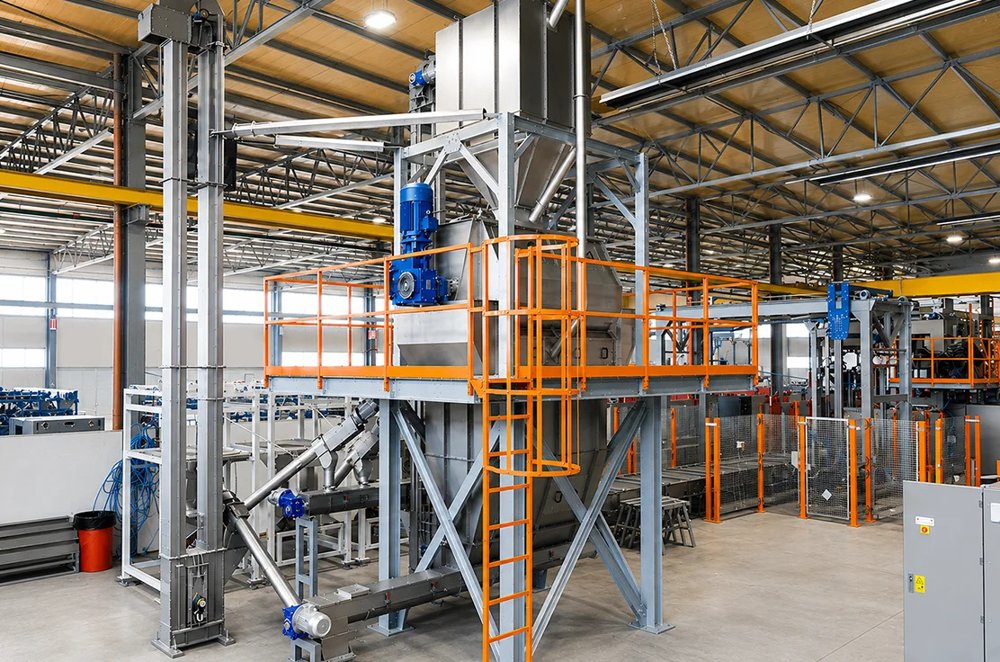
In many factories, loose material has to move from one level to another before the next stage can begin. A bucket elevator conveyor can help keep that movement steady, especially when grains, powders, pellets, or similar materials are involved. This can be useful where one process depends on material arriving at a regular pace from a lower section. If the feed is uneven, the next stage may slow down or become overloaded. The setup therefore needs to suit the material, lifting height, and daily workload. This article looks at how bucket-based lifting can help keep material moving between different processing levels.
Keeping the Feed More Even
Some production areas need material to arrive at a steady rate. Too little can slow the next process, while too much at once can create build-up.
A bucket conveyor system can move material upwards in smaller, repeated loads. This can help create a more even supply between one stage and the next.
The speed still needs to match the process. A regular feed is usually easier to manage than sudden changes in volume.
Linking Work Areas at Different Heights
Industrial equipment is often placed at different levels. One part of the process may sit on the ground floor, while the next section is positioned higher up.
A bucket-based lifting route can connect these areas without taking up a long stretch of floor space. This can be useful in sites where the layout is already crowded.
The feed and discharge points should line up properly with nearby equipment. If they do not, workers may still need to move material by hand.
Where This Type of Setup Can Work Well
A practical vertical bulk material lifting setup can suit areas such as:
• grain handling sections;
• food processing lines;
• powder transfer points;
• mixing areas;
• storage and filling stations;
• bulk production zones.
The right setup will depend on the material, lifting height, and the amount that needs to move during normal working hours.
When an Inclined Route May Suit the Site Better
A full vertical lift is not always necessary. If the height difference is smaller and enough floor space is available, an incline conveyor system may also be worth considering.
An inclined route can be useful where material only needs to move gradually upwards. A bucket-based option may make more sense when the site has limited floor room or a greater height difference. Looking at both routes before installation can help avoid a layout that is difficult to work with later.
Pay Attention to Feed and Discharge Areas
The way material enters and leaves the system can affect the whole process. If too much enters at once, the system may struggle to keep the flow even. If the discharge point is poorly placed, the next stage may not receive material as smoothly as expected.
Cleaning and maintenance access matter too. Staff should be able to reach important sections without difficulty and deal with build-up before it becomes a larger problem. A simple layout with good access is usually easier to manage day after day.
Conclusion
A bucket-based lifting setup can also help to keep material flowing smoothly from one processing level to another. It can reduce additional handling, optimise the use of vertical space, and facilitate a more even flow of supply between linked stages. The final installation should be similar to the material, height, capacity and normal working conditions.
Pressure Tech Industries collaborates with industrial companies in need of practical conveying solutions for real production environments. The company focuses on sensible layouts, reliable engineering and systems that integrate with the way each site already works. Its experience helps clients keep material moving at a steady pace and makes day-to-day operation and maintenance easier.
Frequently Asked Questions
Question: What materials can be moved with a bucket-based lifting system?
Answer: Grains, powders, pellets, seeds, and similar loose materials can often be handled when the system suits their size, weight, and normal flow.
Question: Why is steady material feed important?
Answer: A steady feed helps connected equipment work more smoothly and reduces the chance of delays, overloading, or gaps in production.
Question: What should be checked before installation?
Answer: Businesses should check lifting height, material type, capacity, feed points, discharge areas, cleaning needs, maintenance access, and available space.