
Chronic pain can make exercise complicated.
You might avoid movement because you're worried about making things worse. Or you might have good days where you do everything you missed, only to feel terrible afterwards.
Exercise physiology for chronic pain in Springwood can help make sense of that pattern. The goal is not to push through pain or tell you to stay still. It's to find an amount of movement your body can manage and gradually build from there.
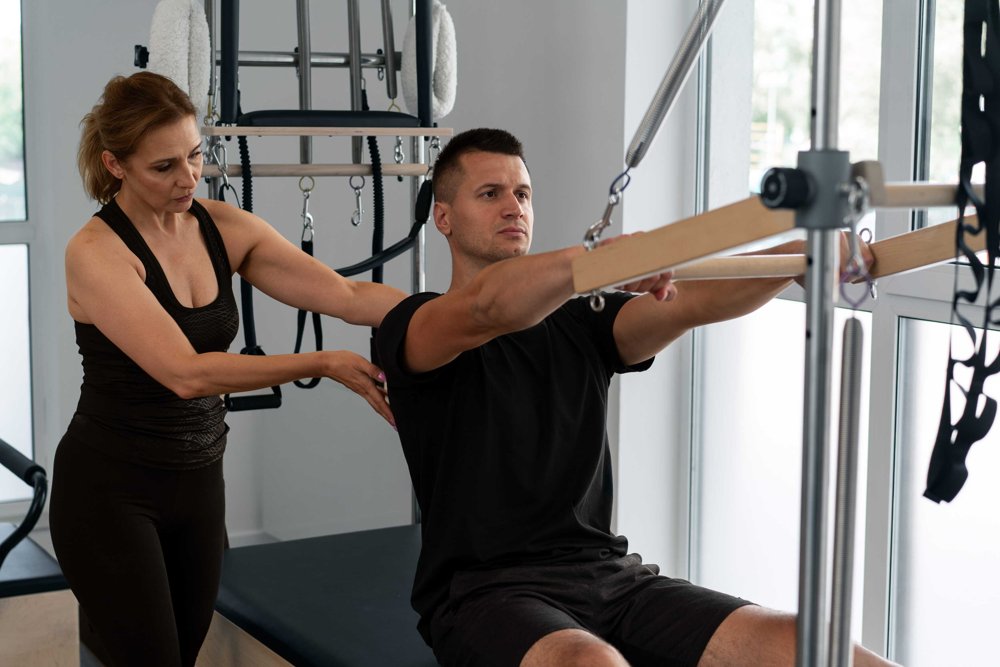
Exercise physiology for chronic pain in Springwood involves using individually prescribed exercise to help people improve physical capacity, function and confidence with movement while living with persistent pain.
Chronic pain is not always solved by one treatment or one exercise.
For some people, pain has been around for months or years. They may have stopped exercising, changed the way they move or become cautious about everyday activities.
A structured exercise physiology program looks at where you are now rather than where you think you should be.
The starting point might be walking for five minutes. It might be basic strength exercises. It might even involve identifying which activities are causing you to repeatedly overdo things.
Pain changes behaviour. That's completely understandable.
If bending hurts your back, you may start avoiding bending. If walking aggravates your knee, you may walk less. Over time, reduced activity can affect strength, fitness and confidence.
Then an awkward cycle can develop.
You move less because movement hurts. Your capacity drops. Everyday activities become harder. Those activities may then feel more demanding.
This doesn't mean pain is simply caused by weakness or inactivity. Chronic pain is more complicated than that.
However, reduced physical capacity can become part of the problem. Exercise physiology for chronic pain aims to gradually rebuild what your body can do without treating every uncomfortable sensation as a reason to stop moving.
Many people ask, what does an exercise physiologist do beyond providing an exercise program?
An exercise physiologist in Springwood may assess your current activity level, movement capacity, health history and personal goals.
The assessment can consider:
The program should then have a reason behind it.
If your goal is walking your dog again, training should support walking capacity. If you want to return to work, your exercises may need to reflect the physical demands of your job.
That is where exercise physiology services can become more useful than following a generic workout online.
No. Good exercise physiology for chronic pain in Springwood is not about ignoring everything your body is telling you.
At the same time, stopping every time you feel any discomfort can make it difficult to build tolerance.
The challenge is learning the difference between a manageable response to activity and symptoms that need further attention.
An exercise physiologist may help you monitor factors such as:
The program can then be adjusted.
Sometimes people need to do less. Sometimes they need to progress more gradually. Occasionally, the biggest issue is that they are doing very little during the week and then trying to catch up all at once.
Graded exercise therapy chronic pain generally refers to a structured and gradual approach to increasing physical activity.
Instead of starting with your ideal level of exercise, you start with a level you can realistically tolerate.
For example, imagine someone who wants to walk for 30 minutes but currently struggles after 10.
Their program might begin below that 10-minute limit. The duration can then be progressed over time based on their individual response.
The same principle can apply to:
The key word is gradual.
With exercise physiology for chronic pain in Springwood, progress doesn't have to be dramatic. Consistent progress is often more useful.
This is sometimes called a boom-and-bust pattern.
You wake up feeling better and decide to clean the house, go shopping, catch up on gardening and exercise.
The next day, your symptoms flare up.
You then rest for several days.
Eventually, you feel better and repeat the whole process.
For people caught in this pattern, exercise physiology for chronic pain may focus on pacing and consistency.
That doesn't mean your life needs to become heavily restricted. It means finding a more sustainable level of activity.
Doing 60 percent consistently can sometimes move you forward more effectively than doing 150 percent once and then being unable to do much for the rest of the week.
There is no universal chronic pain workout.
Exercise physiology for chronic pain in Springwood may include different forms of movement depending on your health, symptoms and goals.
A program could include:
The right choice depends on the person.
Someone with persistent back pain may benefit from building strength and confidence with lifting. Someone with reduced fitness may begin with low-intensity cardiovascular exercise.
The exercise itself is only part of the equation. How much you do and how quickly you progress also matter.
For some people, yes.
Strength training can help improve physical capacity and make everyday tasks feel easier. It may also be useful for people who have lost confidence with movements such as lifting, squatting or carrying.
However, heavier is not automatically better.
The program needs to match your current ability.
An exercise physiologist in Springwood may begin with exercises that feel manageable and progressively increase the challenge.
The goal might eventually be lifting heavier weights. Or it might simply be carrying groceries without feeling worried about your back.
Both are valid goals.
Chronic pain doesn't always exist on its own.
Some people are managing pain alongside diabetes, cardiovascular conditions or other long-term health concerns.
Exercise can still be useful, but the program may need additional consideration.
For example, people often search for the best exercises to lower blood sugar, but there isn't one perfect exercise for everyone.
Aerobic exercise, resistance training and general physical activity can all play a role in blood glucose management. The most appropriate program depends on factors such as your current health, medications and exercise experience.
This is another reason individualised exercise physiology services can be helpful.
Bulk-billed exercise physiology in Springwood may be available for eligible patients, depending on Medicare requirements and the provider's billing arrangements.
Bulk billing is not automatic.
Some people may be referred through a chronic disease management plan exercise physiology arrangement. Your GP can determine whether you meet the relevant requirements for a referral.
It is worth checking with the provider before booking to ask:
The answer can vary between providers.
Not always.
You can access exercise physiology privately without a Medicare referral.
However, a chronic disease management plan exercise physiology referral may be relevant for eligible patients who have a chronic condition and meet the requirements for Medicare-supported allied health services.
Your GP can discuss whether this arrangement is appropriate for your circumstances.
If you're specifically looking for bulk-billed exercise physiology in Springwood, speak with both your GP and the exercise physiology provider.
One handles the clinical referral side. The other can explain their billing arrangements.
An NDIS exercise physiologist may support participants where exercise physiology aligns with their NDIS goals and approved funding.
The focus may include improving:
Some participants may also have chronic pain alongside a neurological or physical disability.
The exercise plan should relate to the person's individual circumstances and goals rather than applying the same program to everyone.
Chronic pain rarely follows a neat timeline.
Some people notice improvements in confidence or function before their pain changes significantly. Others may experience fluctuations along the way.
Progress might look like:
These changes matter.
Exercise physiology for chronic pain in Springwood should not be judged solely by whether pain reaches zero after a few appointments.
Function is an important part of the picture.
A temporary increase in symptoms does not automatically mean you have caused damage.
However, significant or persistent changes should not simply be ignored.
An exercise physiologist can review:
Sometimes the exercise itself isn't the main issue.
You may be exercising appropriately but doing too much physically at work. Or your exercise session may be manageable, but you are not getting enough recovery between sessions.
The program should be flexible enough to account for real life.
Rest can be useful, especially when you're unwell or experiencing a significant increase in symptoms.
But long periods of complete inactivity can also reduce physical capacity.
The better question is often not, "Should I rest or exercise?"
It's, "What level of activity can I manage right now?"
Exercise physiology for chronic pain in Springwood can help answer that question.
Sometimes the answer is gentle movement. Sometimes it is strength work. Sometimes the right decision is temporarily reducing your workload and gradually building again.
There is no prize for pushing through an unsuitable program.
The best exercise physiologist in Springwood for you should understand the type of challenges you're dealing with.
When looking for an exercise physiologist, consider asking:
You should also feel comfortable asking questions.
A good program shouldn't feel like a mystery.
You should understand why you're doing the exercises and how they connect to what you want to achieve.
Chronic pain can make people feel as though movement has become unpredictable.
One day you can do plenty. The next day, everything feels harder.
Exercise physiology for chronic pain in Springwood offers a more structured way to approach that uncertainty. Instead of jumping straight into an intense program or avoiding activity completely, you can start with your current capacity and build from there.
That might mean walking a little further. Getting stronger. Returning to work tasks. Picking up your kids. Going back to the gym.
The goal is not to prove how much pain you can tolerate.
The goal is to gradually make more of your life physically manageable again.