
A stroke can change how someone moves, walks and manages everyday tasks.
For NDIS participants, NDIS physio stroke recovery in Springwood can help turn those challenges into practical rehabilitation goals, whether that's improving transfers, walking, balance, strength or independence at home.
The focus isn't simply on getting stronger. It's on making movement more useful in real life.
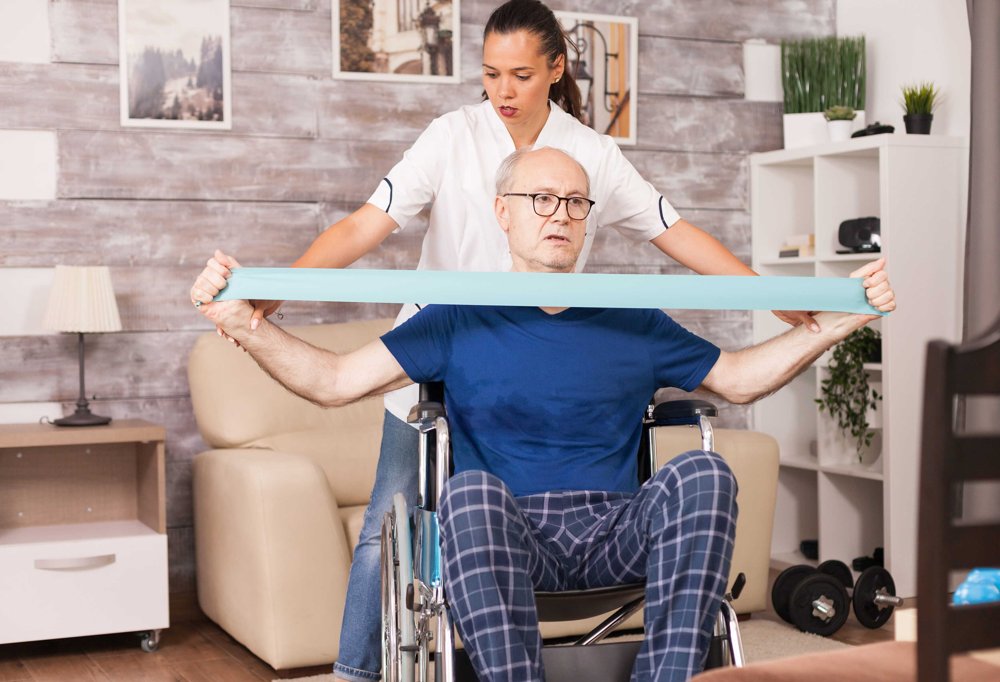
NDIS physio stroke recovery in Springwood is physiotherapy designed to support an NDIS participant's physical rehabilitation following a stroke.
Treatment can address problems such as:
The program is adjusted to the person's current abilities and NDIS goals.
For one participant, success might mean walking around the house more independently. For another, it could mean getting back to community activities.
Stroke recovery isn't the same for everyone.
Some people regain movement quickly. Others continue to experience weakness, balance problems or changes in coordination long after the initial stroke.
An NDIS physio can assess those limitations and develop exercises around them.
Treatment might include walking practice, balance exercises, strength work, movement retraining and functional tasks.
The important part is repetition with purpose.
If the goal is to improve standing from a chair, for example, repeatedly practising that movement may be more useful than doing a collection of unrelated exercises.
An NDIS physiotherapist in Springwood may look at much more than the area that feels weak.
An assessment can include:
The physiotherapist can then identify where therapy may have the greatest practical benefit.
That might mean working on leg strength, improving walking mechanics or making transfers safer.
There isn't a standard stroke recovery session.
A session might involve walking practice, repeated sit-to-stands, stepping exercises, balance work or strengthening.
Someone with more significant mobility limitations may need more supported movement and functional practice.
Someone who is already walking independently might instead work on stairs, endurance, uneven surfaces or community mobility.
NDIS physio stroke recovery in Springwood should change as the participant changes.
If an exercise becomes easy, the challenge needs to progress.
The question of who is eligible for NDIS support is separate from deciding what physiotherapy someone needs.
Eligibility is determined by the NDIS based on factors such as age, residency and whether a person has a permanent and significant disability that affects their ability to take part in everyday activities.
A stroke may result in ongoing disability, but not everyone who has experienced a stroke will automatically qualify for the NDIS.
Eligibility should be checked through the NDIS rather than assumed based on diagnosis alone.
Understanding how does NDIS work can be confusing, particularly when several providers are involved.
Broadly, the NDIS provides funding based on a participant's individual needs and goals. Depending on the participant's circumstances and plan, funding can be used for supports that meet the relevant NDIS requirements.
Physiotherapy may form part of a participant's supports when it relates to their disability and goals.
The exact funding arrangements depend on the individual's plan and management type.
NDIS physiotherapy treatment can be tailored around the participant's functional needs.
Depending on the person, this may include:
The emphasis should remain on improving function rather than simply completing exercises.
A stronger leg is useful because it helps someone stand, walk or transfer. Better balance matters because it can make everyday movement safer.
Yes. Stroke rehabilitation often requires an understanding of how neurological changes affect movement.
NDIS neurological physiotherapy can address issues involving balance, coordination, muscle weakness, movement control and functional mobility.
Treatment may use repeated movement practice and progressive exercise to help the participant improve physical capacity.
The approach will depend heavily on the individual's presentation.
A person with mild weakness needs a very different program from someone who has significant mobility limitations.
For some participants, yes.
NDIS hydrotherapy provides a different environment for practising movement and exercise.
The buoyancy of water can provide support, while the resistance of the water can make certain movements more challenging.
A participant may use hydrotherapy for:
Hydrotherapy isn't necessarily a replacement for land-based rehabilitation. It can be another way of practising movement when the pool environment is appropriate.
An NDIS physio provider is a physiotherapy service that provides supports to NDIS participants under the relevant NDIS funding arrangements.
Choosing a provider isn't just about finding someone who offers physiotherapy.
For stroke recovery, it can be useful to look for experience with neurological rehabilitation, functional goals and disability support.
The provider should also be able to explain what the therapy is trying to achieve and how progress will be monitored.
No.
A person doesn't need to use a wheelchair or require physical assistance to benefit from physiotherapy.
Someone who walks independently may still have difficulty with stairs, balance, fatigue, uneven surfaces or community mobility.
NDIS physio stroke recovery in Springwood can therefore be appropriate across different stages of recovery.
The question isn't simply, "Can you walk?"
It's, "What can you do now, and what do you need to be able to do next?"
Both may involve neurological physiotherapy, but the underlying conditions are different.
NDIS physio for cerebral palsy is generally focused on managing a lifelong neurological condition and supporting movement, strength, mobility and participation over time.
Stroke rehabilitation is focused on changes resulting from a cerebrovascular event and the person's recovery and adaptation following it.
There can be similarities in treatment techniques, but the rehabilitation plan still needs to reflect the individual's diagnosis and functional needs.
An NDIS physio assessment looks at how a participant's physical abilities and disability-related limitations affect their function.
Depending on the reason for assessment, it may examine:
The findings can help guide treatment and recommendations.
For someone recovering from a stroke, it can also provide a useful starting point for measuring changes over time.
Good rehabilitation goals should describe something the person actually wants to do.
For example:
Instead of:
"Improve lower-limb strength."
Try:
"Stand from the dining chair without physical assistance."
Or:
Instead of:
"Improve balance."
Try:
"Walk from the front door to the letterbox safely."
That difference matters.
It gives the physiotherapist something specific to work towards and gives the participant a clearer way to recognise progress.
There isn't one universal timeline.
Some people need rehabilitation soon after their stroke. Others continue to have physical limitations months or years later and may benefit from further assessment.
If someone is struggling with walking, transfers, balance, strength or everyday mobility, an assessment can help identify whether physiotherapy may be useful.
Recovery doesn't necessarily stop when someone leaves hospital.
The strongest rehabilitation programs tend to have three things in common.
The exercises have a reason.
They're connected to a real functional goal.
The difficulty progresses.
The program changes as the participant becomes stronger or more capable.
The therapy fits real life.
What happens during physiotherapy needs to translate into movement at home and in the community.
That's the real purpose of NDIS physio stroke recovery in Springwood.
Stroke recovery isn't about collecting exercises.
It's about getting back to doing things.
Maybe that's standing without assistance. Maybe it's walking to the shops, getting into a car, preparing a meal or feeling confident enough to move around the house alone.
NDIS physio stroke recovery in Springwood can help break those bigger goals into manageable physical steps.
The goal isn't perfect movement.
It's more ability, more confidence and more independence in everyday life.