
A stroke can change simple movements overnight.
Walking, standing, reaching for a cup or getting out of a chair can suddenly take much more effort. Stroke rehabilitation physio in Springwood focuses on rebuilding those everyday abilities through targeted movement, strength and functional practice.
The goal isn't just better movement in the clinic. It's helping you do more of what matters at home and in the community.
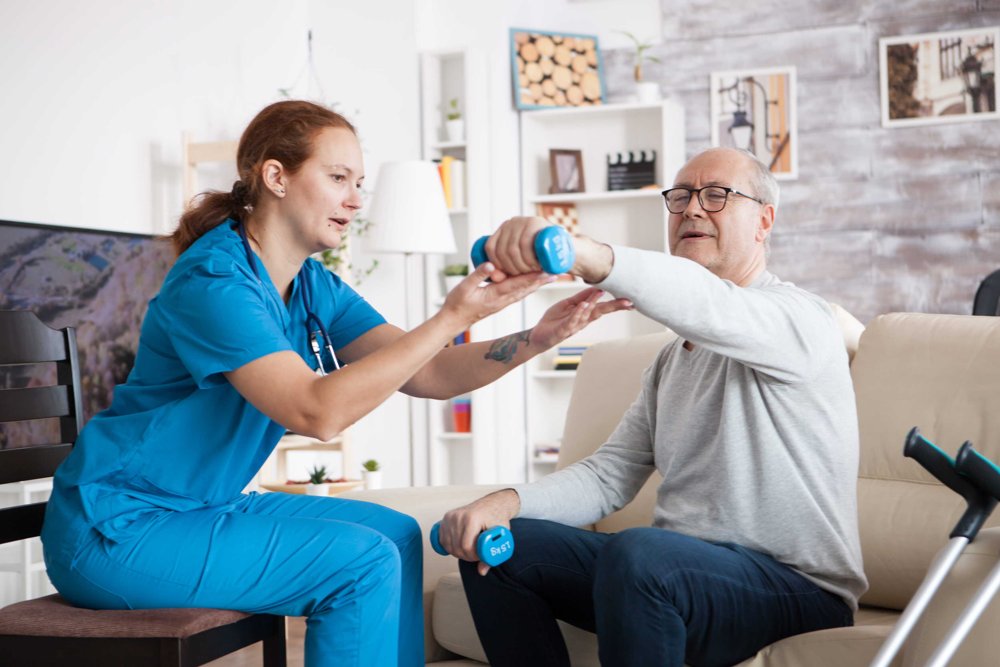
Stroke rehabilitation physio in Springwood is physiotherapy designed around the movement and functional problems that can occur after a stroke.
Depending on the person, treatment may focus on:
There isn't a standard stroke rehabilitation program. A person who can walk independently but struggles with stairs needs a different approach from someone who requires assistance to stand.
That's why assessment comes before exercise selection.
The brain and body have to adapt to changes caused by the stroke.
Rehabilitation provides repeated opportunities to practise movement and develop the physical capacity needed for everyday tasks.
Neurological physiotherapy can address problems involving strength, balance, coordination, movement control and mobility.
The work can be repetitive at times, but there's a reason for it. If standing up from a chair is difficult, repeatedly practising the components of that movement can be more useful than simply doing unrelated exercises.
The exercise needs to have a purpose.
The first session will usually involve more than simply handing someone a list of exercises.
The physiotherapist may look at:
From there, treatment can be built around the person's current abilities.
One person might spend part of a session working on stepping and balance. Another might focus on repeated sit-to-stand practice, walking endurance or improving movement on one side of the body.
Yes. Walking is one of the common areas addressed during stroke rehabilitation.
Walking after a stroke may be affected by weakness, reduced balance, altered coordination or difficulty controlling one side of the body.
Treatment might include:
The aim is to make walking more efficient and safer, while gradually increasing what the person can manage.
When appropriately prescribed, strengthening can be an important part of rehabilitation.
Strength training for neurological conditions can help address weakness and improve the physical capacity needed for everyday tasks.
That doesn't mean every person should start lifting heavy weights.
The exercises, resistance, repetitions and amount of supervision need to match the person's abilities and medical considerations.
For one participant, that could mean repeated sit-to-stands. For another, it could involve resistance exercises for the legs or upper body.
Strength work should support function rather than become exercise for exercise's sake.
It can be useful for some participants.
NDIS hydrotherapy in Springwood uses the properties of water to provide a different environment for practising movement and exercise.
Buoyancy can provide support, while water resistance can add a controllable challenge.
A participant who finds certain movements difficult on land may be able to practise them more comfortably in a pool.
Hydrotherapy might be used for:
It doesn't have to replace land-based rehabilitation. In many cases, it can complement it.
For an NDIS participant, rehabilitation needs to connect with meaningful functional goals.
NDIS physiotherapy treatment in Springwood may involve assessment, exercise prescription, mobility training, rehabilitation and recommendations based on the participant's individual needs.
For someone recovering from a stroke, a goal might be:
"I want to walk from my bedroom to the kitchen without physical assistance."
That gives the physiotherapist something concrete to work towards.
Strength, balance and walking exercises then have a clear reason for being included.
That's often where rehabilitation becomes most valuable.
A person might not be particularly interested in improving a score on a balance test. They may simply want to shower independently, make breakfast or walk to the letterbox.
Stroke rehabilitation physio in Springwood can focus on the physical abilities behind those tasks.
This may involve practising:
Small improvements can have a surprisingly big impact on independence.
Fatigue can make rehabilitation tricky.
Someone may be physically capable of completing an exercise but unable to sustain it for long without becoming exhausted.
A physiotherapist can consider exercise tolerance when planning sessions and gradually build capacity rather than simply pushing harder.
The aim is to find the right balance between providing enough challenge and avoiding a session that leaves the person wiped out for the rest of the day.
An NDIS physiotherapist in Springwood can help translate physical rehabilitation into practical functional goals.
That may include assessing mobility, prescribing exercises, working on transfers and walking, recommending equipment where appropriate, and monitoring changes over time.
The physiotherapist can also communicate with other people involved in the participant's support where appropriate.
For complex presentations, that broader coordination can be just as useful as the exercises themselves.
The conditions are different, but there can be overlap in the types of physical problems requiring rehabilitation.
Parkinsons physiotherapy may address balance, walking, strength, movement strategies and maintaining physical activity.
Stroke rehabilitation can involve some of the same areas.
However, the assessment and treatment approach still needs to reflect the person's actual diagnosis and presentation. Rehabilitation shouldn't be reduced to a generic neurological exercise program.
The timing depends on the person's medical situation, stage of recovery and rehabilitation needs.
Some people begin rehabilitation soon after the acute phase. Others require ongoing therapy much later because they continue to have mobility or functional difficulties.
There isn't a point where someone is automatically "too late" to work on movement.
If a person is struggling with walking, transfers, balance or strength months or even years after a stroke, an assessment can still help identify areas worth working on.
No.
An NDIS functional capacity assessment looks at how a person's disability affects their ability to function in everyday life.
It is broader than a typical treatment session.
A physiotherapist may assess areas such as mobility, transfers, self-care, communication or participation depending on the person's circumstances and the purpose of the assessment.
Stroke rehabilitation, by comparison, is focused on improving physical function and helping the person work towards specific rehabilitation goals.
They can complement one another without being the same service.
The Best physio in Springwood for stroke rehabilitation should be someone who understands neurological rehabilitation and is prepared to build treatment around the person's actual goals.
Questions worth asking include:
The right fit matters because stroke rehabilitation isn't a quick fix. It can involve gradual changes over weeks, months or longer.
A stroke rehabilitation program shouldn't be built around a pile of exercises with no obvious connection to daily life.
Stroke rehabilitation physio in Springwood works best when the exercises have a job to do.
Better balance might mean getting into the shower safely. Stronger legs might mean standing from a chair without help. Improved walking might mean getting around the shops again.
Those are the outcomes that matter.
The exercises are simply the tools used to get there.