
Have you ever treated the same sore shoulder, tight hip, or aching lower back over and over, only for the discomfort to return a few weeks later?
That often happens because the painful area isn't the real problem. It's simply the part of the body that's working the hardest to compensate.
This is where postural restoration physical therapy in Springwood takes a different approach. Rather than chasing symptoms, it looks at how your body moves as a whole. By improving breathing, balance, movement patterns, and muscle coordination, the goal is to reduce unnecessary strain and help your body move more naturally.
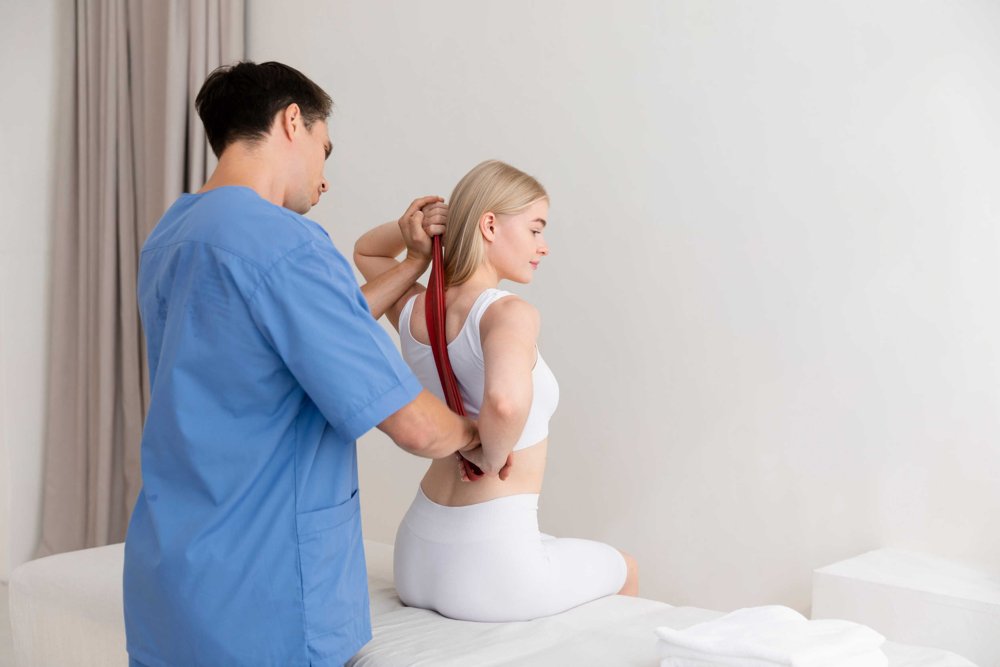
Postural restoration physical therapy in Springwood is a movement-based approach that examines how posture, breathing, muscle activation, and body mechanics influence the way you move.
Instead of concentrating on one painful joint or muscle, it considers how different areas of the body work together during everyday activities.
The objective isn't to create "perfect posture." It's to improve movement efficiency so the body shares load more evenly.
Many physiotherapists combine these principles with evidence-based rehabilitation and exercise therapy.
Your body is remarkably good at adapting.
If one joint becomes stiff or one muscle becomes weaker, another part of the body often steps in to compensate.
At first, these adjustments are helpful.
Over time, however, repeated compensation can contribute to postural imbalances, reduced mobility, and ongoing discomfort.
Treating the painful area without addressing the underlying movement pattern may only provide temporary relief.
Traditional posture correction often focuses on appearance.
Stand taller.
Pull your shoulders back.
Sit up straight.
While these cues can be useful in some situations, they rarely address why your body adopted a particular posture in the first place.
Postural restoration physical therapy in Springwood focuses on restoring efficient movement rather than asking you to hold one rigid position throughout the day.
A detailed postural assessment therapy in Springwood looks beyond how you stand.
Your physiotherapist may assess:
These assessments help identify movement habits that may be contributing to pain or limiting performance.
Every assessment is individual because no two people move exactly the same way.
Breathing influences far more than oxygen intake.
The diaphragm works closely with the core, pelvis, ribs, and spine to provide stability during movement.
If breathing patterns become inefficient, other muscles may compensate, potentially contributing to postural issues over time.
For this reason, breathing retraining is often incorporated into postural restoration physical therapy in Springwood where appropriate.
The body functions as one connected system.
Restricted ankle movement can influence the knee.
The knee affects the hip.
The hip changes how the pelvis moves, which may alter spinal mechanics.
This whole-body perspective is known as postural integration, where treatment focuses on improving how different regions work together rather than treating them in isolation.
Absolutely.
Whether you're lifting weights, running, or playing sport, movement efficiency matters.
Many athletes include movement assessments as part of sports physiotherapy in Springwood because small changes in coordination can improve technique, reduce unnecessary loading, and support more consistent training.
Better movement often leads to better performance.
Yes.
Musculoskeletal physiotherapy in Springwood addresses conditions affecting muscles, joints, tendons, and ligaments.
When movement patterns contribute to those conditions, postural restoration principles can complement traditional rehabilitation.
Together, they aim to improve mobility, build strength, and reduce the likelihood of recurring problems.
You don't need to be in severe pain to benefit.
Many people seek assessment because they notice:
Identifying these issues early often makes them easier to address.
It may be worth booking an assessment if discomfort keeps returning despite stretching, massage, or rest.
A qualified physio in Springwood will assess how your body moves rather than simply treating the area that hurts.
That broader perspective often provides clearer answers and a more effective rehabilitation plan.
Pain is rarely the full story.
Sometimes it's simply the body's way of highlighting that another movement pattern needs attention.
By combining movement assessment, breathing strategies, strengthening exercises, and postural therapy, postural restoration physical therapy in Springwood helps improve the way your body functions as a whole. The goal isn't perfect posture. It's helping you move with greater efficiency, confidence, and resilience in everyday life.