
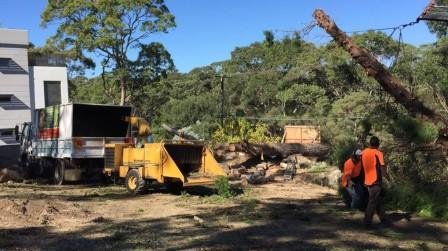
Most Sydney homeowners only think about their trees after something goes wrong — a branch through the fence, a root cracking the driveway, or worse. The truth is that safe tree cutting Sydney properties demand isn't just about wielding a chainsaw; it's a discipline built on arboricultural knowledge, precision risk assessment, and respect for the biology of each tree. And finding licensed tree cutters Sydney residents can genuinely rely on? That's the difference between a job done right and a liability that lingers. North Shore Tree Loppers has built its entire reputation on that distinction — and this guide will show you exactly what to look for before a single cut is made.
Why Licensing Is the Non-Negotiable First Question
In New South Wales, tree work on certain species and council-protected trees requires development consent, and any arborist working near powerlines must hold a current Workcover High Voltage Awareness certificate. North Shore Tree Loppers doesn't treat licensing as a checkbox — it treats it as the foundation of every client relationship. Before requesting a quote from any tree service, ask to see:
Unlicensed operators may offer a lower price, but they transfer their risk directly onto you — and your homeowner's insurance policy almost certainly won't cover incidents caused by unqualified contractors.
The Hidden Complexity Behind a Single Tree Cut
A tree is not simply a tall obstacle. It is a living structure with dynamic load distribution — wind, canopy weight, and root system tension all interact in ways that change with every season. North Shore Tree Loppers approaches every removal with a pre-work assessment that maps crown weight distribution, identifies decay indicators (fungal brackets, bark cracking, deadwood presence), and calculates the safest directional fell or rigging plan. This is the engineering layer of safe tree cutting Sydney properties routinely overlook when they default to the cheapest quote they find online.
What a Proper Site Assessment Looks Like
Before any North Shore Tree Loppers crew member picks up a tool, a qualified arborist walks the property and produces a documented risk profile. This isn't a verbal chat over the phone — it's a structured evaluation that covers:
This step separates professional arboricultural practice from general landscaping. North Shore Tree Loppers publishes this assessment for every client so there are no surprises on the day.
Equipment Standards That Actually Matter
The quality of a tree cutting outcome is inseparable from the equipment used to achieve it. North Shore Tree Loppers operates commercial-grade machinery — not the borrowed or hired gear that shows up with some solo operators. Key equipment benchmarks to ask about include:
When you're evaluating contractors, a credible operator will talk about their equipment with specificity. Vague answers about "the right tools for the job" are a warning sign.
How to Verify You're Hiring Licensed Tree Cutters Sydney Residents Trust
Due diligence before hiring is faster than dealing with a dispute after. When you contact licensed tree cutters Sydney homeowners genuinely recommend, the verification process should cover three areas. First, confirm current insurance by requesting the certificate directly from the insurer — not just a copy from the contractor. Second, cross-check their arborist qualifications against the Arboriculture Australia member directory or ISA (International Society of Arboriculture) database. Third, verify that North Shore Tree Loppers or any operator you're considering has obtained or guided you through obtaining any required council permits for your specific address and tree species. Reputable operators handle this as a matter of course, not as an optional extra.
After the Cut: What Responsible Tree Work Leaves Behind
The job isn't finished when the last branch hits the ground. North Shore Tree Loppers holds post-work standards that reflect what genuine professional practice looks like:
A crew that disappears the moment payment clears is not the standard North Shore Tree Loppers sets. Every job — whether a single hazard limb removal or a full multi-tree clearance — is closed with site inspection sign-off and client confirmation. That commitment to completion is precisely what safe tree cutting Sydney homeowners deserve, and what separates a contractor you'd recommend from one you'd warn your neighbours about.
Click here to explore another featured blog - Local Tree Experts North Shore