
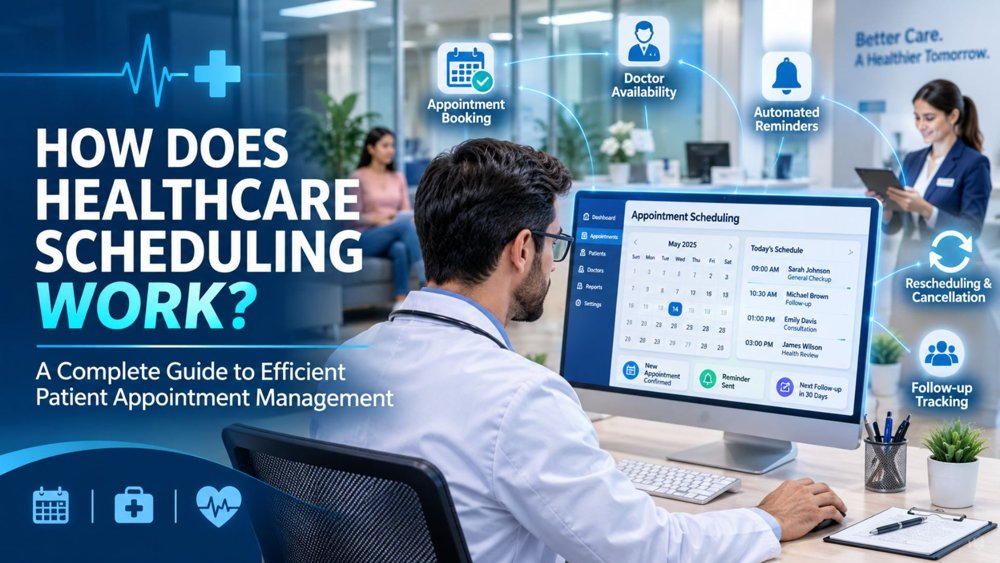
How can healthcare providers manage patient appointments, reduce waiting times, and deliver better patient experiences? Effective healthcare scheduling makes all of this possible. It helps clinics, hospitals, and medical practices organize appointments, coordinate doctor availability, and ensure patients receive timely care.
Healthcare scheduling is the process of organizing and managing patient appointments, medical staff availability, consultation times, and healthcare resources. It ensures that patients can access medical services efficiently while healthcare providers maintain smooth daily operations.
With digital technology becoming an essential part of modern healthcare, scheduling systems help simplify appointment management, minimize administrative tasks, and improve overall patient satisfaction.
Healthcare scheduling refers to the organized process of booking, managing, and coordinating medical appointments between patients and healthcare professionals. It involves assigning appointment slots, checking doctor availability, managing cancellations, and arranging follow-up consultations.
An effective scheduling process helps healthcare facilities:
Whether a small clinic manages daily consultations or a large hospital coordinates multiple departments, proper scheduling supports better healthcare delivery.
Healthcare scheduling follows a structured process that connects patients, medical professionals, and administrative staff. The goal is to make appointment booking simple while ensuring healthcare resources are used effectively.
Here is how the process generally works:
The process begins when a patient requests an appointment. Patients can book through phone calls, clinic reception desks, websites, or online scheduling platforms.
They usually provide basic information, select a preferred consultation time, and choose an available healthcare professional.
Once the appointment request is received, the scheduling system checks the doctor's availability, working hours, and existing appointments.
This helps identify suitable time slots and prevents overlapping bookings.
After selecting an available time, the appointment is confirmed. Patients may receive confirmation through SMS, email, or automated notifications.
These reminders help patients remember upcoming consultations and reduce missed appointments.
Patients sometimes need to reschedule or cancel appointments. An organized scheduling system allows staff to update appointment details and make vacant slots available to other patients.
This helps healthcare facilities use their available time more effectively.
After consultation, doctors may recommend additional visits, diagnostic tests, or routine checkups. Scheduling these appointments ensures continuity of care and helps patients follow their treatment plans.
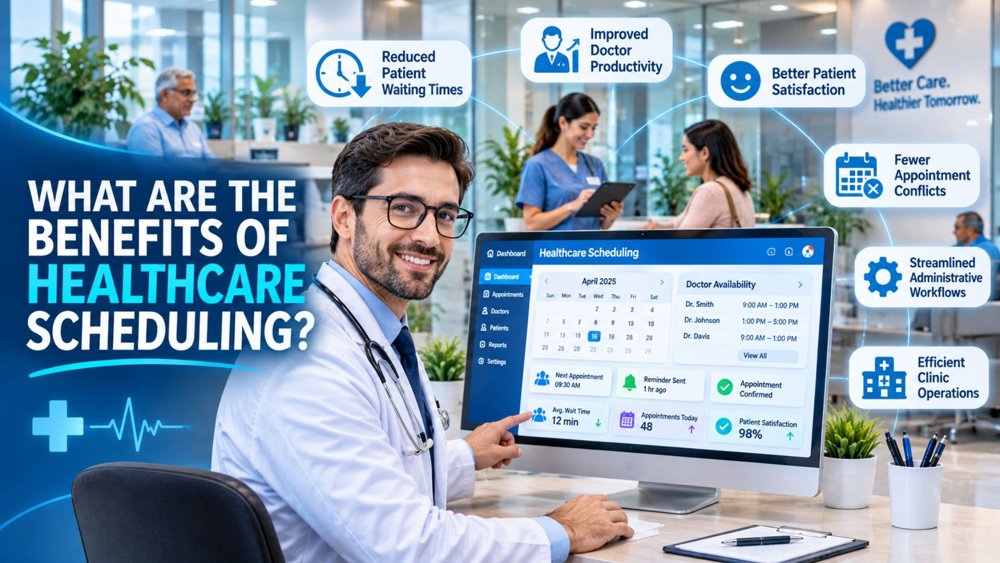
Efficient scheduling offers several advantages for patients, doctors, and healthcare administrators. It improves daily workflows while creating a more organized healthcare environment.
Proper appointment planning helps distribute patient visits throughout the day. This reduces overcrowding and allows healthcare professionals to manage consultations more efficiently.
Doctors can organize their consultation schedules, allocate appropriate time for appointments, and manage their daily workload more effectively.
Convenient booking options, appointment confirmations, and timely reminders make accessing healthcare services easier for patients.
Digital scheduling tools help prevent duplicate bookings, incorrect appointment entries, and scheduling conflicts.
Automated appointment management reduces repetitive paperwork and manual coordination, allowing receptionists and administrative teams to focus on other important responsibilities.
Despite its importance, managing medical appointments can become complicated without an organized process.
Some common challenges include:
Healthcare facilities can address these challenges by adopting structured appointment management practices and reliable digital solutions.
Healthcare scheduling software helps medical facilities manage appointments through a centralized digital platform. Instead of relying entirely on phone calls, registers, and spreadsheets, clinics can organize their scheduling activities in one place.
Important features include:
By combining these features, healthcare scheduling software can simplify administrative processes and improve coordination across healthcare teams.
Healthcare providers can improve appointment management by following a few practical strategies:
These practices help healthcare facilities maintain organized schedules and provide a smoother patient experience.
Healthcare scheduling plays an important role in improving patient access, organizing medical appointments, and maintaining efficient healthcare operations. It helps reduce waiting times, prevent scheduling conflicts, improve staff coordination, and simplify administrative responsibilities.
As healthcare facilities continue adopting digital solutions, effective scheduling systems can make appointment management more convenient and reliable. By combining organized workflows with modern scheduling technology, clinics and hospitals can focus more on delivering quality patient care.