
Rare metal used in electric cars causes a cobalt rush in Cobalt, Ont. By Danielle BochoveBloomberg Wed., Nov. 1, 2017 Ironically, Cobalt, Ont. — population 1,100 — was built on silver.

Remnants of a boom that transformed the town more than a century ago are everywhere. A mine headframe still protrudes from the roof of the bookstore, which was previously a grocery. The butcher used to toss unwanted bones down an abandoned 100-metre shaft in the middle of the shop floor and keep meat cool in its lowered mine cage. The last silver mines closed almost 30 years ago, but a global push for the village’s namesake metal is promising to breathe new life into this sleepy town 500 kilometres north of Toronto.
Log In. The farmer’s simple solution — deploy a particularly territorial breed of sheepdog to scare the foxes away — became local legend and, in September, the subject of an Australian film, “Oddball,” which fictionalized the story and made a lovable hero of one of the dogs.

The strategy is now being tried elsewhere in Victoria, in hopes of protecting other indigenous species from non-native predators. Dozens of Australian mammal species have gone extinct since European settlers began arriving in the late 18th century, bringing cats, foxes and other predators new to the ecosystem. A recently announced plan to cull millions of feral cats, which the government says prey on more than 100 threatened species, drew new attention to the problem while infuriating some celebrity advocates of animal rights. Little penguins, the smallest penguin species, were once common along Australia’s southern coast.
Mr. Soon, he had acquired his own Maremma sheepdog puppy. Photo A five-year trial is underway, with Mr. Interseeding into Native Grassland with a Two-Row Lister Machine. Click Here for Printer Friendly version Interseeding into Native Grassland with a Two-Row Lister Machine Llewellyn L.

Manske PhD Range Scientist North Dakota State University Dickinson Research Extension Center The first native grassland interseeding techniques study at the Dickinson Research Extension Center was conducted by Dr. Harold Goetz and Dr. The established vegetation was mixed grass prairie on Morton fine sandy loam soil. The interseeded species were seeded October 1969 in 40-inch rows on 50 X 150 foot plots replicated three times. Forage yield data were collected during August from 1971 to 1978. Germination and seedling establishment of the interseeded species were generally high early in the first growing season (1970).
Travois, Ladak, and Vernal alfalfas, smooth bromegrass, and crested wheatgrass had large increases in herbage weight during the third growing season (1972). Acknowledgment Fig. 1. Literature Cited Goetz, H., and W.C. Goetz, H., and W.C. Goetz, H., and W.C. Arbuscular mycorrhiza. It has been said that it is quicker to list the plants that do not form mycorrhizae than those that do.[2] This symbiosis is a highly evolved mutualistic relationship found between fungi and plants, the most prevalent plant symbiosis known,[3] and AM is found in 80% of vascular plant families in existence today.[4] The tremendous advances in research on mycorrhizal physiology and ecology over the past 40 years have led to a greater understanding of the multiple roles of AMF in the ecosystem.
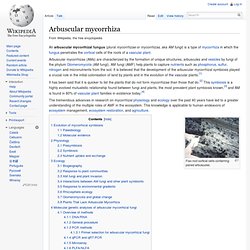
This knowledge is applicable to human endeavors of ecosystem management, ecosystem restoration, and agriculture. Flax root cortical cells containing paired arbuscules Evolution of mycorrhizal symbiosis[edit] Paleobiology[edit] Land Degradation. "The objective of this convention is to combat desertification and mitigate the effects of drought in countries... particularly in Africa... in the framework of an integrated approach ... with a view to contributing to the achievement of sustainable development in the affected areas. " Convention to Combat Desertification, Rio de Janeiro, 1994. "A process that describes human-induced phenomena which lower the current and/or future capacity of the soil to support human life" GLASOD - First United Nations Global Assessment of Human-Induced Soil Degradation, 1988-90.
We wish to learn: Soil Management - soil degradation. Soil Management: 1.

Soil Degradation During the past 50 years various land-use practices have degraded about 5 billion ha (about 43%) of Earths vegetated land. This land degradation results in reduced productive potential. Soil degradation. Soil retrogression and degradation. Soil retrogression and degradation are two regressive evolution processes associated with the loss of equilibrium of a stable soil.

Retrogression is primarily due to erosion and corresponds to a phenomenon where succession reverts to pioneer conditions (such as bare ground). Degradation is an evolution, different from natural evolution, related to the local climate and vegetation. It is due to the replacement of primary plant communities(known as climax) by the secondary communities. This replacement modifies the humus composition and amount, and affects the formation of the soil. It is directly related to human activity. At the beginning of soil formation, the bare rock out crops is gradually colonized by pioneer species (lichens and mosses). The cycles of evolution of soils have very variable durations, between tens, hundreds, or thousands of years for quickly evolving soils (A horizon only) to more than a million years for slowly developing soils. Biorhexistasy theory[edit] Soils. Land degradation.