If you are waking up with sore ear canals, aching ear cartilage, or finding squashed little cylinders of yellow foam lost in your bedsheets, you are not alone.
Every night, thousands of light sleepers across the country turn to generic pharmacy earplugs in a desperate bid to block out early morning traffic, neighborhood noise, or a snoring partner. Yet, despite being the most widely available option on supermarket shelves, traditional foam plugs consistently fail the people who need them most.
Working on product research and customer support at Aussie Ear Plugs, I review daily feedback from people struggling to get six or eight hours of unbroken sleep. The pattern is always identical: foam plugs feel tolerable when you first put them in, but by 3:00 AM, they turn into an uncomfortable distraction.
To help you find the<!--td {border: 1px solid #cccccc;}br {mso-data-placement:same-cell;}-->best earplugs for sleeping in Australia, let's look at the mechanical reasons why disposable foam fails in bed and what you should be using instead.
The fundamental issue with polyurethane foam is simple: it was never engineered for nighttime sleeping. Foam hearing protection was designed for industrial daytime settings like construction sites and factory floors, where people are upright and need temporary acoustic reduction.
When you take that same material to bed, three major design flaws emerge:
Another common point of confusion is using the wrong tool for the job. Many people mistakenly assume that premium concert or musician ear plugs Australia will work equally well for bedtime noise.
While filtered plugs are brilliant for preserving clear sound fidelity at a live gig in Sydney or Melbourne, they are counterproductive for sleep. Live music protection uses acoustic chambers to lower volume evenly while keeping frequencies crisp.
For sleeping, you do not want acoustic clarity. You want raw acoustic deadening—a continuous, dense barrier that halts vibrational energy before it reaches your eardrum.
To sleep deeply without morning ear pain, your earplugs must conform to the shape of your body, not force your body to conform to them. This is why the industry has shifted away from deep-canal insertion toward an outer-ear seal.
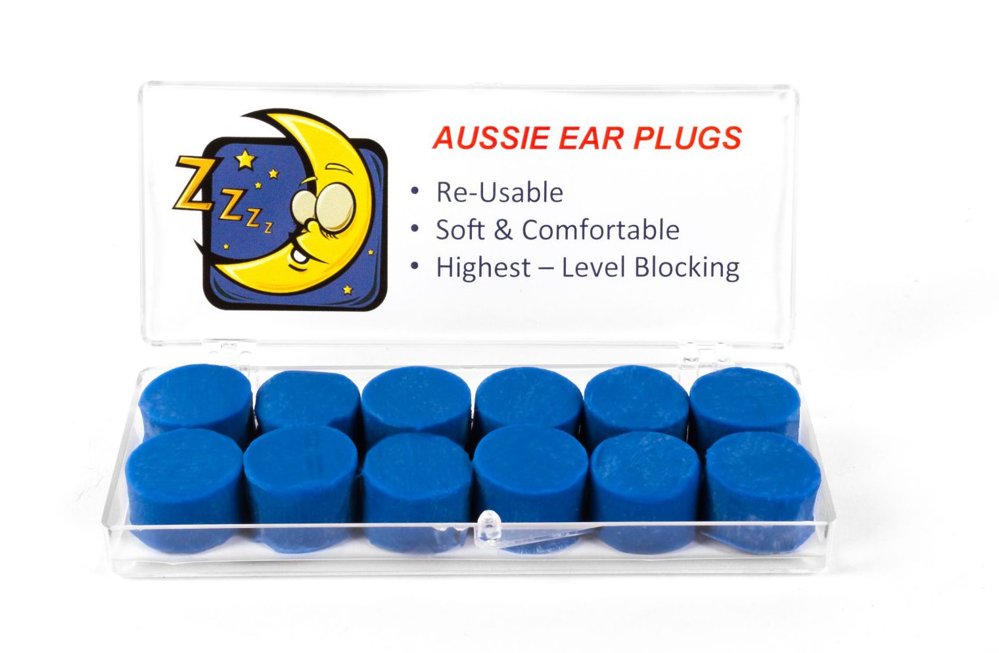
Instead of pushing an object into the ear canal, moldable materials sit comfortably over the external opening of the ear. This completely bypasses the sensitive canal walls and creates a flat, flush surface against your head.
At Aussie Ear Plugs, we formulate our sleep solutions using a blend of natural beeswax, lanolin, and organic cotton fibers. This natural composition offers three distinct advantages over synthetic foam:
To get the most out of your sleep setup in a noisy Australian home, follow these practical steps: