Mali: A Cultural Center. Mansa Musa, greatest king of Mali, is shown on this Spanish map of Africa. What would life be like if a magician ruled the land? The history of ancient Mali gives us some hints. The founder of this West African kingdom was well known among his people as a man of magic with more than a few tricks up his sleeve. Before the sorcerer's reign, and the Malian kingdom's birth, years of competition and fighting took place in the lands west of the upper Niger River. A series of fierce battles took place, and in the 13th century C.E., a group known as the Soso emerged victorious.
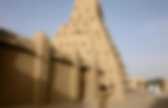
The Soso's new lands, which had once belonged to the kingdom of Ghana, were like giant pots of gold. The Lion King Sundiata claimed that Mali was his by right of inheritance and in 1230 A.D he defeated the Soso and took back the land. The mosque at Timbuktu was the heart of the kingdom of Mali. Sundiata, also known as the "Lion King," was determined to make changes, and indeed he did. For the most part, the system worked. The Empire of Mali (1230-1600) The Empire of Mali was one of the largest empires in West African History, and at its height, it spanned from the Atlantic Coast to central parts of the Sahara desert [i]. The Empire was founded in 1235 CE by the legendary King Sundiata [ii] and lasted until the early 1600s CE [iii].
The Empire’s most famous ruler was named Mansa Musa, and chroniclers of the times wrote that when he travelled to Mecca on a pilgrimage he distributed so much gold that he caused great inflation lasting a decade [iv]. History The Mali Empire arose with the consolidation of several small Malinké Kingdoms in Ghana around the areas of the upper Niger River [v]. The development of the empire began in its capital city of Niani, which was also coincidentally the birthplace of the empire’s founder and King Sundiata [xi].
Economy and Society in the Empire of Mali The Mali Empire consisted of outlying areas and small kingdoms. Leadership Mali’s rulers adopted the title of ‘Mansa’ [xix]. The famous Mansa Musa Endnotes. Ancient Africa for Kids: Empire of Ancient Mali. History >> Ancient AfricaWhere was the Empire of Mali located? The Empire of Mali was located in Western Africa. It grew up along the Niger River and eventually spread across 1,200 miles from the city of Gao to the Atlantic Ocean. It's northern border was just south of the Sahara Desert. It covered regions of the modern day African countries of Mali, Niger, Senegal, Mauritania, Guinea, and The Gambia. Map of Mali by Ducksters When did the Empire of Mali rule?
The Empire of Mali was established around 1235 CE. How did the Empire first begin? The Empire of Mali was formed when a ruler named Sundiata Keita united the tribes of the Malinke peoples. Government The government of the Mali Empire was led by the emperor who was called the Mansa. The Mali Culture Although there were many small tribes and cultural groups within the Mali Empire, most of these groups were considered part of the Mande peoples. The religion of Islam was an important part of the Mali Empire. Mansa Musa by Abraham Cresques. Mali Empire and Djenne Figures. From A.D. 700 to 1600 the ancient empires of Ghana (700-1100), Mali (800-1550) and Songhay (1300-1600) controlled vast areas of West Africa (see map and time line). Although each empire rose to assert its power, they coexisted independently for centuries. At its peak (1200-1300), the Mali Empire covered an area that encompasses significant portions of the present-day country of Mali, southern and western Mauritania and Senegal.
Note that the old kingdoms of Mali and Ghana are not the present-day countries of Mali and Ghana. Predominately a savannah, this vast region has two seasons--a rainy season and a dry season, the latter being the longer of the two. Human histories are reconstructed from a variety of sources--written, oral and archaeological. The few written accounts about ancient Mali were recorded by Arab travelers and scholars.
Oral histories are the traditional means by which people typically pass on their histories. Djenne had three mosques. The Mali Empire | National Geographic Society. From the 13th to 17th century, West Africa was home to the great Mali Empire. Established by King Sundiata Keita, the kingdom united several smaller, Malinké Kingdoms near the Upper Niger River. Protected by a well-trained, imperial army and benefiting from being in the middle of trade routes, Mali expanded its territory, influence, and culture over the course of four centuries.
An abundance of gold dust and salt deposits helped to expand the empire’s commercial assets. Mali included the city of Timbuktu, which became known as an important center of knowledge. Mali also developed into a hub for the Islamic faith before poor leadership led to the empire’s ultimate decline in power and influence. The rise of the Mali Empire can be traced back to Sundiata, or the “Lion King,” as some called him. Mali had kings, called Mansa. Spanish cartographer Abraham Cresques even featured Musa in the Catalan Atlas, a popular resource for European explorers. The Trans-Saharan Gold Trade (7th–14th Century) This 14th-Century African Emperor Remains the Richest Person in History - HISTORY. In the vast fictional universe of Marvel Comics, T’Challa, better known as Black Panther, is not only king of Wakanda, he’s also the richest superhero of them all. And although today’s fight for the title of wealthiest person alive involves a tug-of-war between billionaire CEOs, the wealthiest person in history, Mansa Musa, has more in common with Marvel’s first Black superhero.
Musa became ruler of the Mali Empire in 1312, taking the throne after his predecessor, Abu-Bakr II, for whom he’d served as deputy, went missing on a voyage he took by sea to find the edge of the Atlantic Ocean. Musa’s rule came at a time when European nations were struggling due to raging civil wars and a lack of resources. During that period, the Mali Empire flourished thanks to ample natural resources like gold and salt. And under the rule of Musa, the prosperous empire grew to span a sizeable portion of West Africa, from the Atlantic coast to the inland trading hub of Timbuktu and parts of the Sahara Desert. How Timbuktu Flourished During the Golden Age of Islam - HISTORY. For centuries, the city of Timbuktu, located in the center of present-day Mali in Western Africa, thrived as one of the bustling centers of culture and learning during the Golden Age of Islam. The region’s legacy as an intellectual destination begins with the Epic of Sundiata.
According to the 13th-century epic poem, the Mandinka prince of the Kangaba state, organized a successful resistance against the harsh Sosso king Sumaoro Kanté—and a new empire was born. The Mali Empire on the upper Niger River then grew in power and prestige. When the powerful Malian king, Mansa Musa I, peacefully annexed the city of Timbuktu in 1324 after returning from his pilgrimage to Mecca, the empire became a hub of exceptional learning, culture and architecture. Timbuktu's Origins as Ancient Trading Post Timbuktu had been a seasonal trading post established in 1100 A.C., where the Saharan Desert and the Niger Delta meet, creating a lush and lucrative agricultural zone. Scroll to Continue.