
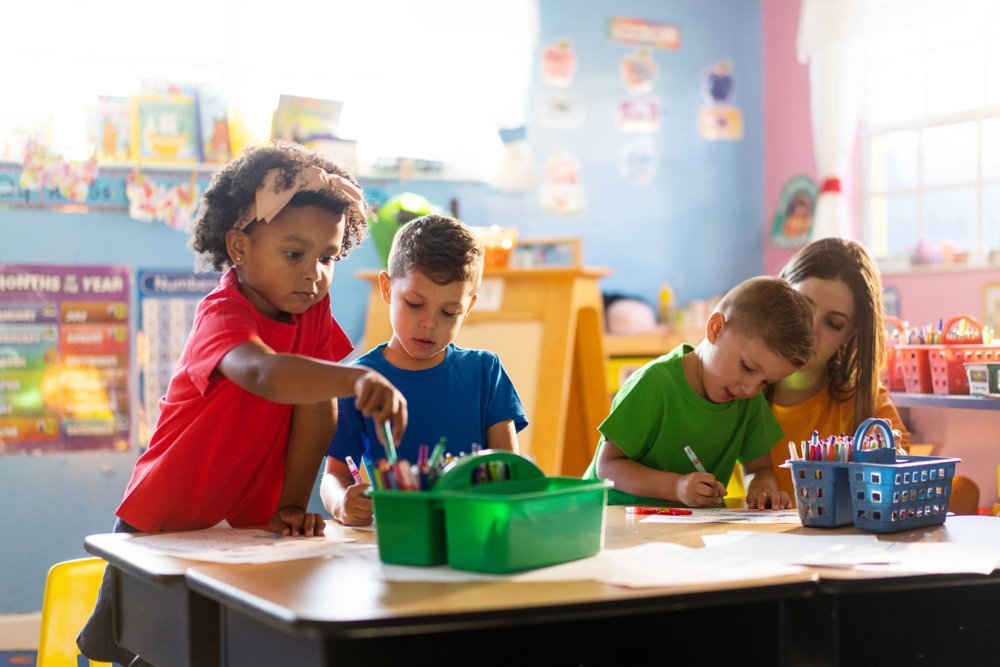
Social skills do not begin only when children start school. They begin much earlier, through simple moments like sharing a toy, waiting for a turn, asking for help, or learning how to play beside another child. A good daycare in Calgary setting gives children regular chances to practise these skills in a safe and guided way. With caring educators, steady routines, and group activities, children slowly learn how to communicate, listen, cooperate, and manage feelings. These early experiences can shape how they handle friendships, classroom routines, and daily interactions later on. In this article, we will look at how daycare supports real-world social growth from the early years.
Children Learn to Be Around Others
Nursery is often one of the first places that young children spend regular time with children outside of their family. This gives them an opportunity to learn how group settings work. They learn that other children have ideas and needs and feelings, too. With gentle support, they start to share a space, join activities and feel comfortable around other people. Children gain more confidence in social situations during the early years of group experience, especially when the group is led by patience rather than pressure.
Sharing and Taking Turns Become Easier
Sharing is not always easy for young children because they are still learning how to manage wants and emotions. In a thoughtful day care Calgary program, children get many small chances to practise. They may take turns with blocks, wait for a swing, pass crayons, or share books during story time. Educators can guide these moments calmly by using simple words and fair routines. Over time, children begin to understand patience, cooperation, and respect for others. These small lessons often become the base for stronger friendships later.
Communication Grows Through Daily Play
Children build communication skills by using words throughout the day. They ask questions, express needs, listen to instructions, and talk with friends during play. A caring daycare Calgary SE environment can support this by giving children plenty of chances to speak, listen, and respond. Storytime, songs, group games, pretend play, and outdoor activities all help children practise language in natural ways. As they learn to use words more clearly, they also become better at asking for help, solving small problems, and joining group activities.
Emotional Skills Build through Guidance
Social growth also includes learning how to handle feelings. Young children may feel upset when a toy is taken, nervous during drop-off, or frustrated when an activity does not go their way. These moments are normal, and they can become learning opportunities when handled with care.
• Children learn to name simple feelings.
• They practise calming down with adult support.
• They begin using words instead of crying or grabbing.
• They learn that others may feel differently.
• They receive help during small conflicts.
• They slowly build patience and self-control.
With steady guidance, children learn that emotions can be understood and managed. This makes social situations easier and helps them feel more secure.
Group Routines Prepare Children for Future Settings
Regular routines help children learn how to behave in common areas. Sitting for snack, listening during story time, cleaning up after play, lining up for outdoor time, and participating in group activities all teach useful habits. Calgary daycare learning support allows children to develop these routines naturally and in an age-appropriate way. These habits can make the transition to preschool or school easier, because children already know the basic expectations of a group. They feel more confident in listening, waiting, participating and following simple directions.
Conclusion
Daycare can play an important role in helping children build real-world social skills early. Through play, routines, communication, and caring guidance, children learn how to share, listen, cooperate, manage feelings, and build friendships. These simple daily experiences can support confidence and prepare children for future learning environments.
Kiddies Daycare offers a warm and supportive setting where children can grow socially through play-based learning, steady routines, and patient educator guidance. Its focus on comfort, confidence, and early development helps children practise important life skills in a safe and caring environment.
Frequently Asked Questions
Question: How does nursery develop social skills in children?
Answer: Nursery helps children practise sharing, listening, taking turns, talking with others, joining group play and handling small conflicts with guidance from caring educators.
Question: Why are group activities important for young kids?
Answer: Being involved in group activities helps children to learn how to cooperate, to follow simple directions, to wait their turn, to communicate clearly and to be comfortable in a shared learning environment.
Question: Can creche help shy kids build confidence?
Answer: Yes. A nurturing nursery environment can help shy children gain confidence slowly through gentle routines, friendly play, teacher support and positive daily interactions with other children.