
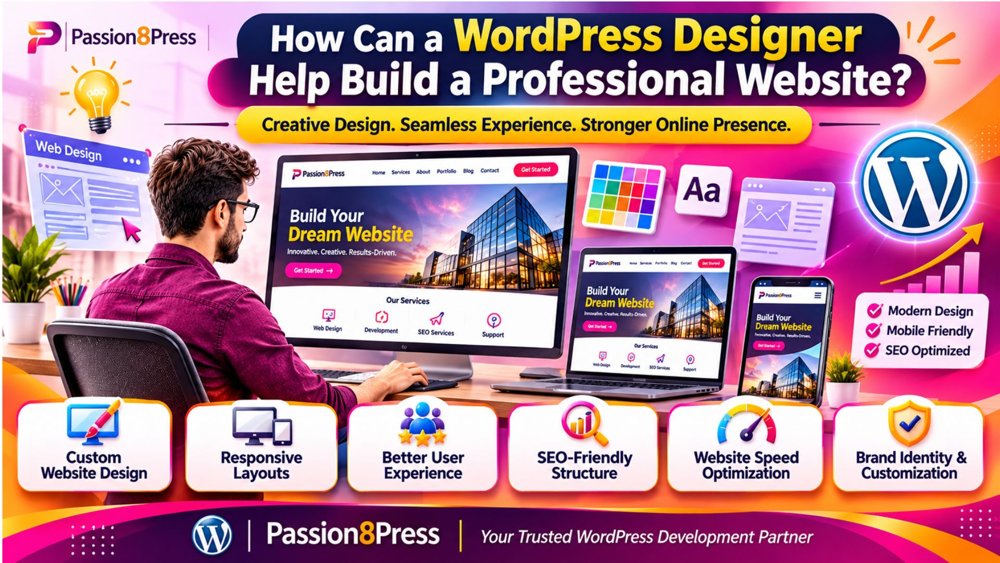
How can you make your website look professional, attract visitors, and turn them into customers? A well-designed website is often the first impression people have of your business, so its appearance, functionality, and user experience matter.
A professional WordPress designer can help transform your website idea into an attractive, responsive, and user-friendly online presence. From choosing the right layout and customizing pages to improving navigation and mobile compatibility, professional design helps create a website that reflects your brand and supports your business goals.
Whether you are launching a new business, updating an outdated website, or building an online store, the right design approach can make your website more effective.
A WordPress design professional plans, creates, and customizes websites using the WordPress platform. Their goal is to make websites visually appealing, easy to navigate, responsive, and aligned with business requirements.
Their responsibilities typically include:
A professional website should not only look attractive but also help visitors find information and take meaningful action.
Your website should communicate what your business offers and what makes it different. A generic layout may not effectively represent your brand or create a memorable impression.
A professional designer can create a consistent visual identity by selecting:
For example, a technology company may benefit from a modern layout with clean typography and interactive elements, while a creative agency may prefer a more visual design.
A consistent appearance helps visitors recognize your brand and builds trust.
Visitors should be able to find the information they need without confusion. Complicated menus, crowded pages, and unclear buttons can encourage people to leave your website.
A designer improves the browsing experience through:
Good navigation helps visitors move naturally from one page to another. It also makes important information, such as services, pricing, and contact details, easier to access.
Many people browse websites using smartphones and tablets. If your website does not adjust properly to different screen sizes, visitors may struggle to read content, use menus, or complete forms.
A professional designer focuses on responsive design to ensure that:
Mobile-friendly design also supports search visibility because mobile usability is an important part of Google's overall page experience considerations.
A visually appealing website needs visibility to attract potential customers. Search engine optimization helps search engines understand your pages and makes it easier for users to discover relevant content.
A designer can support SEO by creating a clean website structure and following design practices such as:
However, design alone cannot guarantee higher rankings. Strong SEO also requires useful content, relevant keywords, technical optimization, and quality backlinks.
Website speed affects how visitors experience your business online. Slow-loading pages can frustrate users and increase the likelihood that they leave before exploring your services.
A designer can support better performance by:
For more advanced speed improvements, collaboration with a WordPress developer or performance specialist may also be necessary.
Visitors often judge a business by the quality of its website. A poorly organized or outdated design can create doubts about the company's credibility.
Professional visual elements help establish a stronger impression, including:
These elements make your website feel more reliable and encourage visitors to explore your products or services.
A business website needs regular updates as products, services, and customer requirements change. A well-planned WordPress design makes ongoing management easier.
A professional designer can organize pages and reusable sections so business owners can update content without redesigning the entire website.
This can help you:
A flexible design also makes it easier to expand your website as your business grows.
Although WordPress offers themes and ready-made templates, creating a professional website requires more than installing a theme. You need a clear design strategy, an understanding of user behavior, and attention to functionality.
Hiring an experienced professional can provide several advantages:
Benefit
How it helps
Custom design
Creates a website that matches your brand
Better usability
Makes navigation easier for visitors
Responsive layouts
Improves browsing across devices
Consistent branding
Builds a recognizable business identity
SEO-friendly structure
Supports search engine understanding
Time savings
Reduces the effort involved in building the website
If your website requires advanced features, custom integrations, or complex functionality, consider working with a developer alongside your designer.
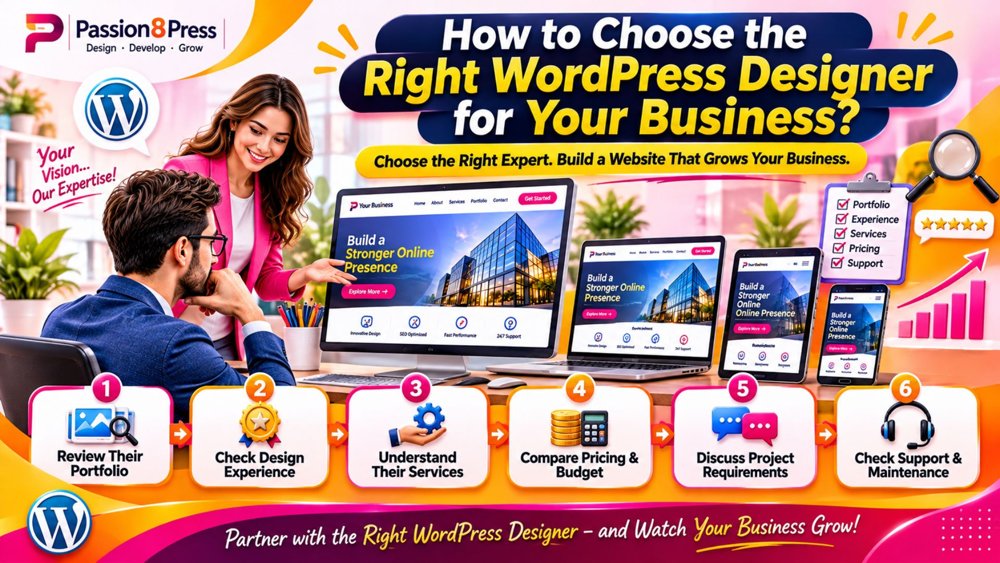
Choosing the right professional is important because your website represents your business online. Before making a decision, evaluate the following factors:
Clear communication and a well-defined project scope can help ensure that the final website meets your expectations.
A professional website is more than an attractive collection of pages. It should represent your brand, provide a smooth browsing experience, communicate your services clearly, and encourage visitors to take action.
Working with a skilled WordPress designer can help you achieve these goals through thoughtful layouts, responsive design, consistent branding, and user-focused functionality. By investing in the right design approach, you can create a website that supports your current business needs and provides room for future growth.
A WordPress design professional creates and customizes websites using WordPress. Their work includes page layouts, theme customization, visual elements, responsive design, and user experience improvements.
The cost depends on website complexity, design requirements, customization, features, and the professional's experience. A simple business website generally costs less than a complex eCommerce or custom website.
Yes. They can create responsive layouts that automatically adjust to smartphones, tablets, laptops, and desktop screens.
Yes. WordPress offers flexible themes, plugins, customization options, and content management features, making it suitable for business websites, blogs, portfolios, and online stores.
A designer primarily focuses on website appearance, layout, branding, and user experience. A developer focuses more on coding, custom functionality, integrations, and technical implementation. Some professionals offer both services.
Yes. WordPress themes and visual page builders allow users to create and customize websites without writing code. However, professional assistance can be helpful for advanced customization and a more polished result.