
<!--td {border: 1px solid #cccccc;}br {mso-data-placement:same-cell;}-->Choosing between a sectional and a traditional sofa depends on your room, seating needs, lifestyle, and how you plan to use the space. Neither option is automatically better. The right choice is the one that fits your home comfortably and works well for your everyday routine.
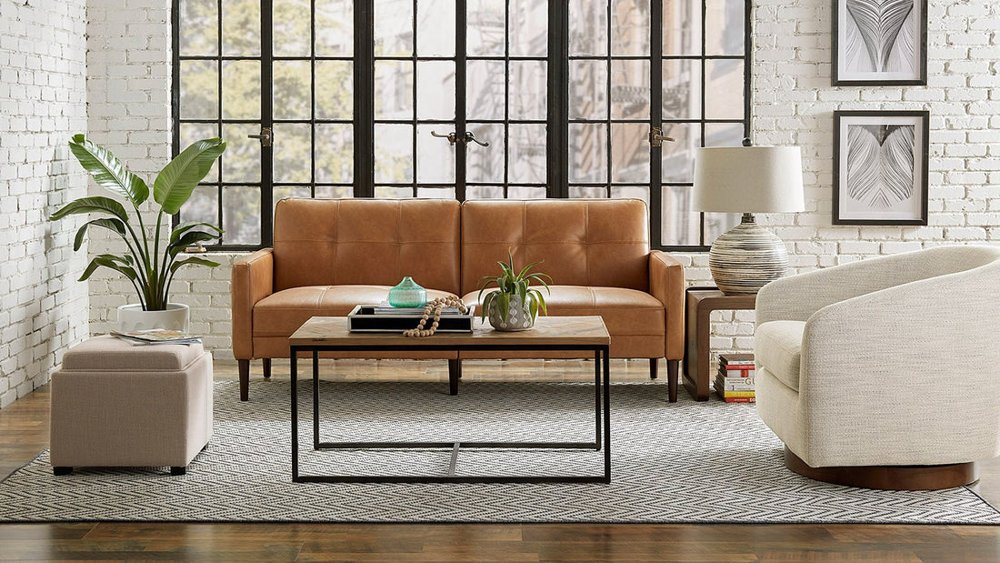
A sectional can be a good choice if you want more seating in one piece of furniture. Its connected design usually provides plenty of room for several people to sit, stretch out, or relax together. Sectionals can work especially well in larger living rooms, family rooms, and open-plan spaces.
<!--td {border: 1px solid #cccccc;}br {mso-data-placement:same-cell;}-->A modular sectional sofa can offer additional flexibility because individual pieces can sometimes be rearranged to suit different room layouts. This can be useful if you move furniture frequently or expect your space to change.
Another benefit is that a sectional can create a natural gathering area. An L-shaped or U-shaped design can help define a seating zone without requiring several separate pieces of furniture.
A standard sofa is often more practical for smaller rooms or homes where flexibility is important. Because it takes up less floor space than many sectionals, it can leave more room for accent chairs, tables, lamps, or walkways.
A sofa may also be easier to move through narrow doorways, stairways, and hallways. If you frequently rearrange your room or move homes, this can be an important consideration.
Pairing a sofa with a loveseat or accent chair can also give you more control over the layout. Instead of being limited to one fixed configuration, you can arrange individual pieces according to the room.
Before deciding, measure both your room and the route the furniture will take into the house. Check doorways, elevators, staircases, and tight corners—not just the area where the furniture will sit.
Think about how many people normally use the seating. If your household regularly watches movies, hosts guests, or likes to lounge together, a sectional may be more comfortable. If you mainly need everyday seating for two or three people, a sofa may be sufficient.
Also consider the sectional sofa couch configuration, cushion support, upholstery, seat depth, and whether the chaise or corner is positioned correctly for your room. A beautiful sectional can still be frustrating if it blocks a doorway or makes the room difficult to navigate.
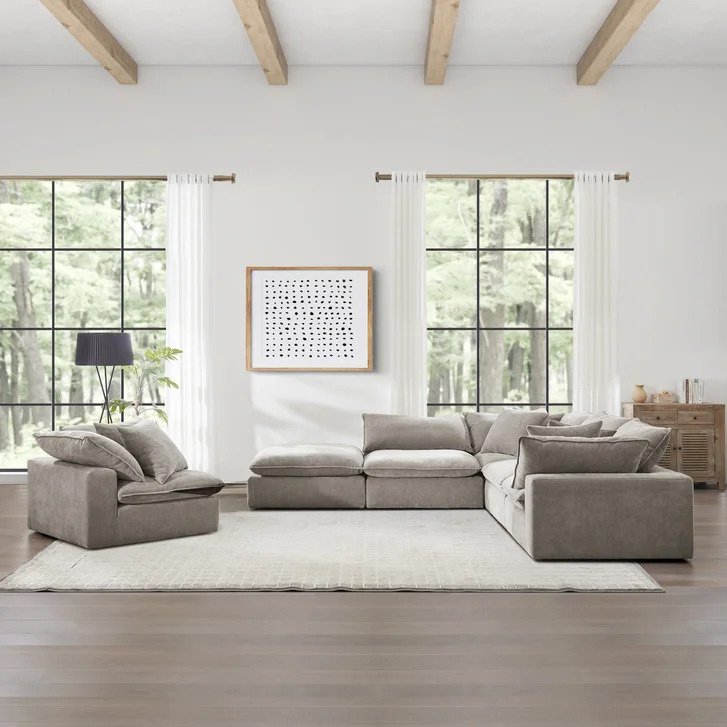
One of the most common mistakes is buying based only on appearance. A large sectional may look impressive in a showroom but overwhelm a smaller living room. Another mistake is failing to measure the furniture's full dimensions, including chaise length and recliners if included.
It's also worth checking whether cushions can be removed, how the upholstery should be cleaned, and whether replacement parts are available. These details can matter for long-term furniture care.
If you're comparing different styles, visiting a local furniture retailer such as Murphy's Furniture & Mattresses can be useful for sitting on different sofas and sectionals before making a decision. Treat this as a way to compare comfort, construction, and fit rather than simply choosing based on appearance.
Ultimately, a sectional isn't automatically better than a sofa. Choose a sectional when you need generous, connected seating and have enough space; choose a sofa when you value a smaller footprint and greater layout flexibility. Measuring your room, considering your daily habits, and testing comfort in person can help you choose furniture that works well for years.