
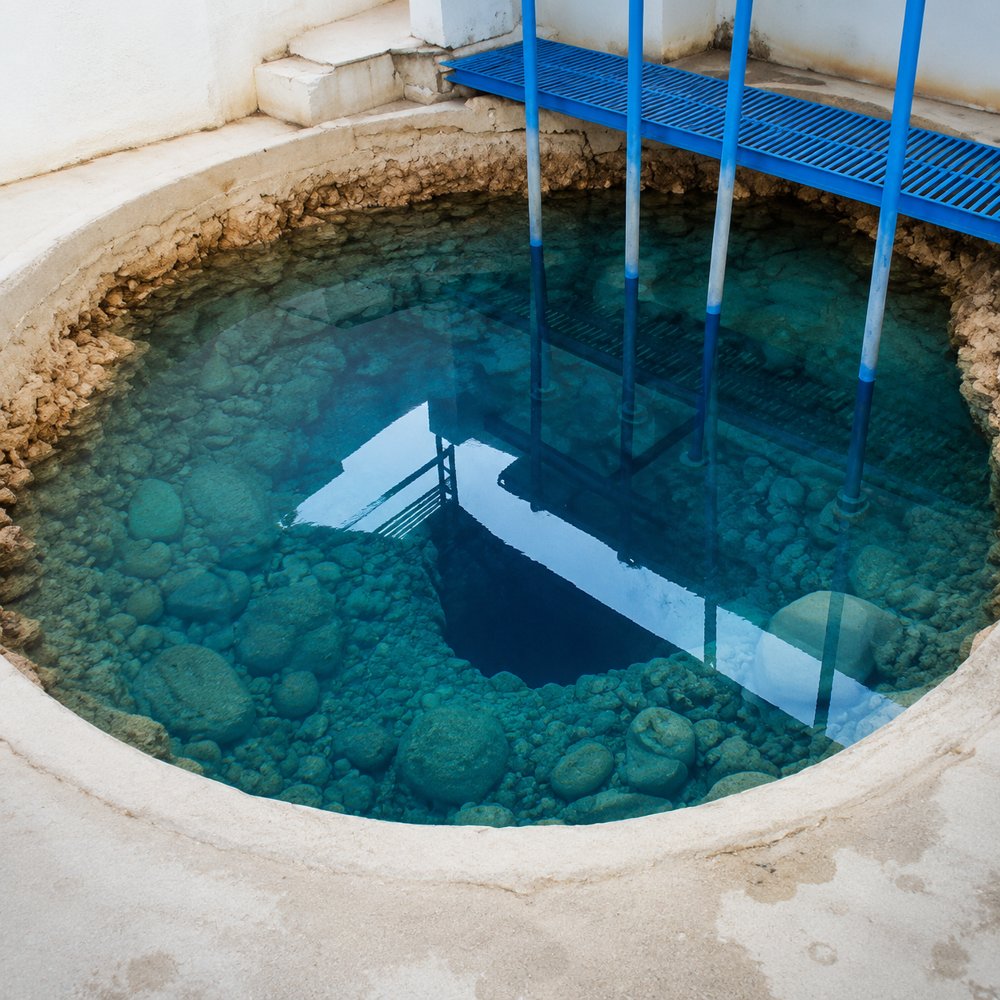
Homeowners often assume that once a well is drilled, it will provide a bottomless supply of pristine water forever. Unfortunately, a borehole is not a sterile, static pipe. It is an active, dynamic environment interacting directly with the earth’s crust. Over a decade of drawing water, the deep rock fractures that feed your home can become severely compromised.
If your tap water has started looking muddy, your filters are clogging up every few weeks, or your overall water pressure drops significantly when you run the hose and the washing machine at the same time, your underground environment is likely choking itself off.
At Everlasting Wells, we constantly meet homeowners who try to fix these severe issues by installing larger above-ground filters. But if the actual hole in the ground is filled with sludge and bacteria, an indoor filter is merely a band-aid. To truly restore your water volume and clarity, you need comprehensive<!--td {border: 1px solid #cccccc;}br {mso-data-placement:same-cell;}-->well cleaning services.
To understand why a borehole needs to be physically cleaned, you have to look at what is happening hundreds of feet below the grass. Two primary culprits destroy a well's efficiency:
Iron Bacteria and Biofouling
Iron bacteria are naturally occurring microorganisms that live in groundwater. They pose no direct threat to human health, but they are incredibly destructive to plumbing. These bacteria consume iron and leave behind a thick, slimy, rust-colored byproduct. Over the years, this bio-slime coats the submersible pump, clogs the pump intake screens, and glues itself to the rock walls, physically blocking fresh water from entering the borehole.
Mineral Scaling and Silt Build-Up
As groundwater flows through bedrock fractures, it carries dissolved minerals like calcium and magnesium, along with microscopic grains of sand. The constant fluctuation of water levels causes these minerals to oxidize and harden against the steel casing, creating a concrete-like scale. Simultaneously, sand and silt accumulate at the very bottom of the well, slowly burying the pump in abrasive mud.
You cannot just pour a bottle of bleach down the wellhead and expect these heavy blockages to disappear. Professional cleaning is an intensive, mechanical process designed to scrub the earth and restore natural flow rates.
When our field technicians begin a rehabilitation project, the first step is pulling the entire pump system out of the ground. Once the borehole is empty, we lower specialized heavy-duty wire brushes attached to a rig deep into the casing. We physically scrub the steel walls and the bedrock fractures to break apart the hardened mineral scale and thick bacterial slime.
After the mechanical brushing, we introduce commercial-grade, environmentally safe cleaning compounds that dissolve the remaining iron bacteria. Finally, we use a process called "surging," which rapidly forces water back and forth through the rock fractures, blasting the loose sediment and chemical residue out of the top of the well until the water runs completely clear.
Rehabilitating your borehole is the only way to recover lost water yield and protect your submersible pump from burning out in thick mud. Once the source itself is restored and producing high-volume, sediment-free water, you can then focus on indoor purification.
A clean source is the mandatory first step before you invest in any well water treatment near me. An expensive indoor filtration system will only work efficiently if the water coming out of the ground is free of heavy sludge.
If your<!--td {border: 1px solid #cccccc;}br {mso-data-placement:same-cell;}-->Water pressure is fading or your filters are constantly failing, the problem might be hundreds of feet beneath your feet. The field experts at Everlasting Wells possess the specialized equipment required to scrub, surge, and rehabilitate your system, securing your home's water supply for decades to come.