
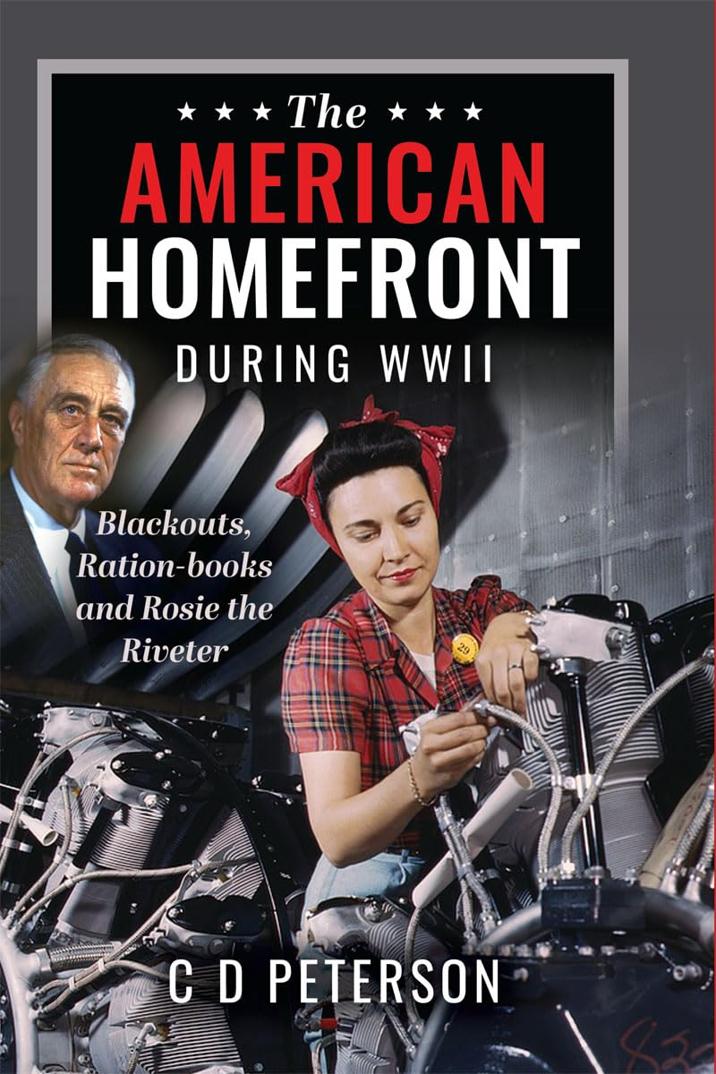
World War II was a fight for freedom, but not all Americans experienced that freedom equally. For Black Americans, the wartime years were marked by both opportunity and injustice. While the nation called for unity and sacrifice, segregation and systemic racism remained entrenched at home. In America’s Home Front in WWII, C.D. Peterson confronts this paradox with clarity and compassion, documenting how Black Americans contributed to the war effort while simultaneously battling discrimination.
As millions of white men left civilian jobs to serve in the military, industries faced a labor shortage that opened doors previously closed to Black workers. Defense factories, shipyards, and transportation systems began to accept Black employees, often under pressure from civil rights groups and government mandates. Executive Order 8802, issued in 1941, prohibited racial discrimination in the defense industry and led to the creation of the Fair Employment Practices Committee (FEPC). Still, enforcement was inconsistent, and many Black workers faced hostility, unequal pay, and limited advancement.
Peterson highlights the courage and persistence of these workers, many of whom moved from the rural South to urban centers in the North and West in search of better opportunities. This Great Migration reshaped the demographic and cultural landscape of cities like Detroit, Chicago, and Los Angeles. Yet the welcome was far from warm. Black migrants were often denied housing, excluded from labor unions, and subjected to racial violence.
The book also recounts the experiences of the Tuskegee Airmen, who trained in a segregated military and became the first Black military aviators in the U.S. Armed Forces. Their excellence in combat stood in stark contrast to the discrimination they faced at home and within the military hierarchy. While celebrated today, at the time their service was often dismissed or minimized.
On the home front, Black Americans contributed in countless ways. Women worked in munitions plants and took up domestic work to keep households running. Communities organized bond drives, Victory Gardens, and war relief efforts. Yet the burden of segregation persisted. Schools, transportation, and public services remained unequal. In some defense towns, Black workers were forced to live in substandard housing or denied access to the new government-built war housing projects altogether.
Despite these barriers, the war years sparked a renewed push for civil rights. The “Double V” campaign—victory against fascism abroad and racism at home—became a rallying cry. Newspapers like the Pittsburgh Courier and organizations like the NAACP gained momentum, using the contradiction of American ideals and domestic realities to call for lasting change.
Peterson captures the complexity of this moment. Black Americans were simultaneously patriots and protesters, builders of bombers and challengers of bigotry. Their fight was not just for democracy overseas but for dignity in their own neighborhoods and workplaces.
America’s Home Front in WWII offers a necessary lens into a side of the war too often overlooked. It honors the sacrifice of Black Americans who fought with courage and worked with determination, even as they endured segregation and injustice. Their stories are a crucial part of the American wartime experience—one that reminds readers that the struggle for freedom did not end with victory in 1945.
Grab your Copy Now: https://www.amazon.com/dp/B0DDL1GXF2