
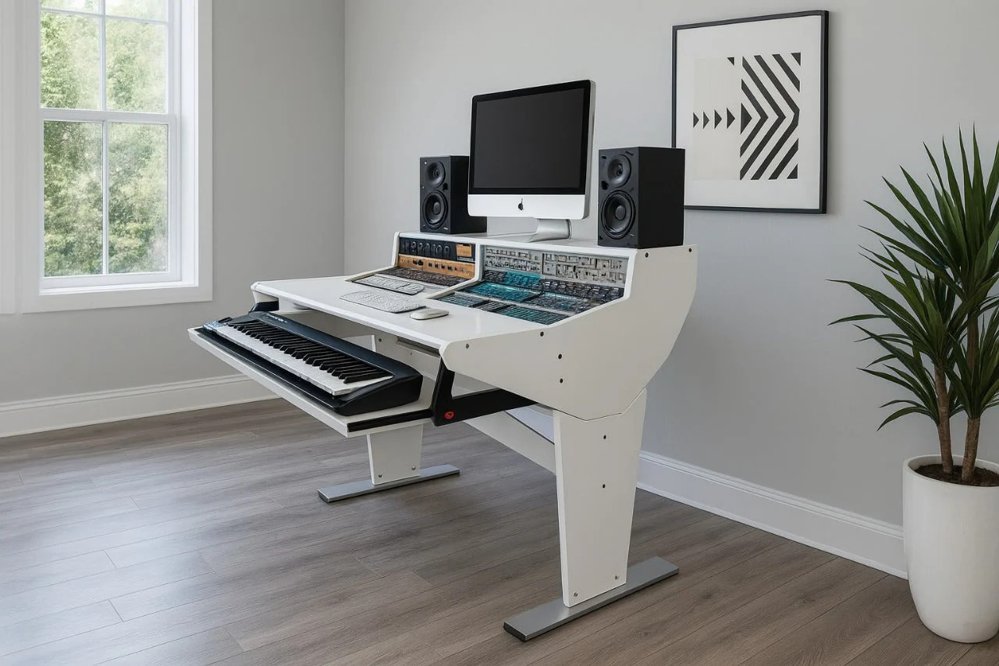
A creative room can have strong monitors, steady software, and talented people, but it still feels a bit clunky if the desk isn't made for the actual work. The issue usually shows up during real sessions: cables drift forward, screens feel off by a few degrees, and controllers start grabbing space from the mouse and notes. A serious desk gives the room some rhythm and structure, not merely a flat surface. It handles reach, posture, storage, and your everyday flow, all in one place. In this article, we'll cover what makes a desk really worth choosing, especially when you want focused, creative work, not constant small annoyances.
A professional studio desk earns its value when it helps the room function with less interruption. Standard furniture may look clean at first, but it often fails once interfaces, screens, controllers, and notes share the same area. During a two-hour editing session, even a small reach problem becomes noticeable. You start moving gear inward, then the surface becomes crowded. I prefer desks that protect one clear working zone, because that keeps movement predictable and reduces unnecessary resets. A desk should support your session rhythm, not force you to rebuild the layout every time the project changes.
Creative work is physical, even when it looks stationary. A desk that sits too high can push your wrists upward, while a shallow surface can force your shoulders and neck into a poor position. The best desk for home recording studio should support a neutral posture, enough legroom, and a practical screen distance without crowding the room. One common mistake is choosing a large surface without checking the chair travel or monitor position. More space can help, but oversized furniture may create new reach problems. The right desk balances comfort, control, and room movement so longer sessions feel sustainable.
The best professional studio desk is usually defined by the less glamorous details. Strong construction, clean routing, stable surfaces, and serviceable access matter more than decorative extras. A practical checklist includes checking surface depth, load capacity, cable pass-throughs, rack or storage options, customization availability, shipping or local pickup details, and warranty support. These points matter because studio furniture faces repeated daily use. If a controller creates wobble or cables cannot be reached without moving the desk, frustration builds quickly. A solid build helps the room stay dependable, even when sessions become demanding.
A smart desk choice should fit the current room while allowing reasonable growth. An ergonomic home studio desk layout helps you plan where screens, monitors, interfaces, keyboards, and accessories belong before the furniture arrives. Think about future needs too, such as adding a second display, rack gear, or a larger control surface. The tradeoff is simple: a bigger desk may improve storage, but it can dominate a compact room if the footprint is wrong. Measure speaker spacing, doorway clearance, chair movement, and cable paths. Good sizing keeps the setup flexible without making the room feel overloaded.
A worthwhile studio desk improves workflow, comfort, organization, and long-term usability. It should give gear a logical place, protect the main work area, and reduce the small disruptions that slow sessions. When the desk fits both the room and the routine, creative work feels more controlled.
Bazel Studio Desk offers handcrafted studio desk collections with customization options, shipping or local pickup choices, and warranty support. For producers, musicians, engineers, and creators across California and Los Angeles, a well-planned desk can support a cleaner, steadier, and more practical studio environment.
Frequently Asked Questions
Question: How do I know if my current desk is limiting my studio?
Answer: If you constantly move gear, lose note space, or feel wrist and neck strain during longer sessions, your desk may be limiting the room. Poor cable access and unstable surfaces are also warning signs. A better desk should make repeated tasks feel easier, not more complicated.
Question: Should I choose a custom desk or a standard studio desk?
Answer: A standard option can work if your room and gear fit it well. Customization becomes useful when you need specific width, rack placement, controller space, or cable access. The goal is not to customize everything, but to remove the awkward compromises that affect daily workflow.
Question: What should I measure before buying a studio desk?
Answer: Measure room width, chair travel, speaker spacing, screen placement, doorway clearance, and the reach to your most-used tools. Also, check where cables and power will run. These measurements help prevent a desk from looking right online but feeling wrong once installed in the room.