
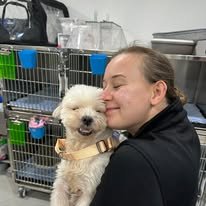
For many small and medium-sized dog owners, noticing an occasional "skip" or a sudden hitch in their pet’s gait is a common but concerning sight. You might see your dog run, suddenly hold a hind leg up for a few steps, and then seemingly return to normal. While it may look like a minor cramp, this is often the classic sign of a Medial Patellar Luxation (MPL). At Bayside Animal Hospital, we are committed to restoring your pet’s mobility through specialized MPL surgery, a procedure designed to correct joint alignment and prevent the long-term pain of degenerative arthritis.
Understanding Medial Patellar Luxation (MPL)
To appreciate the necessity of MPL surgery, it is helpful to understand the anatomy of the canine knee. The patella (kneecap) normally sits in a deep groove at the end of the femur, known as the trochlear groove. It acts as a pulley, allowing the quadriceps muscles to efficiently extend the leg.
In a dog with MPL, the kneecap "luxates," or slides out of this groove toward the inside (medial side) of the leg. This occurs because the structural alignment of the limb—from the hip to the ankle—is slightly off. When the kneecap pops out, it causes a mechanical obstruction and discomfort, leading to that characteristic "skipping" motion. At Bayside Animal Hospital, we categorize MPL into four grades, with higher grades requiring surgical intervention to maintain a high quality of life.
Why MPL Surgery is the Gold Standard
While mild cases (Grade 1) can sometimes be managed with supplements and weight control, Grade 2 and above typically benefit significantly from MPL surgery. Without correction, the constant sliding of the kneecap wears down the protective cartilage in the knee joint. This lead to "bone-on-bone" contact, chronic inflammation, and accelerated osteoarthritis.
Furthermore, an unstable patella places undue stress on the Cranial Cruciate Ligament (CCL). Dogs with uncorrected MPL are at a much higher risk of suffering a secondary CCL tear, which would then require even more complex orthopedic intervention. By choosing MPL surgery at Bayside Animal Hospital, you are proactively protecting your dog’s entire joint health.
The Surgical Approach at Bayside Animal Hospital
No two knees are identical, which is why our orthopedic team at Bayside Animal Hospital utilizes a multi-step surgical approach tailored to your pet's specific anatomy. MPL surgery often involves a combination of three key techniques:
The Bayside Animal Hospital Difference: Precision and Compassion
At Bayside Animal Hospital, we pride ourselves on combining state-of-the-art technology with a gentle, patient-first philosophy. Our diagnostic suite includes high-resolution digital imaging to map out the exact degrees of bony misalignment before the first incision is made.
We also understand that surgery can be a stressful prospect for pet parents. Our team prioritizes transparent communication, walking you through the procedure, the anesthesia protocols, and the pain management strategies we use to keep your pet comfortable. We utilize multi-modal analgesia, ensuring that your dog wakes up from MPL surgery with minimal discomfort and a smooth start to their recovery.
Recovery and Rehabilitation: The Path Back to Play
The success of MPL surgery depends heavily on the healing process. While the surgical correction is immediate, the bone and soft tissues need time to bond and strengthen. Most patients spend 8 to 12 weeks in a "controlled recovery" phase.
Bayside Animal Hospital provides comprehensive post-operative support, including:
A Future without Limitations
The goal of MPL surgery near me at Bayside Animal Hospital is simple: we want your dog to be able to run, jump, and play without the mechanical "glitch" of a slipping kneecap. For many owners, the most rewarding part of the process is seeing their dog’s personality return as the chronic discomfort of the luxation disappears.
Small breeds like Pomeranians, Chihuahuas, and Yorkies are famously prone to this condition, but we also see it in larger breeds. Regardless of size, the relief provided by a stable, correctly aligned knee is transformative. By addressing the root cause of the lameness, we enable your pet to enjoy their senior years with much greater mobility and much less reliance on long-term pain medications.
Trust Your Pet’s Mobility to Bayside Animal Hospital
Your pet’s joints are the foundation of their active life. Don't let an occasional skip turn into a lifetime of arthritis. At Bayside Animal Hospital, our orthopedic specialists have the experience and the dedication to ensure your pet’s MPL surgery is a success.
We believe in a world where every dog can chase a ball with confidence. If you’ve noticed your pet favoring a leg or exhibiting a strange gait, let us provide a professional evaluation and a clear path toward healing.
Would you like to book a specialized orthopedic exam to determine the grade of your dog’s patellar luxation, or are you ready to discuss a surgical timeline with our veterinary team?
Follow this link for another blog - Rhodes Vet Clinic