
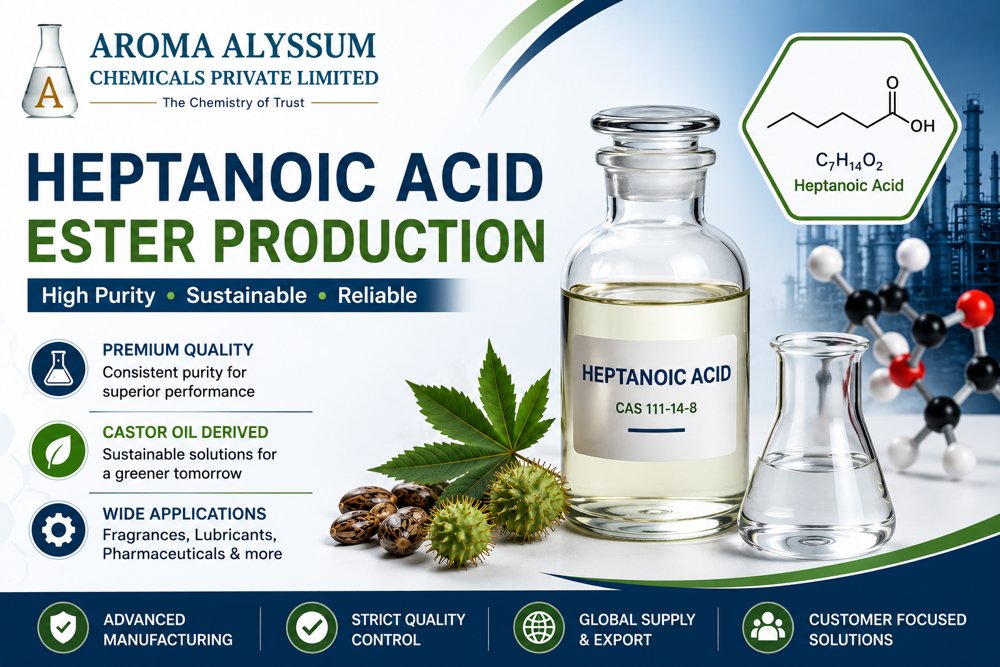
The need for high-performance specialty chemicals is growing across industries, making heptanoic acid ester production more important than ever. Heptanoic acid is a useful chemical that helps make esters for things like fragrances, lubricants, pharmaceuticals, agro chemicals and industrial formulations. Heptanoic acid is a choice for manufacturers because it is very stable and works well with other chemicals.
Heptanoic acid, also known by the number heptanoic acid CAS 111-14-8, is very important for making specialty esters that can handle temperatures, do not break down easily, and have great chemical properties. Many manufacturers like acid castor oil derivative products because they come from natural resources, which is good for the environment, and they are very pure.
When looking at the acid price, bulk buyers should think about more than just the cost. The purity of the product, how it is made, quality control, packaging and if the supplier is reliable all matter for getting value and consistent performance in the long run.
Aroma Alyssum Chemicals is a company that makes quality heptanoic acid and specialty castor oil derivatives. They have manufacturing facilities, high standards for quality and care about their customers. This company provides chemical solutions to industries all over the world.
Whether you are making fragrances, synthetic lubricants, pharmaceuticals, or specialty chemicals, choosing a supplier is crucial for getting consistent quality, a steady supply,
and cost-effective solutions. When selecting a supplier for heptanoic acid and its esters, consider the following factors:
1. Product Specifications: Ensure the supplier offers products that meet your specific requirements in terms of purity, concentration, and any additional chemical properties needed for your application.
2. Certifications and Standards: Check if the supplier adheres to relevant industry standards and certifications, such as ISO, REACH, or other regulatory compliances that are important for your industry.
3. Quality Control: Assess the supplier's quality control processes. This includes their testing methods, documentation, and any third-party certifications they may have.
4. Production Capacity and Reliability: Evaluate the supplier's production capacity to ensure they can meet your demand consistently. Reliability is crucial to avoid disruptions in your production schedule.
5. Sustainability Practices: If sustainability is a priority, look for suppliers that use eco-friendly practices in their production processes and source materials responsibly.
6. Technical Support and Customization: Determine if the supplier offers technical support and can customize products to meet your specific needs.
7. Pricing and Contract Terms: Compare pricing structures and contract terms to ensure they align with your budget and business needs. Consider long-term supply agreements if they offer cost savings and guaranteed supply.
8. Reputation and Experience: Research the supplier's reputation and experience in the industry. Positive reviews and a proven track record can indicate reliability and quality.
9. Logistics and Delivery: Assess the supplier's logistics capabilities, including their ability to deliver on time and their flexibility in handling different shipping requirements.
10. Customer Service: Evaluate the supplier's customer service, including their responsiveness, willingness to address concerns, and ability to provide timely solutions to any issues that may arise.
By considering these factors, you can select a supplier that provides high-quality heptanoic acid and specialty chemicals, ensuring consistent performance and value for your business.
and great product performance. You should look for a supplier that can give you acid and other chemicals that meet your needs. Heptanoic acid is very important for industries, and finding a good supplier of heptanoic acid can make a big difference.