
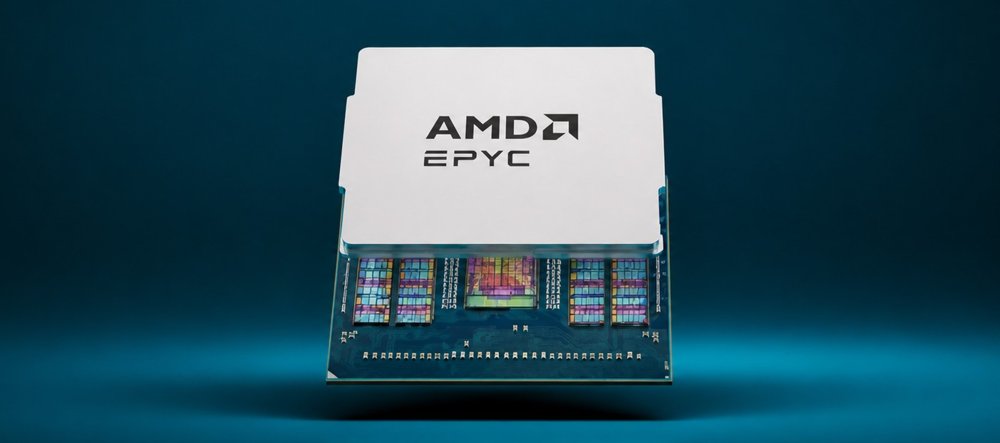
Server CPUs are becoming a major bottleneck in the AI infrastructure buildout. According to the article, delivery times have stretched to 25–30 weeks, compared with 16–20 weeks in a more balanced market. Intel has also indicated that it can meet only about half of processor demand, while AMD has acknowledged tight server CPU supply.
The shortage is not simply a temporary spike in demand. AI infrastructure is evolving beyond GPU-heavy model training toward inference and agentic AI, where software agents perform tasks such as browsing the web, running code, filling out forms, and managing files. GPUs handle much of the AI model computation, but CPUs execute many of the supporting tasks that make these agents useful.
That shift could create a substantial new source of CPU demand. Meta's Muse AI agent illustrates the trend: each user gets a virtual machine to run the agent and manage its data. However, estimating the hardware needed requires more than multiplying the number of users by the virtual CPU allocation. Most users are not active simultaneously, and their virtual machines often leave substantial CPU capacity idle.
Using a scenario of 100 million daily users, the article estimates that agent workloads could require approximately 12.5 million physical CPU cores, equivalent to roughly 99,000 126-core processors. These are scenario-based estimates, not confirmed deployment figures. The broader point is that individually modest workloads can create significant hardware demand when deployed at scale.
For businesses planning server upgrades, the immediate implication is to order earlier, extend the useful life of existing systems where practical, and consider compatible previous-generation processors when new inventory is delayed. The supply crunch also has implications for the secondary market: tested Intel Xeon and AMD EPYC CPUs recovered from decommissioned servers may offer buyers a faster alternative to waiting months for new stock.
For hardware owners, this is also a reason to reassess the value of surplus server processors before disposing of them. When new CPUs are difficult to source, older but compatible components can become more attractive to buyers.
The key question is whether lead times will ease as manufacturers expand capacity and improve demand planning, or whether growing adoption of AI agents will keep CPU supply under pressure into 2027. The CPU is no longer just a supporting component in the AI server. It is becoming an increasingly important part of the infrastructure equation.
Read the full article: https://www.buysellram.com/blog/server-cpu-lead-times-2026/
If your business has surplus processors from server upgrades or decommissioning, explore the options to sell CPU.
#ServerCPU #AIInfrastructure #IntelXeon #AMDEPYC #DataCenter #AI