
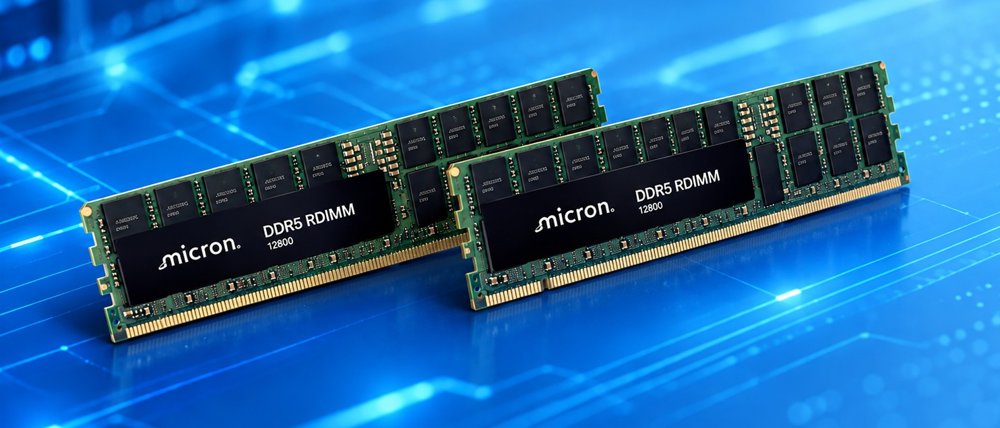
The October 2026 RAM market update from BuySellRam.com examines a memory market that remains under pressure, even as price movements become increasingly uneven across different generations and product categories. The report, RAM Market Update, provides a useful breakdown of retail memory prices, DRAM chip pricing, and supplier contract forecasts. Its central finding is that slower price increases do not necessarily signal a return to normal market conditions.
One of the most notable developments is the resurgence of DDR4 pricing. Although DDR5 has attracted greater attention because of its substantial year-over-year price increases, the latest monthly data suggest that older memory technology remains exposed to significant supply constraints.
According to the report, the lowest tracked prices for four of five DDR4 desktop memory kits increased between August 27 and September 28, 2026. A 32GB DDR4-3200 kit rose from $179 to $198, while a 64GB kit increased from $399 to $490, representing a 22.8% gain. Across the five tracked DDR4 kits, the average increase was approximately 10.2%.
DDR5 followed a less consistent pattern. Some kits appreciated, while others declined, leaving the ten-kit sample nearly unchanged overall. For example, a 32GB DDR5-6000 kit increased from $404 to $429, while a 32GB DDR5-6600 kit fell from $637 to $489.
These figures highlight an important distinction: a memory generation does not have a single market price. Capacity, speed, brand, availability, and the number of competing listings can all influence observed prices. Because the report tracks the cheapest available listings rather than comprehensive transaction averages, individual figures should be interpreted as market indicators rather than definitive valuations.
The report also notes that a separate 12-month comparison showed the average price of 64GB DDR5-6000 memory reaching $1,272 in August 2026, compared with $222 a year earlier—a reported increase of 473%. That figure illustrates the scale of the earlier price surge, but it should not be mistaken for a current October price or a universal increase across all DDR5 products.
The more significant finding may lie upstream in the DRAM chip market. Between August 31 and October 5, branded 16Gb DDR5 chips increased from $53.92 to $58.07 on the report's tracked spot-price series. Meanwhile, the mainstream branded 8Gb DDR4 reference chip rose from $44.37 to $46.32.
Not every chip followed the same direction. Branded 16Gb DDR4 declined from $91.78 to $83.59, while less expensive effectively tested (eTT) DDR4 chips recorded substantial increases. These mixed movements demonstrate why individual spot quotations should not be treated as direct measures of finished memory-module prices.
Supplier contract forecasts reinforce the broader picture. The report cites a projected 10–15% increase in conventional DRAM contract prices for the fourth quarter of 2026, following earlier quarterly increases. This is a forecast, not a confirmed final result. Nevertheless, it suggests that procurement costs may remain elevated even as the rate of increase slows.
The underlying challenge is the balance between supply and demand. Manufacturers are allocating resources across different memory products, including high-bandwidth memory for AI accelerators and conventional DRAM for servers, PCs, and mobile devices. Meanwhile, DDR4 production is contracting while a substantial installed base of older systems continues to require compatible replacement parts.
For enterprise IT departments, these conditions complicate both upgrade planning and hardware retirement. Replacing an entire server platform may require significant capital expenditure, particularly when newer systems also involve higher memory costs. Extending the useful life of existing DDR4 infrastructure can therefore remain economically attractive, provided performance, reliability, security, and software requirements are satisfied.
This creates an important opportunity for businesses managing surplus or decommissioned inventory. Organizations looking to sell DDR4 RAM should identify module specifications and quantities before requesting offers. Older memory is not automatically obsolete simply because a newer generation exists.
The same principle applies to organizations planning to sell DDR5 RAM. DDR5 pricing varies considerably by capacity and speed, so inventory should be documented accurately rather than valued using a single headline percentage.
However, rising retail prices do not guarantee equivalent increases in used-memory values. The report cites a separate Chinese trade-market observation in which used 16GB DDR4 modules had declined by more than 30% from their January peak by late July. Although this is a market-specific example, it demonstrates that new-product prices and secondary-market valuations can diverge.
For companies with larger inventories, a structured approach to sell memory can help recover value from surplus equipment while avoiding the assumption that every module commands the same price. Capacity, part number, ECC support, rank configuration, condition, and demand all matter.
The October report presents a market that is still adjusting to structural supply constraints rather than returning to stable pricing. DDR4's renewed gains demonstrate that older hardware can retain economic relevance when production declines faster than installed systems disappear. DDR5, meanwhile, remains expensive in many categories but shows more variation across individual products.
The next indicators to watch are sustained declines in DRAM spot prices, a reduction in supplier contract increases, and broader evidence that falling prices are attracting buyers rather than reflecting thin trading. Until those conditions emerge, enterprises should approach procurement, upgrades, and hardware disposal with product-specific data rather than relying on headline market averages.