
Noise complaints rarely show up on a facility's risk register until they become a compliance problem — a hotel guest complaint escalated to municipality inspection, a hospital ward failing an acoustic audit, or a diesel generator enclosure that draws objections from a neighbouring residential tower. By the time noise becomes visible as a problem, the fix is usually more expensive than it would have been at the design stage.
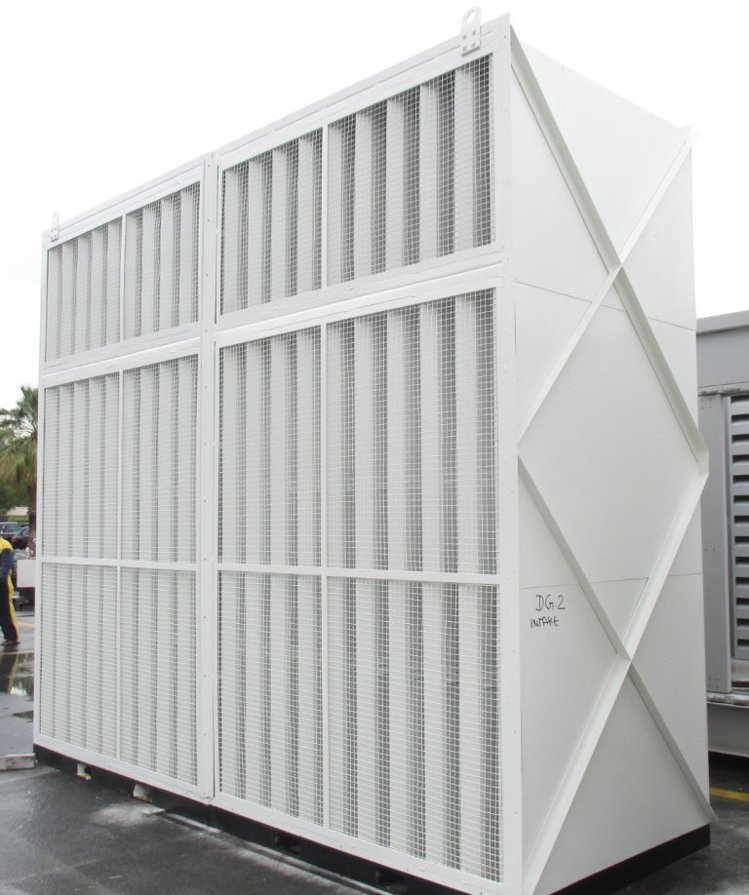
The vocabulary here trips people up. Acoustic attenuators are duct-mounted silencers — rectangular, circular, or elbow-type — that control fan and airflow noise inside HVAC ductwork before it reaches occupied spaces. An acoustic canopy, by contrast, is a full enclosure built around a noise source, most commonly a generator, to control noise at the source itself rather than in the ductwork downstream. A facility often needs both: a sound attenuated generator enclosure around the plant, and separate acoustic attenuators wherever that plant's ventilation ducting runs into occupied space.
An acoustic enclosure for generator installations — whether a bespoke build or a caterpillar sound attenuated enclosure matched to a specific Caterpillar genset — has to be sized around the unit's own heat output and exhaust back-pressure limits, not just a target decibel figure. Get the ventilation wrong on a caterpillar generator enclosure and you solve the noise problem while creating an overheating one; acoustic enclosures for generators need airflow and acoustic design solved together, not sequentially.
Generators get most of the attention, but acoustic enclosures for air conditioners — condenser units, chillers, and rooftop plant — follow the same underlying logic: enclose the source, manage the heat, don't choke the airflow the unit needs to function. Any facility searching for acoustic enclosure manufacturers in UAE for one type of plant noise is usually dealing with the same underlying problem for several pieces of equipment on the same roof.
· Acoustic canopy / enclosure — fully encloses a noise source to bring site-boundary noise down to a target limit.
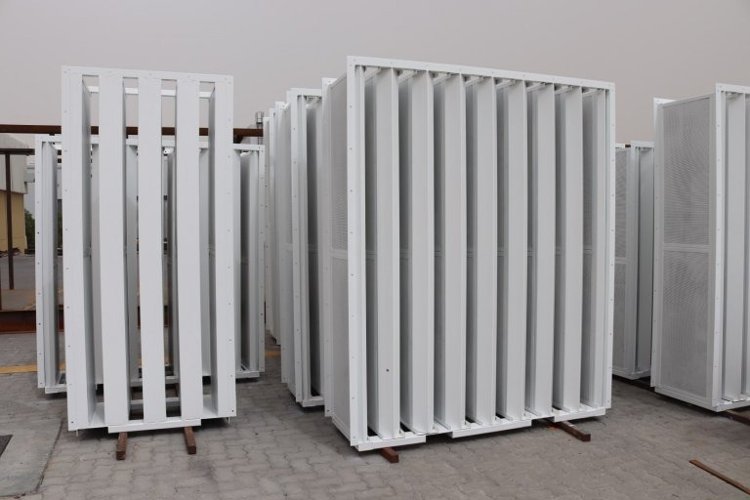
· Acoustic attenuators — duct-mounted silencers, referenced against ISO 7235 and ASTM E477 insertion-loss testing, and ASHRAE's NC-30/NC-40 space targets.
· Acoustic louvers — weather-rated intake/exhaust louvers that control noise at plant-room openings without blocking the airflow the equipment behind them needs.
In the Gulf specifically, acoustic design can't be separated from thermal and environmental design. An enclosure tight enough to hit an aggressive noise target can trap heat around a generator if ventilation isn't sized correctly, and material choice (galvanized steel, aluminium, or stainless) needs to account for coastal corrosion exposure as much as acoustic absorption. The facilities that get this right treat any acoustic enclosure for generator or air-conditioning plant as one part of a combined thermal/acoustic/corrosion brief, not a bolt-on afterthought.
About the contributor: This piece was contributed with input from Al Bahar Metal Cabinets & Enclosures Manufacturing (MCEM), a Dubai-based manufacturer of acoustic attenuators and sound-attenuated canopies for facilities across the UAE, Oman, Kuwait, Qatar, and Bahrain.