Automated Guided Vehicles Market Trends and Industry Outlook 2034
Across industries, the global automated guided vehicles market reflects strong transformation as companies adopt smart material handling solutions. The report explains market dynamics, innovation trends, investment patterns, competitive positioning, and evolving automation strategies. It highlights how digitalization, warehouse modernization, and safety requirements influence adoption across industries. The study also provides insights into business strategies, technology developments, regional demand patterns, and long term growth outlook.
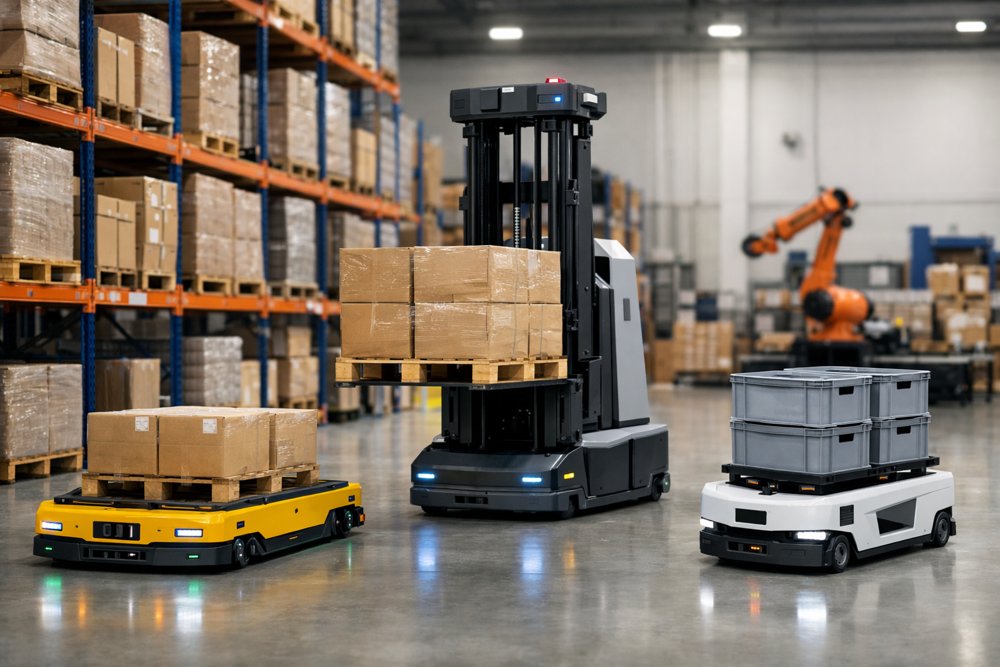
Market Size and Forecast
The market reached USD 6.39 Billion in 2025 and is projected to reach USD 13.66 Billion by 2034, growing at a CAGR of 8.81%. Increasing warehouse automation, digital supply chains, and productivity improvement goals are driving adoption. Businesses are shifting toward robotics based material handling to enhance efficiency and reduce operational risks.
The report includes insights into industry trends, innovation strategies, investment focus, and competitive positioning. It explains business opportunities, technology evolution, and regional demand patterns.
Market Snapshot
Ongoing innovation, growing logistics complexity, and expanding e commerce are encouraging adoption of automated vehicle solutions across industries.
Key Drivers
- Growing warehouse automation adoption
- Increasing focus on operational efficiency
- Expansion of e commerce logistics networks
- Rising demand for workplace safety
- Integration of robotics and smart software
Market Segmentation Overview
The market is divided into multiple categories that explain how automation solutions are designed, deployed, and used across industries. This segmentation provides clarity on technology adoption and operational requirements.
By Vehicle Type
Different vehicle designs support varied operational tasks across warehouses and manufacturing facilities.
- Tow Vehicle: Supports multi load transport operations and improves workflow efficiency.
- Unit Load Carrier: Enables controlled movement of individual goods across facilities.
- Pallet Truck: Improves pallet transport speed and warehouse productivity.
- Forklift Truck: Supports automated lifting and storage operations.
- Hybrid Vehicles: Provides flexible functionality across different tasks.
- Others: Covers additional specialized vehicle types.
By Navigation Technology
Navigation technologies enable safe and accurate vehicle movement.
- Laser Guidance: Offers high precision navigation for dynamic environments.
- Magnetic Guidance: Ensures stable routing in structured layouts.
- Vision Guidance: Enables adaptive navigation through camera systems.
- Inductive Guidance: Provides reliable path tracking through embedded infrastructure.
- Natural Navigation: Supports flexible movement without fixed paths.
- Others: Includes emerging navigation approaches.
By Application
Applications explain operational uses across logistics and manufacturing.
- Logistics and Warehousing: Supports inventory movement and order fulfillment.
- Assembly: Improves production line coordination.
- Packaging: Enhances workflow efficiency.
- Trailer Loading and Unloading: Automates dock operations.
- Raw Material Handling: Ensures consistent production supply.
- Others: Covers additional use cases.
By Industry
Adoption varies across sectors based on operational complexity.
- Manufacturing Sector: Uses automation for productivity and safety.
- Wholesale and Distribution Sector: Focuses on inventory and logistics efficiency.
By Component:
- Hardware: dominated the market in 2025, accounting for around 62.8% of the total share, driven by strong demand for physical systems, devices, and equipment integration.
- Software: held approximately 6% share, supported by analytics, monitoring platforms, and automation tools.
- Services: captured nearly 6% share due to growing need for installation, maintenance, and support.
By Battery Type:
- Lithium-Ion Battery: led the market in 2025 with about 54.7% share owing to high energy density and longer lifecycle.
- Lead Battery: accounted for around 25.3% due to cost advantages in conventional applications.
- Nickel-based Battery: represented nearly 4% share supported by niche industrial usage.
- Others: held roughly 6% share.
By Mode of Operation:
- Indoor: held the largest share in 2025 at around 58.9%, driven by warehouse, manufacturing, and facility-based deployments.
- Outdoor: accounted for approximately 1% share supported by logistics, construction, and field operations.
Key Players
The market is competitive with technology driven innovation.
- Daifuku Co., Ltd.: Offers integrated automation solutions for warehouses and manufacturing.
- Dematic: Provides intelligent logistics automation platforms.
- KION Group AG: Focuses on robotics and warehouse automation technologies.
- TOYOTA INDUSTRIES CORPORATION: Develops automated forklifts and logistics solutions.
- Swisslog Holding AG: Delivers robotic warehouse systems and software.
Companies are focusing on innovation, partnerships, and product expansion.
Regional Dynamics
Regional growth reflects industrial development and automation readiness.
- North America: High technology adoption and strong logistics infrastructure support growth.
- Europe: Smart manufacturing initiatives drive automation investment.
- Asia-Pacific: Rapid industrial expansion boosts demand.
- Latin America: Logistics modernization creates opportunities.
- Middle East & Africa: Infrastructure projects support gradual adoption.
Market Opportunities and Challenges
Opportunities
- Expansion of smart warehouses
- Growth of robotics integration
- Rising demand for flexible automation
- Increasing e commerce logistics
- Software driven optimization
Challenges
- High initial investment
- Integration complexity
- Infrastructure requirements
- Skilled workforce gap
- Maintenance costs
Future Outlook
The market is evolving with advanced robotics, software integration, and intelligent navigation systems. Companies are focusing on scalable automation solutions and flexible deployment models. Partnerships, product innovation, and digital transformation are shaping the competitive landscape. Increasing demand for efficient logistics and smart manufacturing will continue supporting long term growth while technology advancements improve accessibility and operational performance.
Information Source: https://www.valuemarketresearch.com/report/automatic-guided-vehicles-market
