
Scientists grapple with ethics in rush to release Ebola vaccines. Ebola Shot Turned Down by WHO Is Best Hope as Virus Rages. Blood Transfusions from Survivors Best Way to Fight Ebola. Treating Ebola patients with blood transfusions from survivors of the disease should be the immediate priority among all the experimental therapies under consideration for this outbreak, World Health Organization (WHO) experts said Friday after reviewing the status of all the potential experimental therapies and vaccines.
“We agreed that whole-blood therapies and convalescent serum may be used to treat Ebola virus disease and that all efforts must be invested into helping affected countries use them safely,” Marie-Paule Kieny, assistant director general for health systems and innovation at WHO told reporters. Ebola Drug 'ZMapp' Saves Infected Monkeys, Study Shows. An experimental drug called ZMapp, which contains a cocktail of three antibodies that fight the Ebola virus, has successfully treated 18 monkeys infected with the deadly disease, researchers reported today.
The new results raise hope that the drug may also work in people who are infected in the current Ebola outbreak in West Africa, the researchers say. On the basis of these results in monkeys, several human patients had recently received the latest drug, before the details of the study were published today (Aug. 29) in the journal Nature. "The success was great," co-author Gary Kobinger, chief of special pathogens at the Public Health Agency of Canada, told reporters at a news conference about the study. Una posible cura para la infección por el virus Ébola. Las fiebres hemorrágicas no son fáciles de contraer.
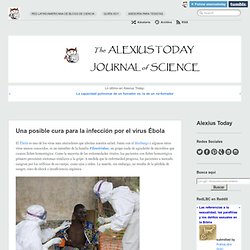
Su transmisión generalmente requiere el contacto prolongado con el paciente o con sus fluidos corporales. Las tasas de mortalidad dependen de la cepa viral particular. En el caso del ébola, la cepa más letal es Zaire, que puede matar hasta un 90% de los infectados. El peor brote se produjo en el Congo en 1976. Ese año, 318 personas fueron infectadas y 280 murieron, una tasa de mortalidad del 88%. Eso puede estar a punto de cambiar. La molécula, llamada BCX4430, se asemeja a la famosa “A” que se encuentra en el ADN: la adenosina. Espera un minuto, seguro que lo están pensando. El experimento más convincente del equipo de investigación examinó la infección de monos macacos cangrejeros con el mortal virus de Marburgo.
Como se muestra más arriba, todos los monos que no recibieron BCX4430 (con la etiqueta “vehículo”) murieron al día 12. Ebola Doctor Reveals How Infected Americans Were Cured. Last week two American aid workers who had contracted Ebola while working in west Africa were released from a U.S. hospital and pronounced “recovered.”
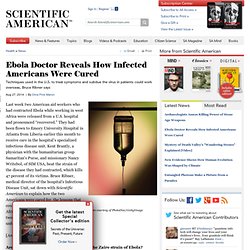
They had been flown to Emory University Hospital in Atlanta from Liberia earlier this month to receive care in the hospital’s specialized infectious disease unit. Kent Brantly, a physician with the humanitarian group Samaritan’s Purse, and missionary Nancy Writebol, of SIM USA, beat the strain of the disease they had contracted, which kills 47 percent of its victims. Researchers uncover how Ebola virus disables immune response. One of the human body's first responses to a viral infection is to make and release signaling proteins called interferons, which amplify the immune system response to viruses.
Over time, many viruses have evolved to undermine interferon's immune-boosting signal, and a paper published today in the journal Cell Host & Microbe describes a mechanism unique to the Ebola virus that defeats attempts by interferon to block viral reproduction in infected cells. El suero contra el ébola. WHO consults ethics experts on wider use of experimental Ebola drugs. Sustained protection against Ebola virus infection following treatment of infected nonhuman primates with ZMAb. With an Untested New Drug, Two Ebola Patients Are Experiencing "Miraculous" Recovery.
LiveSciHealth : "The thing about #Ebola is ... Ebola Virus: Why Isn't There a Cure? Ebola first appeared more than three decades ago, but there is still no cure or specific treatment for the disease, in part because the dangerous nature of the virus makes it difficult to study, experts say.
Since December 2013, an ongoing outbreak of Ebola in West Africa has infected at least 567 people in Guinea, Sierra Leone and Liberia, including 350 who died, according to the World Health Organization. MicroBIOblog : Infográfico sobre cómo funciona ... BloombergNews : Supply of #Ebola drug given ... Ebola Drug Supply Is Exhausted After Doses Sent to Africa. The Ebola drug given to two Americans and a Spanish priest has been sent to a West African country that requested it, and the supply of the medicine is now exhausted, its manufacturer said.
Mapp Biopharmaceutical Inc., based in San Diego, said it was told by U.S. health officials that the countries, including Nigeria and Liberia, had requested the drug, called ZMapp. Spain Imports Ebola Drug for Priest; Ethicists Weigh Use. Spain has received the experimental Ebola drug used on two American aid workers to treat a Spanish priest who came down with the fatal viral illness.
Nigeria and Liberia said they’ve also requested supplies of the medicine. The requests come as ethicists are weighing how best to use a limited supply of experimental medicines that have shown early promise in fighting a disease that’s killed almost 1,000 people this year. Spain obtained a dose of the drug known as ZMapp and is treating a priest who was brought to Madrid Aug. 7 from Liberia, the Spanish health ministry said over the weekend. A panel of ethicists convened by the World Health Organization today is considering whether drugs that haven’t been widely tested for safety should be used in an outbreak where about 40 percent of infected people survive with just supportive care.
Ebola Tobacco Drug Joins Duckweed in Plant War on Disease. On a small plot of land incongruously tucked amid a Kentucky industrial park sit five weather-beaten greenhouses.
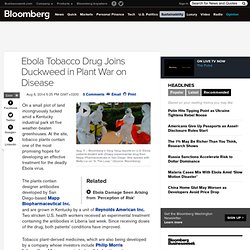
At the site, tobacco plants contain one of the most promising hopes for developing an effective treatment for the deadly Ebola virus. The plants contain designer antibodies developed by San Diego-based Mapp Biopharmaceutical Inc. and are grown in Kentucky by a unit of Reynolds American Inc. Two stricken U.S. health workers received an experimental treatment containing the antibodies in Liberia last week. Since receiving doses of the drug, both patients’ conditions have improved. Tobacco plant-derived medicines, which are also being developed by a company whose investors include Philip Morris International Inc., are part of a handful of cutting edge plant-based treatments that are in the works for everything from pandemic flu to rabies using plants such as lettuce, carrots and even duckweed.
Ebola 'Experimental Serum' in Limited Supply, CDC Says. The "experimental serum" that doctors gave to two American patients with Ebola is in very limited supply, and will not be available for general use, according to the Centers for Disease Control and Prevention.
Doctors reportedly gave the serum to two American health care workers who contracted the deadly virus while working to combat the Ebola outbreak in West Africa. The humanitarian organization Samaritan's Purse, which employs one of the patients, arranged to have the experimental treatment flown to Liberia, the CDC said. Both patients have since been brought back to the United States for treatment. Panel to Discuss Ethics of Experimental Ebola Treatment.
When Will We Have a Vaccine for Ebola Virus? The latest outbreak of Ebola virus in west Africa is the worst ever—as of Monday, it had infected more than 1,200 people and claimed at least 672 victims since this spring. Guinea, Liberia and Sierra Leone all have confirmed cases. An official at Doctors Without Borders has declared the outbreak as “totally out of control,” according to NBC News. Unfortunately, doctors have no effective vaccines or therapies. Health care workers can only attempt to support patients’ immune systems (regulating fluids, oxygen levels, blood pressure and treating other infections) to help the afflicted fight off the virus as best they can. A vaccine to help battle future Ebola outbreaks may be just a few years away, however.