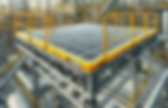
Fiberglass Reinforced Plastic (FRP) grating has revolutionized industries with its high strength, lightweight properties, and corrosion resistance. But what sets FRP grating apart is its ability to be fully customized to meet specific design requirements. Whether for industrial flooring, platforms, walkways, or architectural applications, FRP grating offers flexibility in size, shape, color, load capacity, and safety features.
In this article, we will explore how FRP grating can be customized, the benefits of tailored FRP grating solutions, and what industries benefit the most from these modifications.
FRP grating is a composite material made of reinforced fiberglass and a resin matrix, providing durability, corrosion resistance, and non-conductive properties. It is commonly used in industrial, marine, chemical, and construction applications.
There are two main types of FRP grating:
Customization is one of FRP grating’s biggest advantages. Here are the top ways FRP grating can be modified to meet specific project needs:
FRP grating can be cut into any size, shape, or configuration to fit unique applications. Whether you need circular cutouts, stair treads, or complex panel layouts, FRP can be fabricated accordingly.
Different resins provide different levels of chemical resistance, UV stability, and fire retardancy. Common resin options include:
Depending on the intended application, FRP grating can be designed with specific load ratings. Heavier-duty gratings are reinforced for higher foot traffic, machinery loads, and impact resistance.
FRP grating surfaces can be customized to improve traction and reduce slip hazards. Available surface options include:
FRP grating can be produced in various colors for safety coding, branding, or visibility purposes. Common colors include:
For safety-sensitive environments, FRP grating can be engineered to meet fire-retardant standards such as ASTM E84. It also remains non-conductive, making it ideal for electrical applications.
For industrial environments, FRP grating can include embedded signage, safety warnings, or directional indicators to improve workplace safety.
For outdoor applications, UV-resistant coatings can be applied to extend lifespan and reduce fading.
Customized FRP grating is used in various industries, including:
✔️ Perfect Fit for Any Project – No need for additional modifications or adjustments.
✔️ Enhanced Safety Features – Slip-resistant surfaces and safety colors reduce workplace accidents.
✔️ Long-Term Cost Savings – Durable and low maintenance, reducing long-term costs.
✔️ Lightweight & Easy to Install – Easier to handle and install than steel or wood.
✔️ Corrosion and Weather Resistance – Ideal for harsh environments.
To select the best FRP grating for your project, consider:
FRP grating is strong and durable and highly customizable to meet specific design requirements across multiple industries. Whether you need custom sizes, specific resins, fire-retardant features, or unique safety markings, FRP can be tailored to match your exact needs. To know more details, read this blog: <!--td {border: 1px solid #cccccc;}br {mso-data-placement:same-cell;}-->https://accessindustrial.com/en/Product/fiberglass-grating/
If you're looking for a cost-effective, corrosion-resistant, and maintenance-free solution, custom FRP grating is the perfect choice.
FRP grating is extremely durable, resisting corrosion, weather, chemicals, and heavy loads. With proper installation, it can last decades without deterioration.
Yes, FRP grating can be easily cut and installed on-site using standard power tools. However, it is often recommended to order pre-cut panels for precise fittings.
The initial cost of FRP may be higher than steel, but it offers long-term savings due to low maintenance, corrosion resistance, and lightweight installation.
Yes, custom FRP grating can be designed to meet OSHA, ASTM, and other safety standards with fire-retardant, anti-slip, and non-conductive properties.
FRP grating requires minimal maintenance. Routine cleaning with water and mild detergent keeps it in top condition. It does not rust or degrade like metal.
Yes! Architects and designers use custom FRP grating for decorative facades, fencing, and artistic installations.