
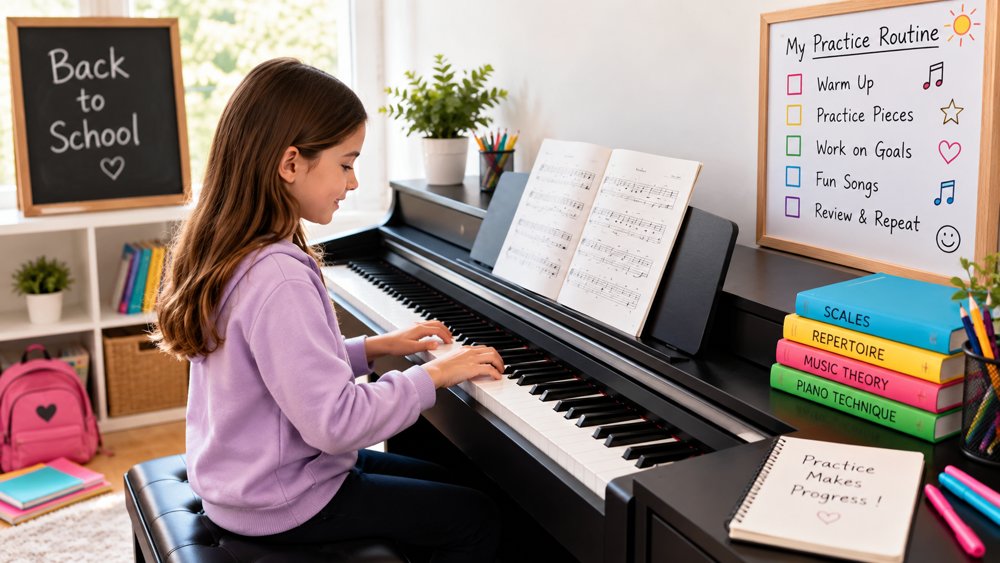
When summer ends, family life starts moving at a different pace. School mornings return, homework fills the afternoon, sports practices appear on the calendar, and weekends quickly become busy. For young pianists, this change can make it difficult to maintain the progress they made during<!--td {border: 1px solid #cccccc;}br {mso-data-placement:same-cell;}--><!--td {border: 1px solid #cccccc;}br {mso-data-placement:same-cell;}-->summer piano lessons. A practice routine that once felt easy may suddenly seem like another responsibility competing for their attention.
The good news is that children do not need to spend hours at the piano every day to develop their musical skills. A realistic, consistent practice schedule can help them improve their technique, strengthen their musical understanding, and enjoy playing even when schoolwork becomes demanding.
The key is to build a routine around your child's age, current ability, school schedule, and personal interests. Instead of treating piano practice as a task to finish, make it a familiar part of the day that encourages curiosity, discipline, and confidence.
Whether your child has recently started learning piano or has been taking lessons for several years, these practical strategies can help establish a back-to-school piano practice routine that remains manageable throughout the academic year.
Regular piano practice helps children retain what they learn during lessons. Musical skills develop through repetition, careful listening, and gradually correcting mistakes. When children practice consistently, they have more opportunities to reinforce finger coordination, improve rhythm, read musical notation, and become comfortable with new pieces.
A predictable routine also reduces the pressure of last-minute practice before a piano lesson or recital. Rather than trying to relearn an entire piece in one sitting, children can work on smaller sections over several days. This approach makes difficult passages easier to manage and helps them recognize their progress.
However, consistency does not mean following a rigid schedule regardless of how busy or tired a child feels. An effective routine leaves room for school projects, family activities, rest, and unexpected changes.
Before setting a schedule, consider your child's age, attention span, experience, and current piano goals. A beginner may benefit from short sessions focused on basic notes and simple melodies, while an experienced student may need more time to work on technique, sight-reading, and challenging repertoire.
As a general starting point, families can consider the following practice ranges. These are flexible suggestions rather than strict requirements.
The quality of practice matters more than the number of minutes alone. Ten focused minutes spent correcting a difficult measure can be more productive than half an hour of playing a piece repeatedly without paying attention to mistakes.
Ask your child's <!--td {border: 1px solid #cccccc;}br {mso-data-placement:same-cell;}-->music teacher Richmond Hill how much practice is appropriate for their current level. The goal is to establish a target that feels achievable on an ordinary school day, not just on a quiet weekend.
One of the most common reasons piano routines fall apart is poor timing. A child who arrives home hungry, tired, or overwhelmed by homework may struggle to concentrate on music immediately.
Look at your family's typical weekday schedule and identify a time when your child is usually alert and available. Some children enjoy practicing shortly after a snack, while others prefer to finish their homework first. There is no universal best time; the most effective choice is the one your family can maintain consistently.
Consider these options:
Try to connect piano practice to an existing daily habit. For example, your child might practice after their afternoon snack or before setting the table for dinner. Linking a new habit to a familiar activity can make it easier to remember.
Avoid scheduling practice so late that it interferes with sleep or becomes a source of frustration. If the usual time stops working, adjust it rather than abandoning the routine altogether.
Children often respond better when they know exactly what to do after sitting at the piano. A short, organized session gives each activity a purpose and prevents practice from becoming repetitive or confusing.
For example, a 15-minute session might include:
This is only a sample structure. A teacher may recommend a different balance depending on the student's level, technique, and current assignments.
For younger beginners, even a shorter session can follow the same general pattern. Start with something familiar, work on one small learning goal, and finish with an activity the child enjoys.
A clear structure also helps parents support practice without needing to teach piano themselves. You can remind your child to follow the plan, encourage careful listening, and celebrate effort without correcting musical details beyond your knowledge.
A weekly plan helps families prepare for busy school days before they happen. Instead of deciding when to practice each afternoon, agree on a schedule at the beginning of the week.
A simple plan might include short sessions on most weekdays, with a slightly longer review on the weekend if needed. If your child has several extracurricular activities, choose fewer but realistic practice opportunities rather than promising daily sessions that rarely happen.
For instance, a family might schedule piano on Monday, Tuesday, Thursday, and Saturday, leaving Wednesday and Friday more flexible. Another child may prefer shorter daily sessions. Both approaches can work when they reflect the student's needs and the teacher's expectations.
Use a paper calendar, family planner, or practice chart to make the plan visible. Children can mark completed sessions themselves, helping them develop responsibility for their musical learning.
The schedule should remain flexible enough to accommodate school examinations, holidays, illness, and family commitments. Missing one session does not mean the routine has failed. Simply return to the plan at the next suitable opportunity.
A comfortable, organized practice space can remove small obstacles that otherwise make it harder for children to begin.
Keep sheet music, lesson notes, pencils, and any assigned practice materials close to the instrument. Adjust the piano bench so your child can sit comfortably with appropriate posture, and make sure the keyboard area has enough light.
If your child uses a digital piano, check that the instrument is ready to play and that headphones, when needed, are accessible. For an acoustic piano, arrange regular tuning and maintenance as appropriate.
Reduce distractions where possible. A television playing nearby, a phone receiving notifications, or siblings competing for attention can make a short practice session less productive.
You do not need an elaborate music room. A quiet corner with a suitable instrument and organized materials is often enough to help a child settle into practice more easily.
When children struggle with a new piece, they may become discouraged and begin avoiding practice. One useful strategy is to divide the music into manageable sections.
Rather than repeatedly playing a complete song from beginning to end, encourage your child to identify a few difficult measures. They can slow down, check the notes and rhythm, and repeat the passage carefully before connecting it with the surrounding music.
A useful practice sequence is to:
Children should not be expected to solve every technical problem independently. If a passage remains difficult, encourage them to write down a question for their<!--td {border: 1px solid #cccccc;}br {mso-data-placement:same-cell;}-->piano teacher.
This approach helps children understand that mistakes are useful information. Progress often comes from identifying what needs improvement and making small, deliberate adjustments.
A broad goal such as "get better at piano" can feel overwhelming because it does not tell a child what to accomplish during today's practice.
Instead, choose a specific goal for each session. It might be playing four measures without stopping, maintaining a steady rhythm, remembering a particular fingering pattern, or learning the opening section of a new song.
Short-term goals create opportunities for children to notice improvement. Over time, these small achievements contribute to larger musical milestones, such as performing a complete piece or preparing for a recital.
Parents can help by recognizing effort and progress rather than focusing exclusively on perfect performance. Comments such as "You kept the rhythm steady today" or "You worked carefully on that difficult section" acknowledge the behaviors that support learning.
Avoid comparing siblings or classmates. Every child develops musical skills at a different pace, and comparisons can turn a positive activity into a source of unnecessary pressure.
A successful back-to-school routine should support a child's overall well-being. Piano practice is valuable, but it should fit alongside school responsibilities, physical activity, social time, and adequate rest.
Review the family's weekly calendar together. Identify especially demanding days and decide in advance how piano practice will fit around them. On days filled with sports, tutoring, or school events, a shorter session may be more realistic than the usual target.
If a child consistently feels overwhelmed, reconsider the schedule before increasing practice time. Sometimes the solution is to change the practice time, reduce distractions, simplify the weekly plan, or discuss expectations with the piano teacher.
It is also important to preserve enjoyment. Let children occasionally choose a favorite song or explore music outside their assigned repertoire, when appropriate for their level. This gives them a sense of ownership and reminds them that music is more than a series of exercises.
A schedule that works in September may need adjustment in November, January, or during the final weeks of the school year. Children's academic workloads, interests, and musical abilities change over time.
Spend a few minutes reviewing the routine each month. Ask your child which practice sessions feel easiest, what they find challenging, and whether they have noticed any progress.
Look for practical signs of improvement, including more confident playing, fewer repeated mistakes in familiar passages, better rhythm, or greater independence when preparing for lessons.
If practice has become inconsistent, identify the reason before introducing stricter rules. The problem may be scheduling, unrealistic expectations, fatigue, or difficulty understanding the assigned music.
Your child's piano teacher can also provide useful feedback about whether the current routine supports progress. Together, you can adjust practice goals to reflect the student's development and upcoming<!--td {border: 1px solid #cccccc;}br {mso-data-placement:same-cell;}-->musical activities.
Building a routine is only the beginning. The real challenge is maintaining it when the excitement of a new school year fades and family life becomes more demanding.
A simple practice chart can help younger children see their consistency. Record the date, practice duration, and one small achievement from each session. The achievement might be learning a new musical phrase or improving a rhythm.
Keep the chart encouraging rather than treating every missed day as a failure. A child's progress should not be measured solely by how many boxes are checked.
Older students may prefer setting weekly goals and reviewing their own progress. This encourages independence and helps them understand how deliberate practice contributes to improvement.
School concerts, examinations, holidays, and family travel can disrupt the usual schedule. Plan for these interruptions instead of assuming every week will look the same.
During particularly busy periods, follow the teacher's guidance about maintaining essential skills with shorter sessions. If practice becomes temporarily impossible, resume the routine when circumstances improve rather than trying to compensate with exhausting sessions.
Consistency over time is more sustainable when families recognize that routines can adapt without losing their overall purpose.
Piano lessons and home practice work best when they support one another. The teacher introduces musical concepts, demonstrates techniques, identifies areas for improvement, and assigns work suited to the student's level.
Parents can reinforce this process by helping children remember assignments and making practice time available. They do not need to become the instructor.
Encourage your child to tell the teacher when a passage feels confusing or when the practice schedule is difficult to maintain. This information can help the teacher clarify assignments, adjust goals, or recommend more effective practice strategies.
A child may make meaningful progress without mastering an entire song in a week. Improved hand coordination, more accurate note reading, stronger listening skills, and increased confidence are all valuable achievements.
Celebrate milestones that reflect the child's individual journey. These might include learning a first complete song, playing with both hands, performing for family members, or practicing independently for the first time.
When children feel that their effort matters, they are more likely to approach challenges with patience and curiosity. That attitude can support not only musical development but also the concentration and persistence they use in other areas of learning.
The following are sample review templates, not verified testimonials. Replace them with genuine feedback from parents who have consented to share their experiences before publishing.
Review 1: Building a Consistent Routine
"We found it easier to fit piano practice into our school schedule once we chose a regular time each afternoon. Shorter sessions also helped our child approach practice with less frustration."
— Parent of a beginner piano student
Review 2: Improving Confidence Through Small Goals
"Breaking difficult pieces into smaller sections helped our child feel more confident. Instead of worrying about the whole song, they could focus on one part and recognize their progress."
— Parent of an elementary school piano student
Review 3: Balancing Music and School Responsibilities
"Having a flexible weekly plan made piano practice easier to manage alongside homework and extracurricular activities. We learned that consistency matters more than trying to make every session perfect."
— Parent of a school-age piano student
A lasting back-to-school piano practice routine does not require a complicated timetable or long daily sessions. It requires realistic goals, a convenient practice time, a clear session structure, and enough flexibility to accommodate a child's changing needs.
Start with a schedule your family can maintain, help your child focus on small improvements, and work with their piano teacher to keep practice appropriate for their level. Review the routine as the school year progresses, making adjustments when homework, sports, or other responsibilities become demanding.
Most importantly, protect the enjoyment of making music. When children have the opportunity to develop skills at a manageable pace, celebrate their progress, and play songs they love, piano practice can become a rewarding habit that continues well beyond the first weeks of school.