
Social Norms? Twitter Users Follow the 79/7 Rule in the U.K. - 7% spent average 6h 17m on Twitter. Alex Burmaster, Communications Director, UK & EMEA, Nielsen’s online division The Pareto principle, more commonly known as the 80/20 rule, is the idea that roughly 80 percent of activity will be accounted for by 20 percent of the participants.
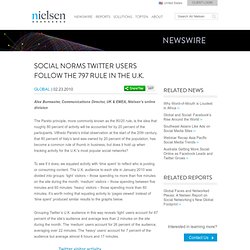
Vilfredo Pareto’s initial observation at the start of the 20th century, that 80 percent of Italy’s land was owned by 20 percent of the population, has become a common rule of thumb in business, but does it hold up when tracking activity for the U.K.' OECD energy statistics for July 2011. IEA has reported the energy statistics for July 2011 for the OECD For the year to date, nuclear generation is down 2.5% or about 15 Terawatt hours for the OECD.
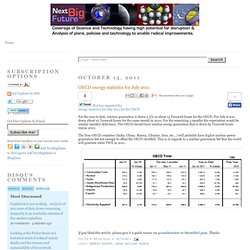
For July it was down about 10 Terawatt hours for the same month in 2010. For the remaining 5 months the expectation would be similar monthly deficiency. The OECD should have nuclear energy generation that is down 65 Terawatt hours versus 2010. The Non-OECD countries (India, China, Russia, Ukraine, Iran, etc...) will probably have higher nuclear power generation but not enough to offset the OECD shortfall. The Demographic Landscape of Social Networks. Study: Ages of social network users. Posted in Tech blog on February 16th, 2010 by Pingdom UPDATE: There is a more recent post available, Social network demographics in 2012.
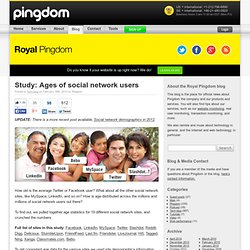
How old is the average Twitter or Facebook user? Twitter Users and Bloggers Open to More Than Earned Media. A key element that makes earned media trustworthy for many consumers is that it can’t be bought—it represents someone’s sincere opinion.
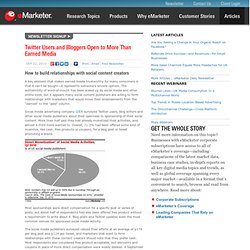
The authenticity of word-of-mouth has been scaled up by social media and other online tools, but it appears many social content publishers are willing to form relationships with marketers that would move their endorsements from the “earned” to the “paid” column. Social media advertising company IZEA surveyed Twitter users, blog writers and other social media publishers about their openness to sponsorship of their social content.
More than half said they had already monetized their activities, and almost a third more wanted to. Overall, 71.3% had been offered some kind of incentive, like cash, free products or coupons, for a blog post or tweet promoting a brand. Kommunikation – zweinull » Zahlen: Social Media Statistics & Facts 2010. $3.8B on Mobile Ads This Year Can’t Keep Up With Usage. Though mobile advertising is growing fast, it’s not yet keeping up with the growth of mobile usage.

Imran Khan of J.P. Morgan estimated today that $3.8 billion will be spent on the U.S. mobile web in 2010, up from $2.6 billion in 2009, but a whole lot less than the $25 billion in total U.S. online advertising for the year. Khan thinks mobile will follow a similar pattern as the web, where usage outpaced revenue until an inflection point at 30 percent broadband penetration. But the problem is, mobile Internet is growing even faster than desktop Internet, as the Morgan Stanley analyst Mary Meeker has detailed. Today 60 million Americans are actively using mobile Internet service. The J.P. For now, the vast majority of mobile advertising — $3.2 billion, or 85 percent — comes from SMS, which has the advantage of being accessible on nearly every phone. The more we tweet, the more addicted we get - Veteran Twitter Users Are Vocal.
Twitter is serving more than 1 billion tweets per month, and a recent study has credited veteran Twitter users (those who have micro-blogged for more than 9 months) as the main contributors.
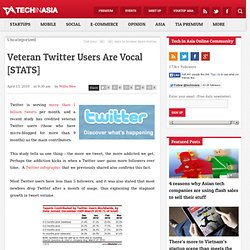
This study tells us one thing – the more we tweet, the more addicted we get. Perhaps the addiction kicks in when a Twitter user gains more followers over time. A Twitter infographic that we previously shared also confirms this fact. Most Twitter users have less than 5 followers, and it was also stated that most newbies drop Twitter after a month of usage, thus explaining the stagnant growth in tweet volume. Quantifying Social Results - Marketers split on whether social media will deliver measurability. It’s no secret that online marketers care about measurability.
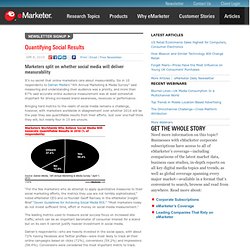
Six in 10 respondents to Datran Media’s “4th Annual Marketing & Media Survey” said measuring and understanding their audience was a priority, and more than 87% said accurate online audience measurement was at least somewhat important for driving increased brand awareness, revenues or performance. Two New Surveys Validate Companies Adoption of Social Media. Senior marketers are putting their money where our conversation has been -- on integrating social with their activities.

The Marketing Executives Networking Group (MENG) 3rd Annual Marketing Trends Study* and The CMO Survey undertaken by the Duke University Fuqua School of Business and the American Marketing Association results converged on the same trend: social media becoming a viable tool in a business marketing mix. Both reports also highlight the increased importance of social media to B2B companies (see eMarketer study summary). Note the increase in spending for the B2B services category and projected allocation in the next 12 months from August 2009 to February 2010. Youth Usage Drives Mobile Social Adoption World Wide. MobileYouth, the youth mobile marketing experts have released some interesting stats this week which highlight growing trends from around the world.

Interesting to see that the largest growth in mobile usage amongst youths is from secondary accounts. In 39 markets, mobile penetration rates across under 30's are above 100% — and in some areas (UAE and Qatar), above 200%. More Than One Billion Mobile Workers Worldwide by the End of 2010 - 129.5 mio in Western Europe until 2013. 21 February '10, 08:15pm Follow According to a recent study by IDC, a global provider of IT market intelligence, the world’s mobile worker population will pass the one billion mark by the end of this year.

By 2013, the total of office-based, non-office-based and home-based mobile workers will grow to nearly 1.2 billion people, representing more than a third of the world’s workforce. Average Social Gamer is a 43-Year-Old Woman. Rightly or wrongly, many people have a picture in their minds of the average online gamer, and it probably involves someone not yet old enough to vote, huddled in their parents’ basement killing dwarves with mystic powers in games like World of Warcraft.