

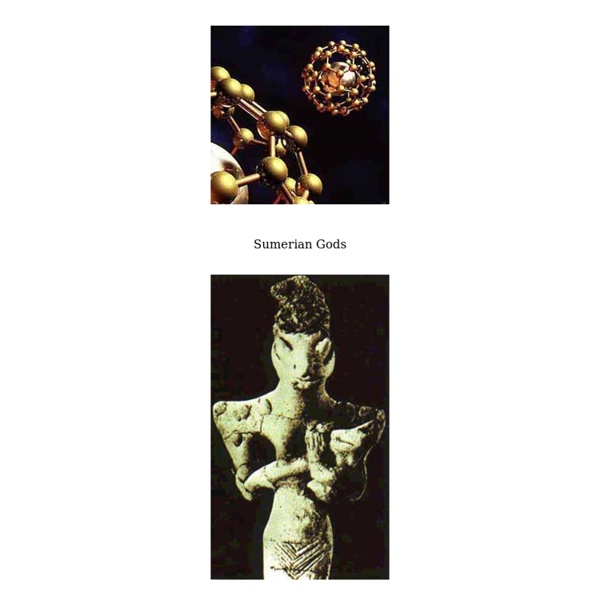
Paranormal, UFOs, Cryptids and Unexplained Phenomena Arguments can be made that the evidence for ancient astronauts comes from supposed gaps in historical and archaeological records, and they also maintain that absent or incomplete explanations of historical or archaeological data point to the existence of ancient astronauts. The evidence is said to include archaeological artifacts that are beyond the presumed technical capabilities of the historical cultures with which they are associated. This also includes artwork and legends that are interpreted as depicting extraterrestrial contact or technologies. Notwithstanding these contentions, let us say that there is an axiom to the ancient astronaut theory. Then we need to ask, who were these beings? What did they represent to the inhabitants of earth? I would like to periodically chronicle my speculation of how the native people interpreted these unknown entities. Anu possesses vast powers of an unknown nature, which seem to surpass the powers of any other Mesopotamian god.
There Were Giants Upon the Earth The following is excerpted from There Were Giants Upon the Earth: Gods, Demigods, and Human Ancestry: The Evidence of Alien DNA, available from Bear and Company. If you would like to learn more about this book or buy a copy, please do so here. Introduction And It Came to Pass And it came to pass, When men began to multiply on the face of the Earth and daughters were born unto them, that the sons of God saw the daughters of men that they were fair, and they took them wives of all which they chose. There were giants upon the Earth in those days and also thereafter too, When the sons of God came in unto the daughters of men and they bare children to them- the same Mighty Men of old, Men of Renown. The reader, if familiar with the King James English version of the Bible, will recognize these verses in chapter 6 of Genesis as the preamble to the story of the Deluge, the Great Flood in which Noah, huddled in an ark, was saved to repopulate the Earth. The schoolboy was I. Sumer: Where Civilization Began
List of mythologies This is a list of mythologies of the world, by culture and region. Mythologies by region[edit] Africa[edit] Central Africa[edit] East Africa[edit] Horn of Africa[edit] Somali mythology North Africa[edit] West Africa[edit] Southern Africa[edit] Arctic[edit] overlaps with North Asia, Northern Europe and North America. Asia[edit] Southwestern Asia[edit] Middle East, Persia, Anatolia, Caucasus. Ancient Medieval to Modern South Asia[edit] East Asia[edit] Southeast Asia[edit] Central and Northern Asia[edit] (overlaps with Eastern and Northern Europe) Australia and Oceania[edit] Europe[edit] Classical Antiquity[edit] Northern Europe[edit] Eastern Europe[edit] Southern Europe[edit] Western Europe[edit] North Caucasus[edit] Nart saga (Covers Abazin, Abkhaz, Circassian, Ossetian, Karachay-Balkar and Chechen-Ingush mythologies)Ossetian mythologyVainakh mythology (Covers Chechen and Ingush mythology) South Caucasus/Transcaucasia[edit] British Isles[edit] Americas[edit] Mesoamerica[edit] Caribbean[edit] Haitian mythology Bronze Age
Sumerian Myths Sumerian civilization originated in what is now southern Iraq, just upriver from the mouths of the Tigris and Euphrates rivers. "Civilization" in this context means a settled town or city-dwelling people who possess a stable agricultural technology (including domesticated animals) and have developed a hierarchical system of social classes (peasants, laborers, slaves, craftsmen [smiths, masons, carpenters, potters, etc.], farmers, fishermen, merchants, doctors, architects, priests and temple attendants, bureaucrats, scribes, advisers, priest-kings). Since the climate of southern Iraq is hot and dry, agriculture requires an extensive irrigation system of canals and dikes. Often, the Sumerians wrote as if their civilization (agricultural techniques, cities, classes of people) came first, and people later. (Why do you think they thought this way?) Map of Mesopotamian Archeological Sites (Oriental Institute, University of Chicago) The Creation of Humans Sumerian Creation Questions1. 2. 3. 4.
Enlil Enlil with his wife, Ninlil Origins[edit] Enlil was known as the inventor of the mattock (a key agricultural pick, hoe, ax or digging tool of the Sumerians) and helped plants to grow.[5] Cosmological role[edit] Enlil, along with Anu/An, Enki and Ninhursag were gods of the Sumerians.[6] Cultural histories[edit] Enlil is associated with the ancient city of Nippur, sometimes referred to as the cult city of Enlil.[7] His temple was named Ekur, "House of the Mountain At a very early period prior to 3000 BC, Nippur had become the centre of a political district of considerable extent. His chief temple at Nippur was known as Ekur, signifying 'House of the mountain'. Grouped around the main sanctuary, there arose temples and chapels to the gods and goddesses who formed his court, so that Ekur became the name for an entire sacred precinct in the city of Nippur. See also[edit] References[edit] External links[edit]
A Book of Creatures | A Complete Guide to Entities of Myth, Legend, and Folklore The Legendary Origins of Merlin the Magician Most people today have heard of Merlin the Magician, as his name has been popularized over the centuries and his story has been dramatized in numerous novels, films, and television programs. The powerful wizard is depicted with many magical powers, including the power of shapeshifting and is well-known in mythology as a tutor and mentor to the legendary King Arthur, ultimately guiding him towards becoming the king of Camelot. While these general tales are well-known, Merlin’s initial appearances were only somewhat linked to Arthur. Merlin the wizard. It is common belief that Merlin was created as a figure for Arthurian legend. Merlin was created as a combination of several historical and legendary figures. In Geoffrey’s version of the story, he includes a long section containing Merlin’s prophecies, along with two other stories, which led to the inclusion of Merlin into Arthurian legend. A giant helps Merlin build Stonehenge. Sources: The Many Faces of Merlin – Timeless Myths.
Anu - www.GatewaysToBabylon.com The name of the Mesopotamian Skyfather and Lord of Firmament, or the Great Above, is written with the sign that means heaven. It also stands for the determinative of divinity in Sumerian, Akkadian, and Hittite. In Babylon, He is called Anu. According to the Southern Creation Myth, or the Eridu Model, He (the Firmament) and Ki came into being out of Nammu, the Sea, the Primeval Mother of all for the Sumerians. Ki, the Earth, was his sister-beloved since the time of conception, when they lay in each other´s arms within Mother Nammu. Later, when Heaven and Earth were separated by Enlil, the young Air God, Ki´s and Anu´s firsborn, from the Heights Above where He found his sacred space, Anu came down to Ki (the Living Earth) to make life grow. Anu is therefore Lord of Creation, whose main symbol, the horned crown, is also the symbol of the king and the high priest, or Supreme Authority over all realms. The antiquity of An as a divine personality is subject to controversy.
The Norse Mythology Blog | Articles & Interviews on Myth & Relgion Enki A large number of myths about Enki have been collected from many sites, stretching from Southern Iraq to the Levantine coast. He figures in the earliest extant cuneiform inscriptions throughout the region and was prominent from the third millennium down to Hellenistic times. Attributes[edit] Myths of Enki[edit] Enki and Ninhursag and the Creation of Life and Sickness[edit] The cosmogenic myth common in Sumer was that of the hieros gamos, a sacred marriage where divine principles in the form of dualistic opposites came together as male and female to give birth to the cosmos. "The land of Dilmun is a pure place, the land of Dilmun is a clean place, The land of Dilmun is a clean place, the land of Dilmun is a bright place; He who is alone laid himself down in Dilmun, The place, after Enki is clean, that place is bright" "Her City Drinks the Water of Abundance, Dilmun Drinks the Water of Abundance, Her wells of bitter water, behold they are become wells of good water, Enki and the Making of Man[edit]
Germanic Mythology: Texts, Translations, Scholarship Sumerian King List The Sumerian King List is an ancient manuscript originally recorded in the Sumerian language, listing kings of Sumer (ancient southern Iraq) from Sumerian and neighboring dynasties, their supposed reign lengths, and the locations of "official" kingship. Kingship was believed to have been handed down by the gods, and could be transferred from one city to another, reflecting perceived hegemony in the region.[1] Throughout its Bronze Age existence, the document evolved into a political tool. Its final and single attested version, dating to the Middle Bronze Age, aimed to legitimize Isin's claims to hegemony when Isin was vying for dominance with Larsa and other neighboring city-states in southern Mesopotamia.[1][2] Composition[edit] Sources[edit] The following extant ancient sources contain the Sumerian King List, or fragments: The first two sources (WB) are a part of the "Weld-Blundell collection", donated by Herbert Weld Blundell to the Ashmolean Museum. The list[edit] Dynasty of Awan[edit]
IRISH LITERATURE, MYTHOLOGY, FOLKLORE, AND DRAMA Irish Writers OnlineIrish PlayographyStudy Ireland: Poetry - BBCIrish Women Writers - M. OckerbloomIreland Literature GuidePoetry Ireland / Éigse ÉireannEarly Irish Lyric Poetry - Kuno MeyerSonnets from Ireland - E. BlomquistColum's Anthology of Irish Verse - Bartleby.comBREAC - Digital Journal of Irish Studies Medieval Celtic ManuscriptsThe Book of KellsCarmina GadelicaCELT Irish Electronic Texts Irish Writers OnlineIreland Literature ExchangeBibliography of 19th-c. Irish Literature - J.M. Jonathan SwiftJonathan Swift ArchiveJonathan Swift Biography - IncompetechGulliver's Travels - U. Bram StokerDraculaBram Stoker Biography - Classic Literature LibraryBram Stoker's Dracula - Carstens smith Oscar WildeThe Official Home Page of Oscar WildeWilde Biography - BBCOscar Wilde OnlineCELT: Oscar WildePoetry of Oscar Wilde - Bartleby.com George Bernard ShawShaw Biography - C. William Butler YeatsYeats Biography - Poetry FoundationCollected Poems - W. Donn ByrneByrne Biography - J. Fine Art Oisín