Alkaline Rich Foods: Photos of ONE Serve of Alkaline-Rich Foods
Ever since I released my Definitive List of Alkaline Foods and then followed this up with my now, officially, ‘wildly popular’ 7 Most Alkaline Rich Foods guide I’ve been inundated with questions from you lovely people asking me more questions about how to start the alkaline diet, and how to live alkaline. This is brilliant. It’s why I’m here. It’s why I spend hours and hours every week writing for you and answering your questions! As I discussed in my review/breakdown of the excellent ‘Hungry for Change’ movie that was released last week, my whole approach to getting healthy, getting alkaline and STAYING alkaline is based around three key things: DON’T try to be perfect – it’s unrealistic, unreasonable and doomed for failure. We all know we have to eat more fresh vegetables (especially the leafy ones) but it seems daunting and intimidating to try and eat (at least) five serves per day. By the end of this guide you’ll realise just how easy this makes the alkaline diet. 1. The Exception… 1.
7 most alkaline foods
Food pH - pH of Alkaline Foods
The relative alkalinity or acidity of food is measured by the pH value of the ash residue that remains after the food has been metabolised by our body. This ash can be acid, alkaline or neutral depending largely upon the mineral content of the food. As a basic rule - potassium, calcium, magnesium, zinc, silver, sodium and iron leave an alkaline residue while sulphur, chlorine, phosphorous and iodine create an acid environment. The foods that are either alkalising or acidifying are very easy to categorise. The confusing food for many people is fruit.
Food pH List - Balancing Acid/Alkaline Foods
A surprising number and variety of physical problems and diseases can be caused by the problem of foods that are acid-producing after digestion. Today the vast majority of the populace in industrialized nations suffers from problems caused by the stress of acidosis, because both modern lifestyle and diet promote acidification of the body's internal environment. The current typical Western diet is largely composed of acid-forming foods (proteins, cereals, sugars). Alkaline-producing foods such as vegetables are eaten in much smaller quantities. Stimulants like tobacco, coffee, tea, and alcohol are also extremely acidifying. Many foods are alkaline-producing or neutral by nature, but manufactured processed foods are mostly acid-producing and these are the ones most heavily advertised in the media, and filling the shelves of supermarkets. It is important to consume at least 60% alkaline-producing foods in our diet, in order to maintain health. What is the body's pH? Help with Weight Loss
Alkaline Foods and Acid Foods.
I heard pH this and pH that for a long time before I REALLY understood how important pH is. I learned through caring for my plants. It took a greater time for me to realize how and why pH is so vital for whole body health. From a reader: In my family, I'm known as the one who researches everything. "And God saw everything He had made, and, behold, it was very good..." pH-inding the Right Balance At the first mention of acidity and alkalinity, eyes glaze over. The Basics Every solution is either acidic or alkaline. Keeping our acidity and alkalinity balanced means regulating the hydrogen ion concentration in our body fluids. The Misconceptions Foods are classified as acid-forming or alkalizing depending on the effect they have on the body. Another misconception is that acid-forming foods are "bad." Common acid-forming foods include processed junk foods and those that are high in animal protein. The Problem Others concur with Airola. The Solution Further Reading Colbin, Annemarie. 1986.
List of Alkaline and Acid foods-INDIAHOME CLUB
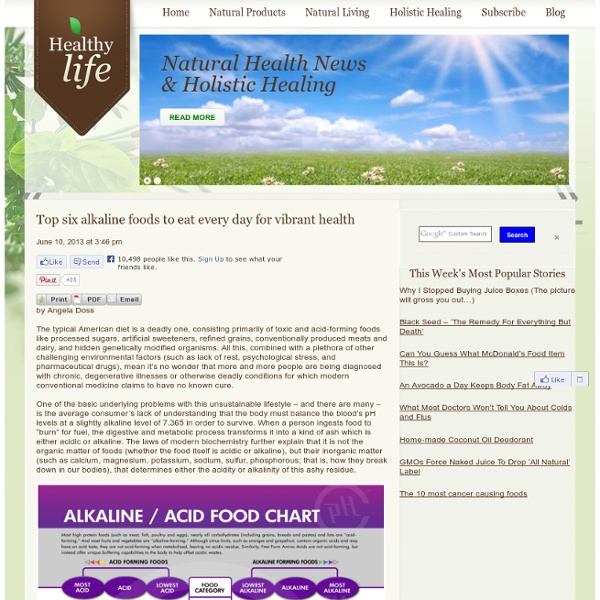
List of Alkaline and Acid foods Following "Alkalizing" and "Acidifying" foods chart is not exhaustive but can be used as an everyday guide while on your pH balancing journey. This chart is intended only as a general guide to alkalizing and acidifying foods. Vegetables are much less alkalizing when cooked , processed or canned as they lose vital minerals and enzymes. Note that a food's acid or alkaline-forming tendency in the body has nothing to do with the actual pH of the food itself. The following food pH charts below provide some more insight into which foods are alkaline and which are acid. source: "Back To The House Of Health" by Shelley Redford Young
Alkaline Diet | Eat Alkaline and Green Food to Balance Body pH!
ph-acid-alkaline-food-chart
Testing your ph is done with what is called a pH strip. The proper strip to purchase for testing both saliva and urine is one that is a "NARROW " or "SHORT" range pH strip. This means that the calibration on the strip goes from about 4 to 9. A Strip that has a calibration from say 1 to 14 is considered to be a "WIDE" or "LONG" range strip. This type of pH strip is used primarily for testing water from aquariums to pools. Do not use these types of strips for testing saliva or urine as the reading will not be accurate. An acidic pH can occur from, an acid forming diet, emotional stress, toxic overload, and/or immune reactions or any process that deprives the cells of oxygen and other nutrients. The reason acidosis is more common in our society is mostly due to the typical American diet, which is far too high in acid producing animal products like meat, eggs and dairy, and far too low in alkaline producing foods like fresh vegetables. Remember, the key here is BALANCE.
Food PH Chart - Most Alkaline and Acidic Foods
Balanced body chemistry is of utmost importance for the maintenance of health and correction of disease. Acidosis, or over-acidity in the body tissues, is one of the basic causes of many diseases, especially the arthritic and rheumatic diseases. All foods are "burned" in the body--more commonly called "digested"-- leaving an ash as the result of the "burning", or the digestion. This food ash can be neutral, acid or alkaline, depending largely on the mineral composition of the foods. Some foods leave an acid residue or ash, some alkaline. It is, therefore, vitally important that there is a proper ratio between acid and alkaline foods in the diet. A healthy body usually keeps large alkaline reserves which are used to meet the emergency demands if too many acid-producing foods are consumed. For optimum health and maximum resistance to disease, it is imperative that your diet is slightly over-alkaline. All vegetable and fruit juices are highly alkaline. Additional Charts: