

Japanac u Zagrebu - banka.hr Bankamagazin Objavljeno 09.52, 01.07.2011. Piše Željko Ivanković, glavni urednik Banke U četvrtak, 30. lipnja časopis Banka organizirao je u Zagrebu, u Novinarskom domu, predavanje japanskog veleposlanika Yoshia Tamure: Rebirth of Japan & a brief Review of Croatian Economy (Ponovno rođenje Japana & kratki pregled hrvatskog gospodarstva). Iako je predavanje bilo na engleskom i u vrijeme kad su godišnji odmori već počeli, posjet je bio dosta dobar. Rijetko koji od oko sedamdeset-osamdeset posjetilaca napustio je dvoranu prije kraja sat i četvrt dugog predavanja, premda ozvučenje nije najbolje funkcioniralo, a i veleposlanik Tamura nije uvijek govorio u mikrofon. Nakon predavanja, većina od onih s kojima sam razgovarao bila je zadovoljna, neki i jako. Pitanje je, naime, koliko su se zapravo razumjeli, odnosno koliko Hrvati uopće žele razumjeti ono što Japanci govore. Nedavno je na televiziji Marijana Petir, zastupnica HSS-a, govorila o tome "da treba uzeti u obzir da je Hrvatska prošla rat".
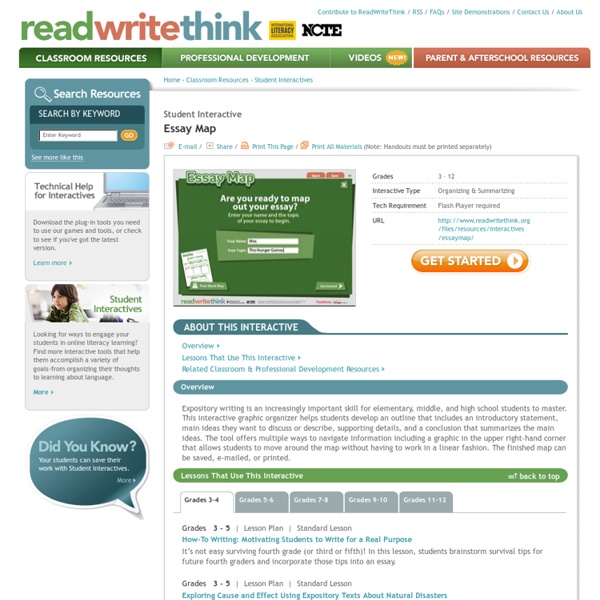
essay format A Basic Essay Format A good way to approach an essay is to envision it as a Five Part project. An essay is made up of the Introduction, Three main points (the body), and the Conclusion. So it looks like this: I. Introduction II. Of course depending on the length and breadth of your paper you may have more than three main points. The Intro… An Introduction should answer three questions 1. The Body… The Body consists of everything between your intro and conclusion and it is where you discuss your three main points. · Introduce your point · Explain your point · Give supporting evidence (this is where quotes go!) The Conclusion… Basically, the conclusion restates the introduction. POINT ONE+POINT TWO+POINT THREE=THESIS OR POINT ONE leads to POINT TWO which leads to POINT THREE therefore THESIS is true! So, when planning your essay consider this format: I. Organization in a paper is important not only because it makes the paper easier to write, it also guides the reader through the paper. Home
The Eight Elements of TQM-Framework How to Write an Essay Introduction (with Sample Intros) Steps Part 1 Building a Concise Introduction <img alt="Image titled Write an Essay Introduction Step 1" src=" width="728" height="546" class="whcdn">1Start with an example. <img alt="Image titled Write an Essay Introduction Step 6" src=" width="728" height="546" class="whcdn">6Transition into your first paragraph to wrap everything up. Part 2 Prewriting For Your Introduction <img alt="Image titled Write an Essay Introduction Step 7" src=" width="728" height="546" class="whcdn">1Think about your “angle” on your topic. Part 3 Tips
Total quality management Total quality management (TQM) consists of organization-wide efforts to install and make permanent a climate in which an organization continuously improves its ability to deliver high-quality products and services to customers. While there is no widely agreed-upon approach, TQM efforts typically draw heavily on the previously-developed tools and techniques of quality control. TQM enjoyed widespread attention during the late 1980s and early 1990s before being overshadowed by ISO 9000, Lean manufacturing, and Six Sigma. History[edit] In the late 1970s and early 1980s, the developed countries of North America and Western Europe suffered economically in the face of stiff competition from Japan's ability to produce high-quality goods at competitive cost. Development in the United States[edit] From the Navy, TQM spread throughout the US Federal Government, resulting in the following: Features[edit] The key concepts in the TQM effort undertaken by the Navy in the 1980s include:[11] Joseph M. [edit]
If You Teach or Write 5-Paragraph Essays–Stop It! | The White Rhino: A Chicago Latino English Teacher Part I: Introduction--What inspired my argumentative response? For decades, too many high-school teachers have been instilling persuasive writing skills by teaching students the five-paragraph essay. You know it: Introduction with three reasons Reason #1 Reason #2 Reason #3 A summary of all three reasons It's bad writing. The five-paragraph essay is rudimentary, unengaging, and useless. If I were using five paragraphs to convince you, based on the argument above, you wouldn't need to read any farther. Aristotle became one of the godfathers of rhetoric by creating structures for persuasive writing and speaking that--if taught to young people today--would transform writing instruction and facilitate the implementation of the Common Core, proving that students--when guided appropriately--can succeed with critical thinking in the 21st century. Part 2: Background--What preceded my argument and / or what needs to be clarified? Part 3: Confirmation--What supports my argument? I know.
Six Sigma vs. Total Quality Management May 28, 2007 | Author: PM Hut | Filed under: Quality Management Six Sigma vs. Total Quality Management By Tony Jacowski Six Sigma is a relatively new concept as compared to Total Quality Management (TQM). However, when it was conceptualized, it was not intended to be a replacement for TQM. Both Six Sigma and TQM have many similarities and are compatible in varied business environments, including manufacturing and service industries. Total Quality Management Total Quality Management is often associated with the development, deployment, and maintenance of organizational systems that are required for various business processes. Comparison To Six Sigma In comparison, Six Sigma is more than just a process improvement program as it is based on concepts that focus on continuous quality improvements for achieving near perfection by restricting the number of possible defects to less than 3.4 defects per million. The basic difference between Six Sigma and TQM is the approach. Conclusion
College: 10 Step Guides - How to Write a Winning Scholarship Essay You've spent who-knows-how-long finding scholarships. You've searched through books and the Internet, you've contacted local organizations and spoken to your counselors. You have a list of awards that are perfect for you. Now it's time to actually win the money. To do so, you will need to fill out applications and more likely than not, write an essay. As with applying to college, the scholarship essay can either make or break your chances of winning. Make sure your essay fits the theme. Let's say that you are applying for an award based on community service. So how do you know what the theme of your essay should be? The theme of your essay is almost always determined by the purpose of the award or why the organization is giving away the money. Once you know this, you can choose which aspect of your life to highlight in the essay. Answer the underlying question. Have you ever been asked one question but felt there was an underlying question that was really being asked? Share a slice of life.
The Three Windows of Opportunity A new book, Made in China, delivers lessons learned by Chinese entrepreneurs in the rugged and dynamic environment of that country. This excerpt zeros in on determining if your timing is right: Is the window of opportunity open? by Donald N. Sull with Yong Wang Editor's note: We all know the stories of famous American entrepreneurs such as Henry Ford, Andrew Carnegie, and Bill Gates. Three windows of opportunity Golden opportunities hold out the promise of great rewards but generally require risky concentration of resources without the benefit of knowing whether the bet will pay off. These questions of whether the customer need is real and the potential market big enough to constitute a golden opportunity are critical. The reality of golden opportunities, however, is more complicated. Is the market poised to take off? [ Buy this book ] Footnotes: 1. 2. 3. 4.
How to Tackle College Application Questions - The College Admissions Insider As the college application season grows nearer, students and their parents are beginning to raise good and important questions relating to their preparations. The following is a sampling of those questions. I am applying to mostly small Northeast liberal arts schools and plan to major in English (more than 80 percent sure). Is it more beneficial to my chances of gaining admission if I put down "undecided" for my major, or should I declare English? Liberal arts colleges assume their entering students are, to some degree, undecided and that most will change their minds about majors once enrolled. As you pull together your application, the next step is to demonstrate your passion for English as a discipline. [Find out when you should choose a major.] When my kid is asked on applications about the other colleges to which she is applying, it makes me anxious. Your daughter should not feel obligated to provide colleges with any information regarding the other places to which she is applying.