

Five tips for designing effective online learning modules Online learning makes it easy for students to learn what they need to move ahead in their training, courses, or careers. Whether you're designing your original content in Word, PowerPoint, or Excel, when you add it to a Learning Content Management System (LCMS), the way you organize your content can help students learn the material successfully. The learning modules you design will be effective for students if you create a logical structure, reinforce key concepts, and add exercises at just the right points to help students evaluate their own learning. 1: Outline your session Perhaps the most important element in an effective online learning module is the way in which it is organized. 2: Create sections for major steps in the process Design your learning module so that each major task is its own section. 3: Make your introductions clear The introduction of your learning model sets the stage for everything that follows. 4: Reinforce the learning in each section with exercises
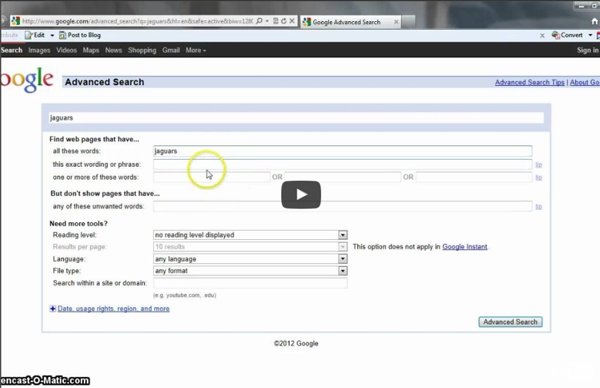
The Power of Google By Delano Taylor|source: Feb 22nd, 2012 Google.com is pretty self explanatory. Right? If you said yes, there’s a good chance you’re not using Google to its full potential. Recently, I found that there’s this complete underground world of mind-blowing search tools for Google, never before mentioned to me. The infographic says that three out of every four students couldn’t perform a “well-executed search”. With midterm papers beginning to breath down my back, this information will be quite beneficial. 11k 11 Hilarious Hoax Sites to Test Website Evaluation In this day and age, where anyone with access to the internet can create a website, it is critical that we as educators teach our students how to evaluate web content. There are some great resources available for educating students on this matter, such as Kathy Schrock’s Five W’s of Website Evaluation or the University of Southern Maine’s Checklist for Evaluating Websites. Along with checklists and articles, you will also find wonderfully funny hoax websites, aimed at testing readers on their ability to evaluate websites. These hoax sites are a great way to bring humor and hands-on evaluation into your classroom, and test your students’ web resource evaluation IQ! Check out these 11 example hoax sites for use in your own classrooms: Of all of these, my favorite is always the Dihydrogen Monoxide website, which aims to ban dihydrogen monoxide and talks in detail about its dangers. Happy hoax-hunting! Like this: Like Loading...
Innovations in Education » Understanding Content Curation July 7, 2012 Come to my session at ISTE 2016: “Personalize Learning With Student Curation” 6/28 4:00 – 5:00 CCC 113, Table 2 There are many buzzwords and phrases prevalent in education today. “21st Century Learning”, “Blended Learning”, “Personalized Learning”, “Flipped Classroom” – just to name a few. The one that has recently caught my attention and curiosity is “content curation.” I manage a grant project in my district designed to assure students acquire “21st century skills” A current strategy for this is using backwards design, formative assessments of 21st century skills, and “blended-learning.” This curiosity led to further questions: Why curate? Collecting vs. I set out to read as much as possible of what others have written on the subject, (see my Scoop-It on Curating Learning Resources) to help with my understanding. Defining Curating in Education by Nancy White is licensed under a Creative Commons Attribution 4.0 International License. Thinking Level Process Organization Value
17 of the Best Content Curation Tools to Use in 2015 Creating content for multiple platforms each and every day can be taxing for even the most skilled copywriter. It means coming up with fresh, interesting content constantly to provide great resources for your clients, but I know that we all can have a rough time at it if we go it alone and don’t do content curation. So how do you exactly go about curating excellent content? Do you just use Google? What if Google does the unthinkable and fails when you are looking for content? Why Do You Need to Do Content Curation? Content curation seems like it might be a bit extraneous at first because you know your topics right now, and you know adequate information about them. Remember, when you are curating content, you are only looking for content to gain inspiration from, not to copy. The Top 17 Awesome Content Curation Tools to Use “Ok, content curation is important, now what?” Trap.It. In the End, When it Doubt Follow Industry Blogs and Use Social Media Photo credit: rzoze19 / iStock
Super Teacher Tools Content Curation Primer Photo by Stuck in Customs What is Content Curation? Content curation is the process of sorting through the vast amounts of content on the web and presenting it in a meaningful and organized way around a specific theme. The work involves sifting, sorting, arranging, and publishing information. Content curation is not about collecting links or being an information pack rat, it is more about putting them into a context with organization, annotation, and presentation. People and organizations are now making and sharing media and content all over the social web. Content Curation Provides Value from the Inside Out What does that mean for nonprofits and the people who work for them? For some staff members, content curation can be professional of learning. The biggest challenge to becoming a content curator is getting past the feeling of “content fried” or so much good content and so little time to digest it. The Three S’s of Content Curation: Seek, Sense, Share Getting Started
21st Century Librarian A New Way of Looking at Public Library Engagement in America The Pew Research Center’s Internet Project has intensively studied the changing world of public libraries for the last three years. The first stage of our research explored the growing role of ebooks, including their impact on Americans’ reading habits and library habits. Our second stage examined the full universe of library services, as well as what library services Americans most value and what they might want from libraries in the future. In March, we released a report from our third and final stage of research—the fruits of a representative national survey of 6,224 Americans ages 16 and older. provision of digital content is certainly a key element of the services that make libraries useful. This approach is a little new for us. Instead, we used statistical analysis to cluster individuals into groups based on their usage of, views toward, and access to libraries, in order to discover larger insights about how libraries fit into American culture. Other insights in the data
THE PIPELINE: Influence--7 Rules (And You Can’t Just Do One!) They always say that in polite company we don’t talk about politics, religion, or sex. Because, well, it runs the risk of offending someone and sparking fights and passionate opinion. I never believed that, and I love engaging in the good fight for the rights associated with the basic human condition. That said, when we talk about school library funding, you can get a similar reaction. In today’s world, access to information, learning, and technology is a human right in an advanced civil society and especially in a democracy where an informed and educated electorate is critical. Nearly everything we do requires more influence and oversight than it used to. So, here’s a short list of what leaders have built and tried in our profession to influence the success of libraries for learners: 1. Lord knows we have impact studies coming out of the horn of plenty like a tornado spins off cows. 2. We’re seeing some great videos that capture the role of libraries in schools. 3. 4. 5. 1. 2. 3. 4. 5.
6 elements of a successful iPad implementation By Samantha Messier and Stephanie Schroeder 11/17/2014 Topics: Mobile Learning, 1-to-1, Professional learning As more districts across the United States move to 1:1 initiatives, a common barrier is financial resources, and a common temptation is to regard these initiatives as technology enterprises rather than instructional transformations. In a three-year pilot project, the Boulder Valley School District (BVSD) addressed these challenges by implementing a creative approach designed to entice public funders by providing all students with equitable access to digital devices. A key feature of our model was synergy among multiple, interdependent program elements: Community engagement A strong instructional model Digital devices and apps for students Logistical support Guidance toward high-leverage resources Ongoing, embedded professional development None of these elements alone is sufficient. 1. We also made every effort to include one of the most important stakeholder groups: parents.
MLA Formatting and Style Guide Coming Soon: A new look for our same great content! We're working hard this summer on a redesign of the Purdue OWL. Worry not! Our navigation menu and content will remain largely the same. Summary: MLA (Modern Language Association) style is most commonly used to write papers and cite sources within the liberal arts and humanities. Contributors: Tony Russell, Allen Brizee, Elizabeth Angeli, Russell Keck, Joshua M. The following overview should help you better understand how to cite sources using MLA eighth edition, including the list of works cited and in-text citations. Please use the example at the bottom of this page to cite the Purdue OWL in MLA. Creating a Works Cited list using the eighth edition MLA is a style of documentation based on a general methodology that may be applied to many different types of writing. Thus, the current system is based on a few guiding principles, rather than an extensive list of specific rules. Here is an overview of the process: Author Said, Edward W. Number
Teaching Essential 21st Century Skills Today’s students need more than just instruction in the core topic areas. They also need to learn key 21st-century skills that will serve them well in a globally competitive, information-based society, such as problem solving, critical thinking, creativity, communication, and collaboration—as well as digital literacy skills such as how to find, evaluate, synthesize, and present information. These skills will be critical for success on the new Common Core assessments set to begin this year. But teaching and measuring these competencies can be a challenge, which is why a growing number of schools are adopting new approaches to instruction and assessment—such as project-based learning—that give students ample opportunities to develop these skills. With the generous support of Learning.com, we’ve assembled this collection of resources to help you integrate 21st century skills into your own curriculum. eSchool News Articles 5 steps to a problem-solving classroom culture Additional Resources