

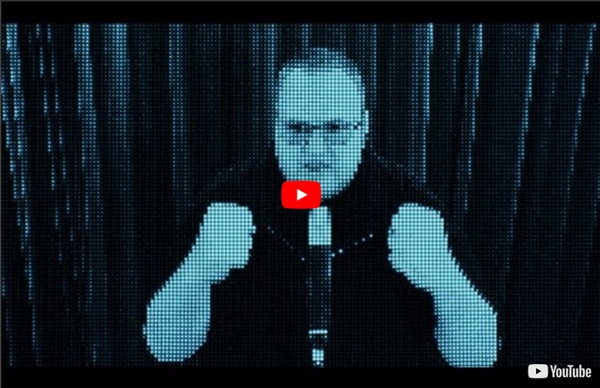
Video Messages Mega : MegaUpload de retour avec un plan anti-fermeture En janvier dernier, le site d'hébergement et de partage de fichiers MegaUpload a été fermé par les autorités américaines. Des accusations de violation massive de droits d'auteur, sans compter des charges de racket ou encore de blanchiment d'argent. En liberté surveillée en Nouvelle-Zélande, le fondateur de MegaUpload, Kim Dotcom, est sous le coup d'une extradition vers les États-Unis pour y être jugé. Une audience doit se dérouler en mars 2013. Cette situation est loin d'altérer les ambitions de l'homme qui a reçu les excuses de la Nouvelle-Zélande pour des écoutes illégales. Dans un entretien accordé à Wired, Kim Dotcom donne quelques détails sur ce service de cloud qui permettra aux utilisateurs de mettre en ligne, stocker et partager des fichiers. MegaUpload avec du chiffrementLa principale différence par rapport à MegaUpload tient à l'introduction du chiffrement AES ( Advanced Encryption Standard ). Le contrôle est donné à l'utilisateur. Vers un succès populaire ?
MegaUpload (MegaVideo) Smoking Gun? Did the site illegally charge for Streaming Movies? These screen shots appear to show that Kim Dotcom’s Megaupload was selling streaming movies that it did not have the rights to sell. Megaupload was allegedly paid uploaders per stream from files they uploaded to Megaupload. That is why there were so many links that Google autopopulated Megavideo after you entered Star Wars in the search field. Then Google estimated that there were 4.3 million web pages that had the words “star wars megavideo” on them. Megavideo let you play the first 45 minutes of Star Wars and thousands of other movies for free (after they had served you and profited from dozens ads) . . . But then, to watch past 45 minutes, you had to enter your credit card and pay $9.99 a month to keep watching. Carpathia Hosting, the CDN that the FBI raided because it was getting paid for caching these illegal movies for Megaupload. Like this: Like Loading...
Google > (The Pirate Bay + Megaupload) Ahahaha mais qu'est-ce qu'on se marre... Je vais vous expliquer un truc pas nouveau, mais un truc très drôle quand même pour ceux qui ne seraient pas encore au courant. Quand un ayant droit découvre avec effroi un lien pointant vers une de ses oeuvres piratées via Google, il envoi ce qu'on appelle une notice DMCA à Google, c'est-à-dire une demande pour retirer le contenu pirate indexé, du moteur de recherche. Très bien. Sauf que Google joue la transparence à fond et communique à la fois sur son site Transparency Report sur qui demande quoi et combien de fois... ... et participe aussi au projet Chillingeffects.org, lancé par l'EFF et d'autres pour protéger les gens et contenus honnêtes des demandes abusives de retrait (DMCA et justice). Sauf que dans ces "notices", on trouve bien sûr les liens pirates dont les ayants droit demandent le retrait. Mouarf ! Elle est pas belle la vie ? Photo et source Vous avez aimé cet article ?
Kim Dotcom Mega : Kim Dotcom ouvre le site Internet du nouveau service Mega existe désormais sur la toile. Kim Dotcom a donné sur son compte Twitter l’adresse du nouveau site Internet. La première page web est rouge avec un énorme bouton au centre MEGA. En passant la souris dessus, les internautes apprennent que le monde changera le 19 janvier. Kim Dotcom se moque des menaces des USA. Pour Kim Dotcom, c’est un peu une vengeance. L’utilisateur bénéficiera d’une réelle rapidité dans le téléchargement. Vous avez aimé cet article ? Inactif Partager vos lectures sur Facebook exemple : Benjamin a lu : Mega : Kim Dotcom ouvre le site Internet du nouveau service sur Begeek.fr Réagir à cet article Vous souhaitez réagir ? Je n'ai pas de comptecréer un compte en 15 secondesCréer un compte Connexion
Dotcom info not 'physical' so FBI denies breaking Last updated 05:00 07/06/2012 FBI agents who copied data from Megaupload founder Kim Dotcom's computers and took it overseas were not acting illegally because information isn't "physical material", the Crown says. The agents were accused of underhanded behaviour by Dotcom's lawyers in the High Court at Auckland yesterday, after revelations that the information was already in US hands. Megaupload's lawyer, Willie Akel, told Justice Helen Winkelmann how two FBI analysts flew to New Zealand on March 20 and reviewed seven hard-drives of information. The analysts cloned the computers in Manukau. When police returned to pick them up to take them to their hotel, the agents had already left to FedEx the copies back to the United States. "The first [copies] were sent without the New Zealand Police having any say in it whatsoever," Mr Akel said. "If [they] went offshore without the consent of the attorney-general, it was an illegal act." Dotcom, 38, is on bail awaiting an extradition hearing.
Alexandre Astier – Son point de vue sur le téléchargement illégal Le site Reviewer a réalisé une interview d'Alexandre Astier lors de la Comicon. (avec un son totalement pourri, désolé pour ça) J'écoutais aussi le podcast de mon ami Patrick Beja, il y a quelques jours, sur le téléchargement illégal (je vous invite à l'écouter) et malheureusement, j'ai trouvé les mecs du Parti Pirate un peu à côté de la plaque. Maintenant mon point de vue... Sur le fond, je suis d'accord avec Alexandre Astier. Mais le vrai débat, ce n'est plus "Est-ce que c'est bien de télécharger / est ce que c'est mal ?" Le vrai problème est en réalité un constat : Sur Internet (ou offline même), les œuvres, peu importe leurs copyrights sont copiées, recopiées et re-re-re-copiées. Il va falloir que tout le monde intègre et apprenne à vivre avec le piratage. La plupart des ayants droit ont encore cette vision erronée du 1 téléchargement pirate = 1 achat loupé. C'est malheureux pour certains comme Alexandre Astier mais c'est la vraie vie. Il faudrait vraiment continuer dans cette voie.
Ray Kurzweil Raymond "Ray" Kurzweil (/ˈkɜrzwaɪl/ KURZ-wyl; born February 12, 1948) is an American author, computer scientist, inventor, futurist, and is a director of engineering at Google. Aside from futurology, he is involved in fields such as optical character recognition (OCR), text-to-speech synthesis, speech recognition technology, and electronic keyboard instruments. He has written books on health, artificial intelligence (AI), transhumanism, the technological singularity, and futurism. Kurzweil was the principal inventor of the first CCD flatbed scanner,[2] the first omni-font optical character recognition,[2] the first print-to-speech reading machine for the blind,[3] the first commercial text-to-speech synthesizer,[4] the Kurzweil K250 music synthesizer capable of simulating the sound of the grand piano and other orchestral instruments, and the first commercially marketed large-vocabulary speech recognition.[5] Life, inventions, and business career[edit] Early life[edit] Mid-life[edit]