

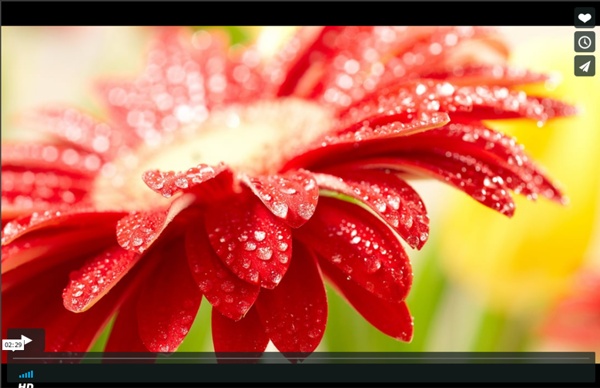
Las personas dan flores de regalo porque en Login - att.net Yahoo! What does "Keep me signed in" mean? Many of our users have asked for a way to reduce how frequently they're asked to sign-in to att.net and Mail. By checking this new box you'll stay signed in for up to 2 weeks or until you sign out. You'll get easier access to your mail, photos, music, and all your other stuff, even if you close your browser or shut down your computer. To protect your most sensitive data and activities (like changing your password or using your credit card), we'll ask you to re-enter your password when you access some AT&T services. What if I'm on a computer that I share with others? If you're using a public computer or you share this computer with others, we recommend that you uncheck the "Keep me signed in" box. This checkbox applies to this computer only. You can change the length of time you remain signed in to att.net and Mail, once you are signed in, by clicking on the "My Account" link at the top of most of the att.net pages. Close
16 Awesome Vector Packs for Creepy Halloween Illustrations » Illustration » Design Festival It’s that time of year when all the creepy-crawly and scary graphics start digging themselves out of their shallow graves! This collection of vectors are perfect for designing your creepy project. We’ve pulled together trees, splatters, bugs, and even skeletons. All are free to use and we even have the download links right here; just be sure to check out the owners’ terms of use. Creepy Trees Source | Download Tree Silhouettes Source | Download Vector Trees Source | Download Ink Splatters Source | Download Spider Source | Download Insects Set Source | Download 71 Insects Source | Download Spooky Pack Source | Download Skeletons and Skulls Source | Download Halloween Vector Art Pack Source | Download Halloween Pumpkin Vector Source | Download Halloween Witch Vector Source | Download Free Halloween Vectors Source | Download Happy Halloween Vector Source | Download Skull and Bones Vector Pattern Source | Download Hand Drawn Spooky Halloween Pattern Source | Download
Este video muestra de manera extraordinaria My Yahoo! Nous, Yahoo, faisons partie de la famille de marques Famille de marques Yahoo Les sites et applications que nous possédons et exploitons, y compris Yahoo et AOL, et nos services publicitaires numériques, Yahoo Advertising.Yahoo. Lorsque vous utilisez nos sites et nos applications, nous utilisons des Témoins Les témoins (y compris des technologies similaires telles que le stockage Web) permettent aux opérateurs de sites Web et d'applications de stocker et de lire des informations provenant de votre appareil. vous fournir nos sites et applications; authentifier les utilisateurs, appliquer des mesures de sécurité et prévenir les pourriels et les abus; et mesurer votre utilisation de nos sites et applications Si vous cliquez sur 'Tout accepter', nos partenaires et nous utiliserons également des témoins et vos données personnelles (telles que votre adresse IP, votre emplacement précis et vos données de navigation et de recherche) dans le but de :
Fascinating Videos About 6 Photographic Processes Used Through History George Eastman House just finished its 6 part video series on photographic processes used throughout history. The short educational videos run about 3-6 minutes each, and provide a great look into the various ways photographers of old created their images. Here’s the entire six-part series for your enjoyment: The Daguerreotype Invented in the early 1800s by Louis Daguerre, the daguerreotype was the first process to become commercially successful. The Collodion Process Invented in the mid 1800s, the collodion process was widely popular and almost completely replaced the daguerreotype within 10 years of being introduced. The Albumen Print Used in the mid-to-late-1800s, the albumen print process was also known as the albumen silver print. The Woodburytype Invented in 1864, the woodburytype was the first photographic method capable of producing printed illustration material that preserved the details of photographs. The Platinum Print The Gelatin Silver Print
La tierra vista desde el aire 3753 Cruithne 3753 Cruithne (/kruːˈiːnjə/[2] or /ˈkrʊnjə/)[3] is an Aten asteroid in orbit around the Sun in 1:1 orbital resonance with Earth, making it a co-orbital object. It is a minor planet in solar orbit that, relative to Earth, orbits in a bean-shaped orbit that ultimately effectively describes a horseshoe, and which can transition into a quasi-satellite orbit.[4] It has been incorrectly called "Earth's second moon".[2][5] Cruithne does not orbit Earth and at times it is on the other side of the Sun.[6] Its orbit takes it inside the orbit of Mercury and outside the orbit of Mars.[6] Cruithne orbits the Sun in about 1 year but it takes 770 years for the series to complete a horseshoe-shaped movement around the Earth.[6] The name Cruithne is from Old Irish and refers to the early Picts (Irish: Cruthin) in the Annals of Ulster[6] and their eponymous king ("Cruidne, son of Cinge") in the Pictish Chronicle. The name is cognate with "Britain" and "British".[7] Discovery[edit] Figure 1. See also[edit]
George Eastman House, International Museum of Photography and Film, Rochester, NY, USA Un video que muestra diferentes momentos de la