

« Makers », le roman qui prône la révolution par le bricolage Extrait du film « Fight Club » (David Fincher, 1999) Il parle d’amour, de technologie et de démocratie : mais le dernier roman de Cory Doctorow, « Makers », parle surtout de marché. Son livre n’arrive pas de nulle part : une « crise » qui commence à durer, des progrès technologiques qui ne profitent pas vraiment au grand nombre, un recul de l’état de nos démocraties à tous les niveaux... De tous ceux qui peuvent brosser un tableau de ce qui risque de nous arriver demain, Cory Doctorow est pour l’instant l’un des plus crédibles. Un monde où les entreprises ne servent à rien Avec « Makers », au lieu de nous brosser un tableau du futur à base de chiffres et de citations éclairées, il a écrit un roman-fiction avec trois héros : deux bricoleurs et une journaliste. La trame de l’histoire, c’est l’aventure de ces trois personnes et leur rôle dans la cristallisation d’un nouveau modèle économique décentralisé et réactif où les grandes entreprises ne servent vraiment plus à rien.
TED's Ten « Textiles Environment Design The TEN → sign up The Ocean Cleanup - Boyan Slat In 2011, together with friend Tan Nguyen, Boyan Slat embarked on writing his final paper in the last year of secondary education, researching the possibility of remediation world’s oceanic garbage patches. During this project, they performed analyses on concentration of particles between 90 micron and 333 micron, plastic/plankton separation, plastic depth measurement devices and amount of plastic within the top layer of the gyres. Spending over 500 hours on the paper (instead of the required 80 hours), it has won several final paper prizes, including Best Technical Design 2012 at the Delft University of Technology. Boyan continued the development of his concept during the summer of 2012, and revealed it several months later at TEDxDelft 2012. At iSea Clash of The Concepts, The Ocean Cleanup was awarded the second prize by the Dutch Ministry of Infrastructure and the Environment.
Comment bricolons-nous le numérique Par Hubert Guillaud le 05/07/11 | 7 commentaires | 3,056 lectures | Impression La technologie est sensée nous rendre la vie plus facile, mais les pires frustrations de nos contemporains sont dues aux nouvelles technologies qui peuplent nos maisons, estime Philip Ely, doctorant au Centre de recherche sur le monde numérique de l’université du Surrey. Pour affirmer cela le chercheur a étudié, à la manière d’un ethnographe, comment les gens vivent leurs relations aux technologies domestiques qui nous entourent, comment ils configurent et reconfigurent leurs pratiques à l’aune du fonctionnement des objets sociotechniques qu’ils utilisent (voir notamment sa contribution dans le livre New Media Technologies and User Empowerment du programme européen Participation in Broadband Society qui se tenait en 2009). Pour évoquer cette écologie technologico-domestique de nos pratiques, Philip Ely parle de “bricolage numérique” (Do It Yourself digital), explique le Guardian.
small infrastructures - MICROMACHINS exhibition Boyan Slat The Maker Movement Disrupts Brands, Provides Opportunities For my third year, I spent yesterday at the Maker Faire, in Silicon Valley. Unlike any other year, the crowds were overflowing, suggesting this movement was growing faster than the cottage industry before. To put this into context, the maker movement is yet (another) disruption to brands, here’s the lineage: [Disruptions Summarized: 1) The Internet democratized knowledge, 2) Social Media empowered crowd, 3) Collaborative Economy endows crowd to buy once, share many, 4) the Maker Movement aims at buying from brands no more. I must honestly confess, I struggle to keep abreast of all the new technologies, and I suspect corporations are experiencing the same. [The maker movement empowers people to build their own products, and share with each other --rather than buying from brands] Those involved in the maker movement are creating their own goods and products, using recycled materials, or improving on existing products. Brands are disrupted by the Maker Movement. Above: 3D Printed Wood.
fairtrade electronic Reti da pesca, ricicliamole come capi d’abbigliamento Recuperare le reti da pesca e trasformarle in vestiti, costumi e calze. È questa l’idea che sta alla base di Healthy Seas, a journey from waste to wear, un progetto internazionale che mira a raccogliere le reti da pesca dismesse per trasformarle in capi di abbigliamento. Troppo spesso infatti questi attrezzi, quando non sono più utilizzati, vengono bruciati, sotterrati, oppure gettati in mare. Secondo un rapporto di Fao e Unep le reti alla deriva negli oceani ammontano a circa 640 000 tonnellate e costituiscono un decimo del totale dei rifiuti presenti in mare. Queste, oltre a inquinare le nostre acque e a rimanere nell’ecosistema marino per centinaia di anni, rappresentano un grave pericolo per delfini, tartarughe e uccelli che spesso vi rimangono intrappolati. Perché non provare a riciclarle allora? Ma in che modo le reti da pesca possono trasformarsi in capi da indossare? foto: Corbis
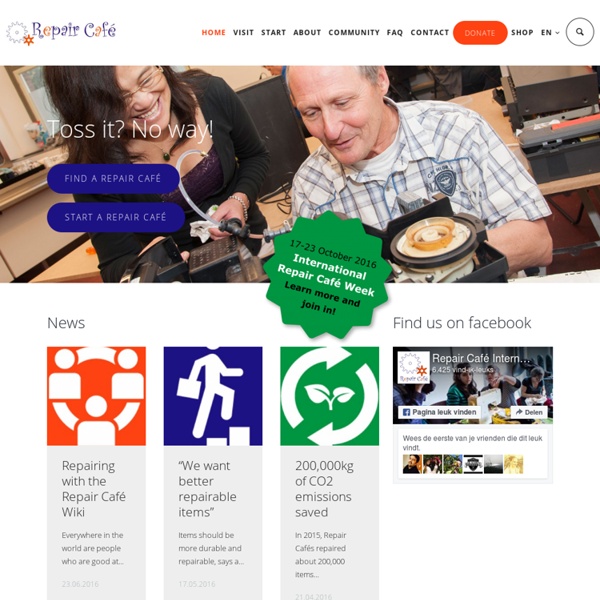
How DIY Electronics Benefit The Environment glacial23/CC BY-SA 2.0 The growing trend toward DIY electronics is good news for the environmental movement. DIYing both directly and indirectly benefits the planet; not only are resources saved by reusing parts and rebuilding gadgets, but also tasks accomplished with the newly created devices can be of use for everyone from scientists to the average home owner. Do It Yourself Electronics and Citizen Scientists A straight line of thought from DIY electronics and conservation leads us to DIY science, or citizen science. One such example is the NOAH app. With NOAH, you can photograph an interesting plant, bug or animal that you want to learn about, send in the photo along with a little info about where you found it, and store it in the species database. Similarly, a citizen science organization called eBird is using information collected and maintained by amateur birdwatchers to help scientists. DIY science using common electronic devices is becoming more common. DrLianPinKoh/CC BY 2.0