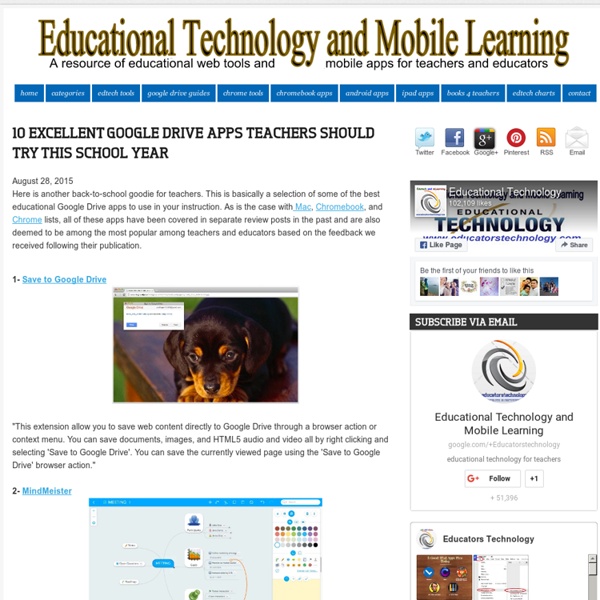
A web whiteboard
Web whiteboard is a web-based shared whiteboard application. This means you can use the Web Whiteboard to draw, sketch and doodle together with your friends, colleagues or students, no matter where they are or which computer or device they're using. It is simple to use and there's no registration needed. Advanced features If you need more advanced features than what's available out-of-the-box in Web Whiteboard, you can register and subscribe for a premium plan. Premium plans allow you to save the boards you create so you can reuse them later, invite guests to watch you draw without allowing them to draw in the board, and even have a voice call with all the board participants (on compatible browsers and good-enough Internet connections). Learn more about premium plans Add whiteboard to your site You can also add a whiteboard widget to your own site. Learn more about our whiteboard widget
8 free apps that pump up Google Drive
Don't let its weird name scare you: Wappwolf Automator for Google Drive is one of the most powerful apps around for dealing with files (and maybe also wolves) in the cloud. Wappwolf is kind of like an IFTTT for Drive: It allows you to set up recipes for advanced automation based on files being added to specific folders. You could create a Dropbox folder, for instance, and tell Wappwolf to upload any files placed in that folder to a matching folder in your Dropbox account. Wappwolf also works with Amazon Cloud Drive, Basecamp, Box, Evernote, Facebook, Skydrive, and an array of other services. In addition to cloud-to-cloud syncing, it can automate a variety of Drive-contained actions, such as converting files, removing EXIF info from images, and stamping logos onto images. The app allows up to 10 automations to be configured for free, with up to 10 files a day being processed.
40 modi di utilizzare le applicazioni Google ne...
Google for Education: Save time and stay connected
For Education Spark learning with G Suite for Education A suite of free productivity tools to help students and teachers interact seamlessly and securely across devices. Get G Suite for Education What’s included A full suite of educational tools for your school. Manage your classroom with ease Create classes, distribute assignments, give quizzes, send feedback, and see everything in one place. Administer with confidence Add students, manage devices, and configure security and settings so your data stays safe. Communicate your way Connect with email, chat, and video conference. Collaborate anywhere Co-edit documents, spreadsheets, and presentations in real time. Manage all your tasks Build to-do lists, create task reminders, and schedule meetings. Google Classroom Google Classroom streamlines assignments, boosts collaboration, and fosters seamless communication to make teaching more productive and meaningful. Collaborate anytime, anywhere, on any device Benefits for your institution cloud_done Easy build book
App e webware per la didattica by Grazia Paladino on Prezi
Apps for Education: domande comuni - Guida di Google Apps Administrator
I servizi di G Suite for Education non raccolgono né utilizzano i dati degli studenti a scopi pubblicitari o per creare profili per gli annunci. Gli utenti di G Suite for Education e della versione gratuita di Gmail utilizzano la stessa infrastruttura: ciò ci consente di offrire a tutti un elevato livello di prestazioni, affidabilità e sicurezza. Tuttavia, G Suite costituisce un'offerta separata che fornisce controlli aggiuntivi per sicurezza, amministrazione e archiviazione per i clienti Education, Business e Government. Come molti provider email, eseguiamo la scansione in Gmail per tutelare la sicurezza dei nostri clienti e per migliorare la loro esperienza d'uso del prodotto. La scansione include protezione antivirus e antispam, controllo ortografico, pertinenza dei risultati di ricerca e funzioni quali la Posta prioritaria e il rilevamento automatico degli eventi del calendario. La scansione viene eseguita su tutte le email in entrata ed è completamente automatizzata.
Movenote
Scratch Help - About Scratch
Who Uses Scratch? Scratch is designed especially for ages 8 to 16, but is used by people of all ages. Millions of people are creating Scratch projects in a wide variety of settings, including homes, schools, museums, libraries, and community centers.Learn to Code, Code to LearnThe ability to code computer programs is an important part of literacy in today’s society. When people learn to code in Scratch, they learn important strategies for solving problems, designing projects, and communicating ideas.Around the World Scratch is used in more than 150 different countries and available in more than 40 languages. To change languages, click the menu at the bottom of the page. Or, in the Project Editor, click the globe at the top of the page. The MIT Scratch Team and collaborators are researching how people use and learn with Scratch (for an introduction, see Scratch: Programming for All).
SafeShare: video youtube in classe senza pubblicità
Nell'enorme archivio di Youtube troviamo tantissime risorse utili per la didattica. Il problema è che molto spesso l'eperienza di navigazione all'interno della piattaforma è piuttosto... frustrante a causa delle pubblicità, dei commenti non appropriati o dei suggerimenti di video non particolarmente adatti ad un contesto scolastico. La rete ci mette a disposizione soluzioni ricche di funzionalità accessorie per poter far visualizzare video ai bambini in totale sicurezza. Una di queste è SafeShare che dovrete custodire nella vostra "Cassetta degli attrezzi" per la notevole dotazione di funzioni, particolarmente utili nella didattica. Ecco come funziona. Andate su SafeShare (non serve registrarsi), incollate l'indirizzo URL appena copiato e cliccate su Generat Safe Link. A questo punto è possibile cliccare su Invio e visualizzare il video depurato di tutti quegli elementi che possono infastidire l'esperienza di fruizione. Ecco un esempio di video in SafeShare Articoli correlati
Sfida i tuoi studenti!
Per un insegnante non è usuale (e neanche piacevole di solito) investire qualcun altro del compito di “misurare” e valutare i propri studenti. Non mi sto riferendo alle rilevazioni del Sistema Nazionale di Valutazione (le famosissime prove INVALSI) e neppure a quelle internazionali (OCSE-PISA, PIRLS, TIMSS,ecc…). Esagerando ed esemplificando: nessuno di noi vorrebbe che la verifica sommativa di fine anno scolastico venisse progettata, realizzata, somministrata e valutata da un collega di un’altra classe. C’è un certo senso di disagio nel pensare di dover accettare una verifica costruita da qualcuno che non conosca bene “i nostri polli”. E se a preparare la verifica finale (magari su tutte le unità svolte durante l’anno) fossero gli stessi nostri studenti? E se invitassimo i nostri stessi ragazzi ad auto-misurarsi a vicenda? E ora passiamo a questa esperienza di “Kahoot estremo” A questo punto penso di sfruttare questo entusiasmo per provare a fare un passo in più. YOUR ROLE? Mi piace: