

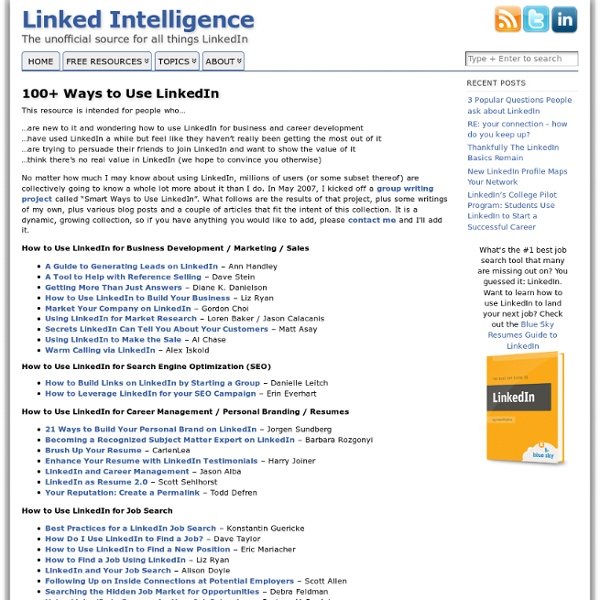
12 Most Useful Tips I’ve Found to Use LinkedIn Effectively The three comments most often made to me about LinkedIn are: It seems overwhelming – I just don’t know where to start.Its not the right network for me B2B/B2C/Entrepreneurial/Fortune 500 Company.I’ve been on LinkedIn for __ years and have never received any business from it. Sound familiar? LinkedIn is a huge network and continues to grow – adding new features every week. But like anything that seems daunting, if you eat the elephant one bite at a time – you can succeed a mastering it! As for point 2 – LinkedIn is for ANYONE in business (or who wants to be!) 1. Make sure it is formatted, clean, and free of spelling and grammatical errors. 2. Like any website, LinkedIn’s internal search engines weigh your keywords heavily in its searches. Professional HeadlineTitle FieldsSpecialtiesInterestsRecommendationsEducation (Activities and Societies) 3. I recommend a close up and a smile. 4. 5. 6. When you edit your website, the drop down menu gives you the option of “other”. 7. 8. 9. 10. 11. 12.
Huntsy: A Dashboard for Your Job Search Ask any job seeker, and he'll tell you that looking for a job is, in and of itself, a job. It's time-consuming to prep your cover letter, tweak your resume, follow up and plan your interview, especially when you're applying for multiple positions. Sure, you could make an intense, color-coded spreadsheet — but most of us aren't that Type A. "People are applying to many different places — Huntsy is our way to make it easy for them," says Cezary Pietrzak, Huntsy's director of marketing. Huntsy's cleaning it off with a slick UI and an organized and social approach to the intimidating job search. The bookmarklet in action Once you click "Add to Huntsy," the job will be added to your dashboard, which looks like this: The dashboard Within the dashboard, you can schedule interviews and follow-ups, receive reminders to send thank-you notes, uncover professional connections at various companies (if you linked your social networks) and, most importantly, apply to jobs directly.
What to Include in Your LinkedIn Profile When You're Unemployed By Alison Doyle Updated March 01, 2016. What to list in your LinkedIn Profile, including your Professional Headline and Current Position, when you are unemployed is an issue. That's because even though you might be unemployed you want to present yourself in a positive light to prospective employers and to networking contacts. What to Include in Your LinkedIn Profile When You're Unemployed In addition, it's important to be honest, because it's easy for potential employers to check your background when they are considering you for employment. Krista Canfield, former Senior PR Manager at LinkedIn, has suggestions on what to include in your LinkedIn Profile when you're out of work: "If you're currently unemployed list your current position as "open to opportunities." Update Your LinkedIn Profile - Or Not A simple option is to put an end date on your last position and not add a new one. continue reading below our video Play Video Unemployed LinkedIn Professional Headline Examples
Home - Avalon Innovation Top 10 Tips to Loving Your LinkedIn Profile When was the last time you gave your LinkedIn profile a little love? When was the last time you even looked at your LinkedIn profile? LinkedIn is a handy network. Before you go overboard joining groups and connecting to people, take a peek at your profile and review the information. Have meaningful Job titles, they are searchable and speak volumes to people who come to your profile.Your summary is the most important real estate on your profile. Freshen up your summary every few weeks. Most of all, interact and have fun.
Why online CVs are essential in your job search Recruiters and hiring managers are increasingly sourcing (and checking) candidates online. The report, What Employers Look Up on Social Media Sites, found that employers are interested in previous work history, recommendations and information such as personal interests. Improve your chances by providing this information online. In the recent Guardian careers podcast, Julian Linley explained how he expects to see a digital CV, providing links to examples of work or projects. LinkedIn profile On LinkedIn you only have one version, so it must appeal to different readers (recruiters, peers and employers) and be appropriate for both networking and job searching. LinkedIn profiles are far more dynamic than traditional CVs. Highlight your professional reputation through adding recommendations and connections, and joining relevant groups. Treat your profile as a networking tool to stop your boss assuming you're planning to leave – one concern raised in a Live Q&A on Getting out of a career rut:
Build a Robust Profile - LinkedIn Career Services Overview Your LinkedIn profile represents your definitive professional image on Web and is discoverable through millions of searches on LinkedIn or from search engines like Google. You are in complete control over what others see on your profile, so leverage this to showcase your skills and talents so the right people and opportunities find you. This guide will step you through how to build an outstanding LinkedIn profile. So what goes into a profile? A LinkedIn profile is more than just a resume. Let’s look in detail on how to build your profile. Headline This blue section will indicate who you are and the degrees of separation between that visitor and yourself. Give your visitors to your profile a short, punchy way to quickly understand who are with your profile headline. Most prefer to highlight their current title and company, but a best practice is to highlight unique skill sets or competencies, like “Technology careers expert with 10 years of experience”. Summary Experience Education
Start-ups, Skunkworks, and Your Next Big Product - Colin Raney by Colin Raney | 1:25 PM June 14, 2012 It’s no secret that many successful companies struggle to grow beyond their core offering. This isn’t because organizations can’t identify new opportunities or develop new and novel concepts; many can and do. Companies often have problems launching these concepts. So how might businesses that found success in one area find new outlets for future growth? Refocusing Resources New ventures in large organizations often fail because the same group charged with maintaining the core business is also given the responsible for new ventures. In the 1970s and 80s large organizations approached this problem quite differently. Given the speed and new economics of rapidly developing and launching products, companies are revisiting structures that separate growth opportunities from the current business. Reframing Risk Corporations often evaluate opportunities in the shadow of their core business.