

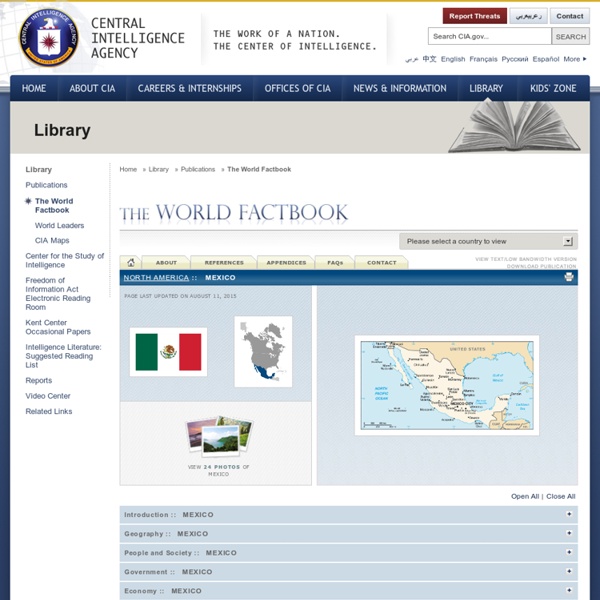
Mexico - Language, Culture, Customs and Etiquette | global-etiquette | resources Welcome to our guide to Mexico. This is useful for anyone researching Mexican culture, customs, manners, etiquette, values and wanting to understand the people better. You may be going to Mexico on business, for a visit or even hosting Mexican colleagues or clients in your own country. Remember this is only a very basic level introduction and is not meant to stereotype all Mexcian people you may meet! Facts and Statistics Location: Middle America, bordering the Caribbean Sea and the Gulf of Mexico, between Belize and the US and bordering the North Pacific Ocean, between Guatemala and the US Capital: Mexico City Climate: varies from tropical to desert Population: 104,959,594 (July 2004 est.) Ethnic Make-up: mestizo (Amerindian-Spanish) 60%, Amerindian or predominantly Amerindian 30%, white 9%, other 1% Religions: nominally Roman Catholic 89%, Protestant 6%, other 5% Government: federal republic Language in Mexico Spanish control of Mexico led to the dominance of Spanish, the official language.
Mexican Culture | Traditions, Legends, Art, Music The Mexican culture is perhaps one of the most fascinating cultures worldwide. The mixture of strong native legends, artistic expressions and Spanish culture elements make the Mexican culture unique. Being proud of their native heritage, Mexican people have preserved many of their ancestors’ traditions. Many of them are present in Mexican music, which resembles the music produced by the ancient Aztec’s drums and ceremonies. Mayan traditions are present in the Mexican culture as well, and maybe the biggest forms of expression that represent the Mexican pride on those traditions are the paintings. As the greatest exponent of the Mexican art, paintings have achieved a well deserved popularity outside Mexico. Many Mexican legends are quite famous too, like the legend of “La llorona” (“the weeping woman”), a woman whose spirit still cries for her lost son, or the legends of the Sacred woods of Chapultepec, where Aztecs emperors had their effigies sculpted in order to achieve immortality.