
T. Salaris
Anchor Stock Images & Video - Dreamstime - Page 4. In the News. The man who made Blair’s Iraq selfie: why Peter Kennard is political dynamite. With a career spanning almost 50 years, Peter Kennard is without doubt Britain’s most important political artist and its leading practitioner of photomontage.
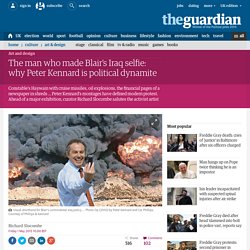
His adoption of the medium in the late 1960s restored an association with radical politics, and drew inspiration from the anti-Nazi montages of John Heartfield in the 1930s. Many of Kennard’s images are now themselves icons of the medium, defining the tenor of protest in recent times and informing the visual culture of conflict and crisis in modern history. Kennard defines his role as that of a “communicator” and is determined to make art that exists outside the confines of the art world, once stating that: “For me, getting the work out into the world and used is as important as its production.” Born in London in 1949, Kennard painted from the age of 13, using a coal shed as a makeshift studio. It was at the Slade that Kennard underwent his political awakening.
The Environment. Tic. The Sixties. Roth. Pronouncing. Measure for Measure. British Decolonization. Ha Ha Ha. Section européenne. Boardwalk Empire Wiki. ((((O)))) Section européenne. Vietnam War. Elmediator. Elvis Presley - Heartbreak Hotel. Cool The Earth.