
Maintain a Weedless Organic Garden. How to Prune Bee Balm. Raised Bed. Perrenial Fruits. Spuds. Corrugated roof. OCEAN 120 Personality Test. Your tomatoes are glad the heat is gone, better days ahead. Good "sleeping weather" for us is good fruit setting weather for a number of vegetables.
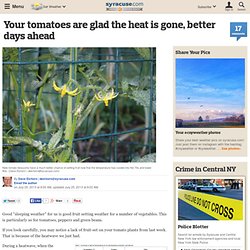
This is particularly so for tomatoes, peppers and green beans. If you look carefully, you may notice a lack of fruit-set on your tomato plants from last week. That is because of the heatwave we just had. View full sizeTomato fruit set response to environmental stress from temperature.Horticultural Sciences Department, Florida Cooperative Extension Service, Institute of Food and Agricultural Sciences, University of Florida. Original publication date July 2012.
During a heatwave, when the temperature is consistently in the 90s by day, warmer than 70 at night or, cooler than the low 50s by night, most tomato plants will drop their blossoms. Sometimes you can actually see evidence of previous heat waves or cold snaps by looking at your tomato plant from the ground up. The tomatoes will show up in vertically stacked groups with vacant layers of no tomatoes in between. Better days ahead:
Squash. Kale. Well water. Harvest at Peak Flavor. Soil. Fall veggie garden. Grains. Home — Beyond Pesticides. Staple or calorie crops. Mushroom logs. Accessing growing degree days with Enviro-weather. Take the MSU Extension and AgBioResearch Survey to Sharpen Our Focus Understanding and using accumulated growing degree days can help you know when to expect pests.
This is one of the services Enviro-weather offers Michigan growers. Posted on May 23, 2013 by Beth Bishop, MSU Enviro-weather One thing is for sure about Michigan’s weather: it’s always different. Just compare this spring (2013) to last spring. This variability means that each year the development of crops, weeds, insects and diseases is different. Most living things depend on external temperatures to fuel their growth and development. Growing degree days are a way of measuring accumulated heat above a certain temperature threshold (minimum temperature below which development stops). Both the lower developmental temperature threshold, referred to as the base temperature, and the number of accumulated growing degree days required for a growth stage varies depending on the particular plant or animal.
Mushroom logs. Berry%20Plant%20Structure%20Poling. Partial Sun Fruit. Hugelkultur Raised Beds - Mindful Making. Design and layout. Permaculture. Fertilizer. Gardening in Michigan. Skip to content Michigan State University Gardening in Michigan MSU Extension’s Plant and Grow Tips These tips sheets are a quick reference for gardeners.
Don’t have Adobe Acrobat Reader for pdf files? Download it here. Plant and Grow Tip Sheets Smart gardening. STAR - Global Vegetation Health Products - Global Vegetation Health Products: Archived Images. <h3 class="noscriptWarning">Javascript is currently disabled on this computer.
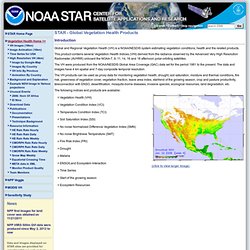
Without javascript, some display enhancements do not work; however, all content is fully visible and accessible. </h3> Global and Regional Vegetation Health (VH) is a NOAA/NESDIS system estimating vegetation conditions, health and the related products. This product contains several Vegetation Health Indices (VHI) derived from the radiance observed by the Advanced Very High Resolution Radiometer (AVHRR) onboard the NOAA-7, 9, 11, 14, 16 and 18 afternoon polar-orbiting satellites. Expert Assessments: United States Seasonal Drought Outlook. Log House Plants.
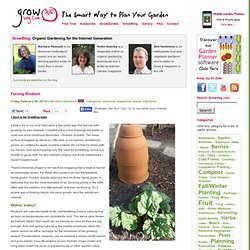
Comfrey. Grafting Tomatoes. Herbs. Cover crops. Compost tea. Forcing Rhubarb. Friday, February 08, 2013by Benedict Vanheems.
Food preservation and storage. Charts and guides. Biointensive gardening. Frost-free dates. Perrenial Vegetables. The Best Organic Fertilizers for a Vegetable Garden. 02-Composting-Biernbaum. Veggie Varieties. Garden info tables. Rainwater Harvesting. National Gardening Association. Growing Herbs at Home. In a botanical sense, an herb is a plant that does not produce a woody stem and dies back to the ground each winter to a perennial root system.
Herbaceous plants in the landscape and garden normally include annuals, perennials, biennials, bulbs and grasses. In the garden sense, herbs are plants that serve as a major source of seasonings in the preparation of foods. In an even broader sense, herbs include those plants that are also useful for scents in cosmetics or for medicinal purposes.
Some of them are woody and outstep the definition of a herbaceous plant. In the gardens of American pioneers, herbs were the major source of seasonings for foods. With the advent of the supermarket, growing herbs in the garden declined because a wide range of dried herbs became available in stores. General culture Light Most herbs are easy to grow, but you must select the proper location to grow them. Soil Herbs will grow in any good garden soil. Most herbs do not require a highly fertile soil.
Living fence. Garden plans. Flowers. Wildflowers and beneficials. Garden tea. Beans. How to Deal with Weeds. Thursday, July 19, 2012 by Benedict Vanheems - Categories: weeding, mulch, planning They're the bane of every kitchen gardener's life and they seem to appear the moment your back is turned. I'm talking about weeds of course! I recently tried to work out exactly how much time I spend weeding – either on my haunches plucking weeds one by one from between my veg, or slicing (or, rather, gliding!) Back and forth with the hoe. By the middle of summer you will either have managed to keep your plot pristine or the weeds may well be gaining the upper hand. Veggies. Overgrown, bitter, bolted lettuce.
Storage shed. Trees. Indoor gardening. County MSU Extension > Horticulture > Growing Fruits. Garden Economic Value. Trellising. Extend growing season. Cold frames. High tunnels and hoop houses. Tools.