
Short List Of Fast Growing Vegetables. April 5, 2014, by Ken Jorgustin Fast vegetable crops are good to grow because they provide some food on the table in the shortest period of time.

They are a good jump-start to the growing season after a winter of grocery store produce. If you have a limited season (colder climate zones), then you can help maximize your garden’s output by growing fast-growing vegetables. Also, in a post SHTF world, these vegetables will provide quick food from the garden… Radishes Days to harvest: 20-30. When sowing radish seeds, plant some about a half-inch deep and the rest a little deeper. Turnips Days to harvest: 40 – 60. Spinach Days to harvest: 45-50. Loose Leaf lettuce Days to harvest: 45-55. Kale.
Toxic Plants. Skunk Cabbage. DESCRIPTION: This entire plant smells like a skunk when injured (hence the specific name, foetidusóstinking)ógreat to show kids, always eager to be repulsed!

The flower, which appears in late winter before the leaves, features a stalked, elliptoid, pale pink spadix (the reproductive part) about 1 inch long, studded with small yellow flowers, and partially shielded by a mottled, purple and green, long-oval spathe, 3 to 6 inches tall. It generates enough heat to melt the surrounding snow, while the odor attracts the yearís first flies to this heated haven.
They mate there and pollinate the flowers. The smooth-edged, long-oval to heart-shaped leaves come up in March (sometimes also in late fall, when they donít complete their development).
Acorn. Home → Survival → Food and Cooking.

Neanderthal Food Drying. Home → Survival → Food and Cooking by Pete Lynah Preserving food by drying it was practiced in this country centuries before Columbus.

The methods are easy, dependable, and do not require on intensive heat source. The nutrition of the food is preserved and NO chemicals are needed. All you need are heat and a free air flow. : Wild Coffee (Triosteum Perfoliatum) Wildharvesting medicine. 19 wild edibles. Pinole: The Ultimate Bugout Food. The Daylily. Disclaimer: Eating certain wild plants can be deadly!!

Be certain to consult a professional (or a really good field guide) in order to positively identify this plant before trying this for yourself. The owners of this site will not be held responsible for any lapses in judgment or stupidity when handling or consuming wild plants. The daylily (hemerocallis fulva) is a very common ornamental plant that has found a home in many yards and gardens throughout the United States. Despite its common occurrence, few realize the year-round food potential of this plant. Wild Edibles: How to Eat Japanese Knotweed. Wild Edibles: Sumac Shoots. Disclaimer: Eating certain wild plants can be deadly!!

How to Eat Common Milkweed. Disclaimer: Eating certain wild plants can be deadly!!

Be certain to consult a professional (or a really good field guide) in order to positively identify this plant before trying this for yourself. The owners of this site will not be held responsible for any lapses in judgment or stupidity when handling or consuming wild plants. Milkweed is one of those plants that I have fond memories for. As a young boy I used to love opening the late summer seed pods to feel the silky soft down inside and watch the wind catch it as I would toss one after the other in the air. Nettles. Sometimes nettles grow near catnip, another similar-looking plant.

Mints, of course, have no stinging hairs, and catnip is fragrant. Catnip and nettles are an excellent combination for herb tea. Collect nettle leaves before they flower in spring. They may be bad for the kidneys after they flower. How to Grow Green Onions Indefinitely. I'm officially dubbing this the week of Scallions and Pinterest.
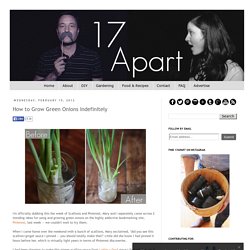
Mary and I separately came across 2 trending ideas for using and growing green onions on the highly addictive bookmarking site, Pinterest, last week — we couldn't wait to try them. How to Grow Potatoes, Growing Potatoes, Potato Eyes. Ah!! The versatile and lovable Potato. Spuds, or tubers, as they are affectionately nicknamed, are a regular at the dinner table, as well as breakfast. Plain by itself, a potato does not have a strong, overpowering flavor. But the numerous ways we cook and serve it, and the wide variety of spices, herbs and sauces added to or put on it, makes for a tremendous number of delicious tastes. Growing Celery Indoors: Never Buy Celery Again. Remember when we tested and shared how to grow onions indefinitely last week?

Well, at the same time, we've been testing out another little indoor gardening project first gleaned from Pinterest that we're excited to share the successes of today — regrowing celery from it's base. We've figured out how to literally re-grow organic celery from the base of the bunch we bought from the store a couple weeks ago. I swear, we must have been living under a rock all these years or just not be that resourceful when it comes to food, but we're having more fun learning all these new little tips and tricks as we dive deeper into trying to grow more of our own food. This project is almost as simple as the onion growing project — simply chop the celery stalks from the base of the celery you bought from the store and use as you normally would.
Beach food.