
Издательский Дом `ИнфоАвтоматизация` Rujak. Nebeng.Com :. Masyarakat Transportasi Indonesia - Home. Expulsions à Jakarta. Dear Mr.
Rencana Tata Ruang Wilayah (RTRW) DKI Jakarta 2010-2030. Platform Nasional Pengurangan Risiko Bencana Indonesia. .: SC-DRR - Safer Communities through Disaster Risk Reduction :. EPAT: Jakarta, Indonesia: The Economics of Water and Waste. The Mapmaker. Interview: Marco Kusumawijaya, architect and green spaces activist By Erwin Maulana and Christen Jamar Marco Kusumawijaya’s name is often followed by a long list of professional identifiers—architect, chairman of the Jakarta Arts Council, urban planner and activist, to name a few.
He has made a name for himself defending Indonesia’s urban public spaces through his books—Kota Rumah Kita (The City as Our Home, 2006) and Jakarta Metropolis Tunggang Langgang (The Scrambling Jakarta Metropolis, 2004) and by introducing the Green Map movement to Indonesia’s cities. He initiated the network with a Green Map for Jakarta (Green Maps use universal icons to identify a community’s natural, cultural and sustainable resources and thereby promote sustainable living) and he has since published three Jakarta Green Maps and assisted with eight other cities’ maps. FuturArc: Considering Jakarta’s current flood-prone conditions, how urgent is it for us to have green spaces?
Marco: We need green space. Indonesia Young Planners Blog. Working Indonesia. Urban Growth in Jakarta, Indonesia. Located on the northwest tip of the island of Java, the city of Jakarta looks out over the Java Sea.
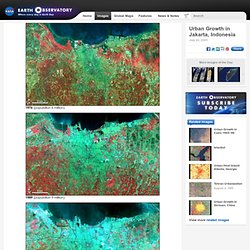
Like many urban areas all over the world, Jakarta, Indonesia, is growing. Since 1976, the population has more than doubled. More people require more housing, more stores, and more streets. This urban growth means that surrounding, undeveloped land has been transformed. This time series of images shows the growth of the city between 1976, when the population was 6 million, and 1989, when the population was 9 million, and 2004, when the population was 13 million. In the 1976 image, captured by the Landsat MSS scanner, the city makes a green patch in image center and along the coastline, while the surrounding area shows large areas of remaining vegetation (red). NASA/GSFC/METI/ERSDAC/JAROS, and U.S. The Asia Foundation : Indonesia (Overview) Indonesia was recently ranked in the top 25 percent in the 2012 Open Budget Survey, which measures budget transparency, participation, and oversight in more than 100 countries around the world. Yet corruption, inequity, poverty, and decaying infrastructure are obstacles to Indonesia becoming fully open and thriving.
Our programs strengthen the effectiveness of democratic institutions and legal and judicial systems, empower women’s political participation, and support environmental governance. Read country overview. Subnational conflict is the most deadly, widespread, and enduring form of violent conflict in Asia. Condemned Communities. This 115-page report describes the Jakarta regoinal government’s excessive use of force to clear out urban slums.
It draws on numerous evictees’ accounts of government security forces beating or mistreating them before destroying their homes and possessions. Many residents say they were given so little warning before their homes were razed that they did not have enough time to collect their belongings. Others describe how security forces opened fire on communities and set buildings alight while people were still inside. The government of Jakarta justifies many of the evictions by claiming it is trying to ensure public order, remove trespassers from private or state land, or clear land for infrastructure projects.
However, the government has used excessive force to conduct the evictions and failed to provide alternative housing or other assistance to the displaced. All Volumes. ANU Indonesia Project. Indonesia. KADIN-INDONESIA. Badan Perencanaan dan Pembangunan Nasional. Departemen Pekerjaan Umum. Departemen Dalam Negeri - Republik Indonesia. URDI - Home. Universitas Indonesia. Sekolah Tinggi Manajemen, Pelatihan Manajemen, Riset Manajemen, Konsultansi Manajemen dan Penerbitan Buku Manajemen. Indonesia. Indonesia (10/09) More information about Indonesia is available on the Indonesia Page and from other Department of State publications and other sources listed at the end of this fact sheet.
The United States established diplomatic relations with Indonesia in 1949, following its independence from the Netherlands. Indonesia’s democratization and reform process since 1998 has increased its stability and security, and resulted in strengthened U.S. -Indonesia relations. In 2010, Presidents Obama and Yudhoyono inaugurated the U.S. Transformation: Indonesia. Index Werte zum Status der politischen und wirtschaftlichen Transformation sowie zum Transformationsmanagement.
Atlas Der interaktive Zugang zu den quantitativen und qualitativen Bewertungen aller Ausgaben seit 2006. Ländergutachten 129 detaillierte Gutachten bilden die Datengrundlage. Mobilités, flux et transports. 1.
Un couloir intense de circulation maritime 2. Un espace stratégique 3. Frontière maritime et espace international Un détroit est un passage maritime exigu entre deux terres faisant communiquer deux mers. Un couloir intense de circulation maritime Les détroits : des "portes océanes" Indonésie. ANU - Australia Indonesia Governance Research Partnership. Jakarta Social Blog. Photography from Asia. Hathi Trust Digital Library - Growing apart : oil, politics, and economic change in Indonesia ... Antara Kita - Home. Home. Danareksa Research Institute. Statistics Indonesia. The Ultimate Indonesian Homepage. Home. KOMPAS.com.