
BoardUno. OSH: Schematics, Reference Design, Board size Arduino / Genuino Uno is open-source hardware!

You can build your own board using the follwing files: Programming The Arduino/Genuino Uno can be programmed with the (Arduino Software (IDE)). Select "Arduino/Genuino Uno from the Tools > Board menu (according to the microcontroller on your board). Reference. UnoDriversWindowsXP. This is a guide to getting the Uno working under Windows XP after the operating system has tried but failed to install the drivers.
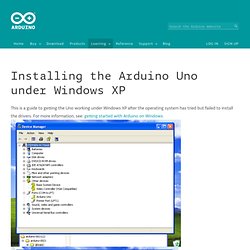
For more information, see: getting started with Arduino on Windows. Step-by-step screenshots created by Pluggy. Tutorials.