
'Great Cannon of China' turns internet users into weapon of cyberwar. Why the Sony hack is unlikely to be the work of North Korea. Everyone seems to be eager to pin the blame for the Sony hack on North Korea.
However, I think it’s unlikely. Here’s why:1. The broken English looks deliberately bad and doesn’t exhibit any of the classic comprehension mistakes you actually expect to see in “Konglish”. i.e it reads to me like an English speaker pretending to be bad at writing English. 2. The fact that the code was written on a PC with Korean locale & language actually makes it less likely to be North Korea.
Here – and here – This change in language is also most pronounced when it comes to special words, such as technical terms. Lets not forget also that it is *trivial* to change the language/locale of a computer before compiling code on it. Mysterious ’08 Turkey Pipeline Blast Opened New Cyberwar Era. The pipeline was outfitted with sensors and cameras to monitor every step of its 1,099 miles from the Caspian Sea to the Mediterranean.
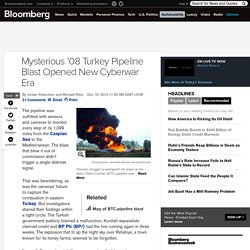
The blast that blew it out of commission didn’t trigger a single distress signal. That was bewildering, as was the cameras’ failure to capture the combustion in eastern Turkey. But investigators shared their findings within a tight circle. The Turkish government publicly blamed a malfunction, Kurdish separatists claimed credit and BP Plc (BP/) had the line running again in three weeks. Largest Cyber-Attack in History Hits Pro-Hong Kong Protest Websites. Websites supporting the pro-democracy protesters in Hong Kong have been hit with a series of DDoS attacks which have been described as the largest in history.

(Bobby Yip/Reuters) A series of cyber attacks against websites supporting Occupy Central protestors in Hong Kong have been described as the biggest cyber attacks ever recorded. Over the last few months two independent news websites which have been covering the Occupy Central protests which began in September following the announcement of a decision by China's Standing Committee of the National People's Congress on proposed electoral reform.
The websites, Apple Daily and PopVote, have been vocal supporters of the pro-democracy protests and even carried out mock chief executive elections for Hong Kong. Cloudflare, a company which is employed to protect websites against distributed denial of service attacks, has revealed thatsince June, these two websites have been bombarded by attacks of unprecedented size. Cyber Attack Against Georgia Blurred Civilian And Military. Last year's cyber assault against Georgia represents a template for civilian involvement in military action.
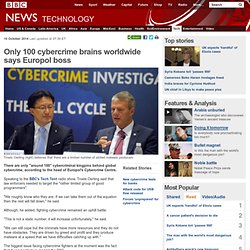
The cyber attacks against Georgia last year marked the first known time that computer networks were assaulted by civilians in conjunction with physical attacks conducted by a national military force. A report on the events of August 2008 by the U.S. Cyber Consequences Unit, a non-profit research institute, suggests that future conflicts may follow a similar course, raising difficult questions about who represents the enemy in cyberspace and what countermeasures might be appropriate against civilian combatants. Only 100 cybercrime brains worldwide says Europol boss. 10 October 2014Last updated at 07:30 ET Troels Oerting (right) believes that there are a limited number of skilled malware producers There are only "around 100" cybercriminal kingpins behind global cybercrime, according to the head of Europol's Cybercrime Centre.
Speaking to the BBC's Tech Tent radio show, Troels Oerting said that law enforcers needed to target the "rather limited group of good programmers". "We roughly know who they are. Malware Traffic Could Forewarn of International Conflicts. A study of malware operating on corporate and government networks suggests that the communication patterns of these programs could warn of major conflicts.

Researchers at the security company FireEye monitored millions of malware messages sent over the past 18 months, and they found spikes in the traffic to and from Russia and Ukraine as tensions rose between the two countries earlier this year. A similar pattern was seen in malware traffic to Israel as it entered its recent hostilities with Hamas. The FireEye study drew on data collected from more than 5,000 corporate and government clients around the world. FireEye’s software captures “callback” messages sent by malware inside a network—either reporting its status to its operators or picking up new commands.
The first stop for security news. Cyberspace2025: Today's Decisions, Tomorrow's Terrain. Cyberspace 2025: Today's Decisions, Tomorrow's Terrain Navigating the Future of Cybersecurity Policy F or the past 10 years, the world—particularly in developed economies—has witnessed unprecedented growth and innovation in information and communications technology (ICT).

But in the coming years it will be the emerging economies of the world that will witness extraordinary growth. By 2025, there will be upwards of 4.7 Billion people online of which 75 percent will come from emerging economies. Research grounded in an econometric model—the Cyber 2025 Model—forecasts that the next decade will witness expansive technological growth, significant demographic shifts, and increasing education needs. The adoption of new technology will occur at a faster rate and have a greater impact than ever before. How well societies cope with these challenges will depend largely on the policy choices they make. . — Matt Thomlinson, Vice President, Microsoft Security.
Unsorted. Institutions. Anonymous Threat. Google. Comodo Hacker. Duqu. Flame. Understanding Cyber warfare.