
WikiLeaks Archive — Cables Uncloak U.S. Diplomacy. Some of the cables, made available to The New York Times and several other news organizations, were written as recently as late February, revealing the Obama administration’s exchanges over crises and conflicts.
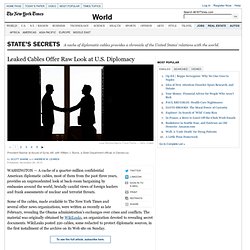
The material was originally obtained by , an organization devoted to revealing secret documents. WikiLeaks posted 220 cables, some redacted to protect diplomatic sources, in the first installment of the archive on its Web site on Sunday. The disclosure of the cables is sending shudders through the diplomatic establishment, and could strain relations with some countries, influencing international affairs in ways that are impossible to predict.
Cablegate One Year Later: How WikiLeaks Has Influenced Foreign Policy, Journalism, and the First Amendment. One year ago today, WikiLeaks started publishing a trove of over 250,000 leaked U.S.
State Department cables, which have since formed the basis of reporting for newspapers around the globe. The publication has given the public a window into the inner workings of government at an unprecedented scale, and in the process, has transformed journalism in the digital age. In recognition, WikiLeaks founder Julian Assange was just awarded Australia’s version of the Pulitzer Prize, in addition to the Martha Gellhorn journalism prize he won in the United Kingdom earlier this year. Breaking through information monopoly - Features. TUNIS, Tunisia - As history has shown repeatedly, access to information can play a decisive role in triggering social change.
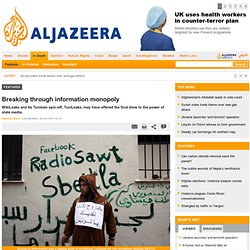
The publication of leaked diplomatic cables by the whistle-blowing organisation WikiLeaks has been controversial. But as a panel at the Third Arab Bloggers' Meeting affirmed this week, the monopoly of state media in most authoritian Arab regimes had been progressively undermined for several years as citizens sought alternative information from dissident bloggers and television. WikiLeaks, if anything, offered the final blow, and, in fact, found partners in the Arab world in the alternative media. In North America and Europe, WikiLeaks formed partnerships with major news organisations. But in Tunisia the whistle-blowing organisation entrusted the diplomatic cables to the dissident website, Nawaat.