
A KPI dashboard for early-stage SaaS startups. [Update 12/20/2013: I have extended the dashboard to include multiple pricing tiers and annual subscription plans.
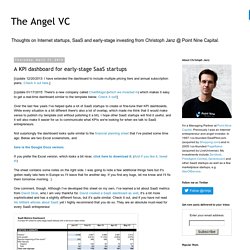
Check it out here.] [Update 01/17/2015: There's a new company called ChartMogul (which we invested in) which makes it easy to get a real-time dashboard similar to the template below. Check it out!] Over the last few years I've helped quite a lot of SaaS startups to create or fine-tune their KPI dashboards. While every situation is a bit different there's also a lot of overlap, which made me think that it would make sense to publish my template (not without polishing it a bit).
Not surprisingly the dashboard looks quite similar to the financial planning sheet that I've posted some time ago. Here is the Google Docs version. If you prefer the Excel version, which looks a bit nicer, click here to download it. The sheet contains some notes on the right side. One comment, though. Apple, Google and the Publishers: Here’s How to Make Subscriptions Work. In recent weeks, we’ve heard growing concern from magazine and newspaper publishers regarding the challenge of providing content for mobile media while preserving their print franchises.
The concern is nothing new, but it’s apparent that content providers are at risk of losing track of their customers like toddlers in a shopping mall. Apple’s iPad success and the imminent release of new application distribution platforms from Google and other software companies threaten another seismic shift for publishers that may have far greater impact on their business models than the growth of free media on the web. Devices like the iPad offer consumers a rich reading experience and offer publishers even more targeted advertising, but the revenue tradeoff as publishers navigate the path from print to this new world is lopsided–and not in a good way. Data informs advertising in magazines and allows for better targeting.
Should we care? Here’s why: The Advertising Model Won’t Pay. Startup Killer: the Cost of Customer Acquisition. Subscriptions are the New BLACK. (+ why Facebook, Google, & Apple will own your wallet by 2015. I'm on a redeye to NYC, supposed to be working on a presentation i'm giving in a few hours... but fuck it, i can't get this outta my head, so here we go.
(note: extremely raw, uneven, long, 1st draft publish & shoot; will revise l8r) ASSERTION #1: The default startup business model from 2000-2009 was based on growth (aka acquisition) and CPM- or CPC-advertising Over the past 10 years, we have seen a massive shift in advertising from CPM to CPC-based advertising. This basically started happening when the 2000-2001 dotcom implosion blew the market cap of Yahoo to smithereens, and display advertising went into the shitter. Altho CPM subsequently recovered, Google's IPO and the gradual emergence of CPC as a higher-quality advertising medium has been the dominant story of the first half of the last decade. Let me say that again with emphasis so you don't miss it. Setting Your Price for Customer Acquisition Costs. Subscription business model. The subscription business model is a business model where a customer must pay a subscription price to have access to the product/service.
The model was pioneered by magazines and newspapers, but is now used by many businesses and websites. Membership fees to some types of organizations, such as trade unions, are also known as subscriptions. Industries that use this model include mail order book sales clubs and music sales clubs, cable television, satellite television providers with pay-TV channels, satellite radio, telephone companies, cell phone companies, internet providers, software providers, business solutions providers, financial services firms, fitness clubs, and pharmaceuticals, as well as the traditional newspapers, magazines and academic journals.
Renewal of a subscription may be periodic and activated automatically, so that the cost of a new period is automatically paid for by a pre-authorized charge to a credit card or a checking account. Types of subscriptions[edit] The ROI Of Software-As-A-Service. Trends: The Subscription Economy. One of the main obstacles standing in the way of making the concept of subscriptions practical to more types of goods and services is that many products don't immediately lend themselves to cheap and easy billing systems.

Subscriptions can play a greater role in our economy if only we can get the business model right. There are multiple ideas about the shape of the future competing for primacy in the electronic village. I am pushing on sustainability, but another idea that I really like is called "the subscription economy," championed most vociferously by Tien Tzuo, CEO of Zuora. Subscriptions fit well into Tzuo's company plan, since his company has a billing and payments system for subscription purchases. But there's more to it than a self-serving motto, and I think the subscription idea feeds nicely into the idea of sustainability.