
CodeIgniter Web Application PHP Framework. CodeIgniter Web Application PHP Framework. The iPhone Has Passed a Key Security Threshold. Less than a month after Apple first shipped the iPhone in June 2007, a group called Independent Security Evaluators documented deep security design flaws in the device.
Apple’s most embarrassing flub: every iPhone application that Apple had written ran with so-called root privileges, giving each one complete control over the entire phone. Hackers found bugs in those apps that could be used to take over the phone from the inside. Apple didn’t fix the design flaw until January 2008. But after that rocky launch, Apple invested heavily in iPhone security.
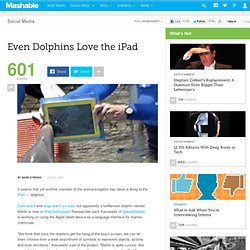
Even Dolphins Love the iPad. It seems that yet another member of the animal kingdom has taken a liking to the iPad — dolphins.
Apps for Apes: Orangutans using iPads to paint and video chat with other apes. Redapes.org Orangutans across the world may soon join the ranks of millions of humans as proud owners of new iPads.
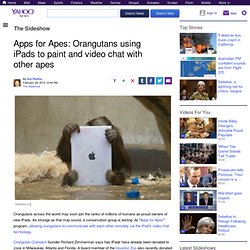
As strange as that may sound, a conservation group is testing its "Apps for Apes" program, allowing orangutans to communicate with each other remotely via the iPad's video chat technology. Orangutan Outreach founder Richard Zimmerman says has iPads have already been donated to zoos in Milwaukee, Atlanta and Florida. The New iPad Is Magical, When Given To Two Magicians [VIDEO. Advertisements We love a good magic show here at Redmond Pie, and if anyone can somehow manage to incorporate some technology into a magic act then we’re particularly interested.

Magic and technology, a match made in heaven. We have been treated to just that a few times since the iPad arrived, but this might just be the best we’ve encountered yet. The iPad has been called a lot of names since its initial release back in 2010. Much fun has been poked at Apple for its incessant use of superlatives when describing its devices, and the iPad has been the biggest beneficiary of such exaggeration. 25 Awesome iPhone tips and tricks. In 1985, Bill Gates Pitched Apple To Make The Mac Into Windows. The fantastic Letters of Note blog has posted an amazing letter that a 30-year old Bill Gates sent to John Sculley and Jean Louis Gassée back in June of 1985.
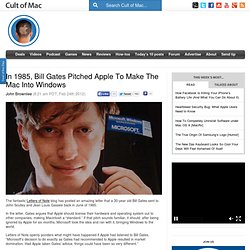
In the letter, Gates argues that Apple should license their hardware and operating system out to other companies, making Macintosh a “standard.” If that pitch sounds familiar, it should: after being ignored by Apple for six months, Microsoft took the idea and ran with it, bringing Windows to the world. Letters of Note openly ponders what might have happened if Apple had listened to Bill Gates. “Microsoft’s decision to do exactly as Gates had recommended to Apple resulted in market domination. Apple's Museum That Never Was: Why Does Stanford Keep It Secret? Where does the world's largest collection of Apple-related history live? In a fascinating archive owned and operated by Stanford University. But good luck actually finding the trove of hardware, software, recorded interviews, revealing documents, candid photos and internal videos. Everything is stored in a secret Bay Area location away from the Stanford campus. Unceremoniously housed in boxes that occupy some 600 feet of shelving in a climate-controlled warehouse, the archive contains gems such as handwritten early sales records of the Apple II, a $5,000 loan agreement that helped the fledgling company get off the ground, and a 1976 letter in which a printer warns a friend about a young "joker" named Steve Jobs.
From Phones To Tablets: 26 Apple Designs That Never Came To Be. Editors’ note: The following is an excerpt from Design Forward: Creative Strategies for Sustainable Change (Arnoldsche Art Publishers), by Hartmut Esslinger.
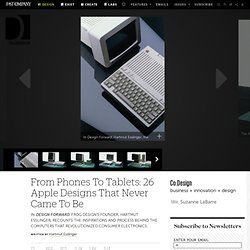
In 1982, Apple was in its sixth year of existence, and Steve Jobs, Apple’s cofounder and Chairman, was twenty-eight years old. Steve, intuitive and fanatical about great design, realized that the company was in crisis. With the exception of the aging Apple IIe, the company’s products were failing against IBM’s PCs. And they all were ugly, especially the Apple III and soon-to-be-released Apple Lisa. How Apple Uses its Supply Chain as a Strategic Weapon. Businessweek provides a very interesting look behind Apple's supply chain and how they have managed to fine tune their operations into a competitive advantage.
According to more than a dozen interviews with former employees, executives at suppliers, and management experts familiar with the company’s operations, Apple has built a closed ecosystem where it exerts control over nearly every piece of the supply chain, from design to retail store. Apple's Supply-Chain Secret? Hoard Lasers. Apple, America and a Squeezed Middle Class. But as of spoke, interrupted with an inquiry of his own: what would it take to make iPhones in the United States?
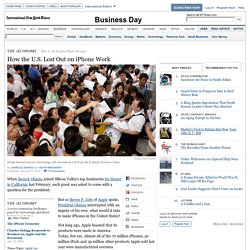
Not long ago, Apple boasted that its products were made in America. Today, few are. Almost all of the 70 million iPhones, 30 million iPads and 59 million other products Apple sold last year were manufactured overseas. Why can’t that work come home? Mr. The Greatest Threat to Steve Jobs's Legacy - Michael Schrage. With thanks to Walter Isaacson, Steve Jobs got the last word on his remarkable life.

But will Apple’s founder be as fortunate extending his enterprise legacy? Apple’s leadership — the Tim Cooks and Jonathan Ives — will step up to realize the vision of their late leader. Steve Jobs' Greatest Product, Importance Of Passion, And Other Tech Secrets. What Everyone Is Too Polite to Say About Steve Jobs. [www.youtube.com] Just a note on this subject.
Jobs obsessed on US manufacturing when the Macintosh and later the NeXT Computers were first announced. He did everything the company could do to make state-of-the-art manufacturing facilities in the US. However the competition from the rest of the industry and demand for low-cost devices pushed the company to China where Apple Computer could compete with the rest of the industry. As for Foxconn, they do not exclusively produce for Apple Computer, those facilities produce products for the following companies: Acer, Amazon(Kindle), Asus, Intel, Cisco, HP, Dell, Nintendo, Nokia, Microsoft, MSI, Motorola(Google), Sony Ericsson and Vizo. Apple Computer increased pressure on their production line partners to improve their conditions and systematically weeded out the ones that failed to improve. Siri. 10 cool things you can do with Wolfram Alpha and Siri.
Steve Sande and I have been collaborating on "Talking to Siri," an ebook that just recently hit the Kindle store. It's a how-to that will help you get the most done with your Siri intelligent assistant. We're sharing some of our favorite tips with TUAW readers. Today, we're looking at Siri's Wolfram Alpha integration. 10 Questions for Siri. The Journey to Get Siri on all iOS Devices. Siri is Apple's virtual personal assistant. iCloud’s real purpose: kill Windows. Apple’s announcements yesterday about OS X 10.7 pricing (cheap), upgrading (easy), iOS 5, and iCloud storage, syncing, and media service can all be viewed as increasing ease of use, but from the perspective of Apple CEO Steve Jobs they perform an even more vital function — killing Microsoft.
Here is the money line from Jobs yesterday: “We’re going to demote the PC and the Mac to just be a device – just like an iPad, an iPhone or an iPod Touch. Why Tim Cook Is the Best Choice to Run Apple. It’s no real surprise that Tim Cook has been tapped to serve as Apple’s CEO following Steve Jobs’ resignation to become Chairman. Cook has spent 30 years distinguishing himself in the industry, spending the first half with IBM and Compaq and the second, more than 14 years, as Jobs’ right hand. He joined Apple’s operations team as a senior VP and quickly advanced to worldwide head of sales, chief operating officer and head of the Macintosh division.
Finally, Cook has served either as official acting CEO or effective head of the company during Jobs’ medical leaves of absence three times since 2004.