The Freenet Project - /index. PET - CyberWiki. Thanks for visiting the CIS PET wiki.
This is meant to be a list of free technologies aimed at empowering Internet users to gain better control over their data. It's very simple to add an entry---just click the "edit" tab, copy and paste the previous entry, and substitute the name, description, and address. Abine - A Firefox / Internet Explorer plugin that blocks third party advertising networks, manages HTTP, DOM, and Flash cookies, and securely manages site logins.
Surf Anonymous Free - Your Ultimate Free Online Protection. Just4Today.NET - Free Usenet. PortableApps.com - Portable software for USB, portable and cloud drives. REVEALED: Hundreds of words to avoid using online if you don't want the government spying on you. Department of Homeland Security forced to release list following freedom of information requestAgency insists it only looks for evidence of genuine threats to the U.S. and not for signs of general dissent By Daniel Miller Published: 09:32 GMT, 26 May 2012 | Updated: 17:46 GMT, 26 May 2012 Revealing: A list of keywords used by government analysts to scour the internet for evidence of threats to the U.S. was released under the Freedom of Information Act The Department of Homeland Security has been forced to release a list of keywords and phrases it uses to monitor social networking sites and online media for signs of terrorist or other threats against the U.S.

Anon Collections. Heartbleed bug: Check which sites have been patched. The Heartbleed bug is serious.

Disclosed less than two days ago, the Heartbleed bug has sent sites and services across the Internet into patch mode. For an in-depth explanation of what exactly Heartbleed is, and what it does, read this post by our own Stephen Shankland. In essence, the bug potentially exposed your username and password on sites like Facebook, Google, Pinterest, and more. Using Alexa.com, we've been going through the list of the top 100 sites in the US, plus a few extras, and asking "Have you patched the Heartbleed bug yet?
" Once we have an answer, we will fill in the chart below with the response.
PirateBrowser - No More Censorship! BackTrack Linux - Penetration Testing Distribution. Kali Linux - Penetration Testing Distribution - Documentation. OWASP Mantra - Free and Open Source Browser based Security Framework. Secure Mobile Apps and Open-Source Code for a Better Tomorrow. Running Mantra and Firefox together. Where ever we go, we always used to hear some people saying that it could have been great if it is possible to run OWASP Mantra and Firefox together. Today, we will be discussing how you can make it possible by a simple trick. Step 1 ------------ Go to the OWASP Mantra folder where you extracted files into.
Step 2 ------------ Right click on it and create a shortcut Step 3 ------------ Go to the properties of shortcut file. Step 4 ------------ Go to the Target field Step 5 ------------ Add --no-remote. Cryptocat. XeroBank. Anonymous File Upload on AnonFiles.com. How to Hide Data in Image, Audio & Video Files: Steganography.
Ever wondered to know how to hide secret data in image, audio and video files? Well, in this post I will take you through a concept called steganography using which, it is possible to hide your secret information in image files, songs or any other file of your choice. At the end of this post, you can also download free stegnographic tools and start hiding your data. What is Steganography? Steganography is a means of obscuring data where secret messages are hidden inside computer files such as images, sound files, videos and even executable files so that, no one except the sender and the receiver will suspect the existence of stealth information in it.
Steganography may also involve the usage of cryptography where the message is first encrypted before it is concealed in another file. The main advantage of steganography over other methods such as cryptography is that, it will not arose suspicion even if the files fall in the hands of a third party. Jpg+FileBinder Free Download. Protecting private information against unauthorized access is one of the problems that computer users encounter.
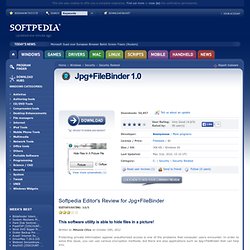
In order to solve this issue, you can use various encryption methods, but there are also applications such as Jpg+FileBinder that can help you. This lightweight tool is simple, yet useful, as it allows you to hide important information in a picture carrier file. Practically, it merges an archive file with a picture, making the output look like an image, when actually it contains the compressed file. The main advantage it brings you is the ease of use, as you have to follow just a few steps to hide your files. The first one is to choose the image file. Hacks/Tools. Telecomix Crypto Munitions Bureau. Distributed Denial of Service (DDoS) Attacks/tools. THE PIRATE ORGANIZATION. Home - leap.se. Hacker Attack Tools. BlackOut -
#OpMegaUpload.
User Agent Switcher. Untitled. Browse Like Bond: Use Any Computer Without Leaving a Trace with Tails. Download. Odebian. Panopticlick. Anonymouth: A stylometry tool. JStylo-Anonymouth - PSAL. The JStylo and Anonymouth integrated open-source project (JSAN) resides on GitHub.

What is JSAN? JSAN is a writing style analysis and anonymization framework. Anonymity. Catégorie:Système informatique d'anonymat. Une vulnérabilité a été découverte dans le logiciel OpenSSL.

Les serveurs de la Wikimedia Foundation ont été mis à jour, et par mesure de précaution, les utilisateurs ont été contraints de se connecter à nouveau en utilisant la nouvelle version sécurisée du logiciel. Bien qu'il n'y ait aucune preuve d'intrusion dans les serveurs ou de perte de données des utilisateurs, la fondation Wikimedia recommande que tous les utilisateurs changent leur mot de passe pour garantir une sécurité maximale de leurs comptes. Une page de Wikipédia, l'encyclopédie libre. Sous-catégories Cette catégorie comprend la sous-catégorie suivante. Et vous vous croyez anonyme ? Raaaah, bientôt on fera moins les malins quand il s'agira d'aller troller un mec sur l'Internet mondial en nous cachant comme des lâches derrière un TOR ou un VPN...

Je vous vois ouvrir grand les yeux, pris de panique ! Voui voui voui... D'après Aylin Caliskan Islam et Sadia Afroz, 2 chercheuses spécialisées en linguistique, il serait possible d'identifier 80% des internautes qui publient anonymement sur le net... Comment ? Et bien tout simplement en analysant les mots employés et la façon de rédiger, des internautes. Online Privacy & Security. Comment identifier une personne sur Internet. On se croit en sécurité derrière son navigateur mais des chercheurs en sécurité sont en train de travailler sur une technique pour dé-anonymiser les internautes.
Il partent du principe que chaque personne possède un navigateur différent, des plugins différents, avec des versions différentes, des polices différentes, un fuseau horaire différent...etc. Et toutes ces petites différences, misent bout à bout, permettent au final de créer une empreinte unique du navigateur (donc de la machine utilisée pour aller sur le net). Ça, c'est ce que l'EFF a appelé Panopticlick et que vous pouvez tester en allant ici. Mais une nouvelle technique exploite les réseaux sociaux. L'anonymat n'existe pas. Samedi 12 janvier 6 12 /01 /Jan 11:04 Il y a quelques temps de cela j'assistais à l’événement « Pas Sages en Seine 2012 ».