
What Everyone Is Too Polite to Say About Steve Jobs. Can hot air be the free fuel of the future? An Australian company says it can produce enough electricity for 100,000 homes by using the movement of hot air.
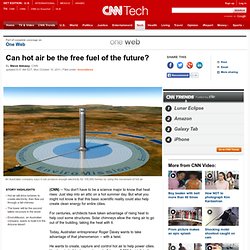
Hot air will drive turbines to create electricity, then flow out through a tall chimneyThe tower will be the second tallest structure in the worldEnviroMission, an Australian company, wants to build it in the Arizona desert (CNN) -- You don't have to be a science major to know that heat rises: Just step into an attic on a hot summer day. But what you might not know is that this basic scientific reality could also help create clean energy for entire cities. For centuries, architects have taken advantage of rising heat to help cool some structures.
Solar chimneys allow the rising air to go out of the building, taking the heat with it. Japanese breakthrough will make wind power cheaper than nuclear. NOTE: Some major wind projects like the proposed TWE Carbon Valley project in Wyoming are already pricing in significantly lower than coal power -- $80 per MWh for wind versus $90 per MWh for coal -- and that is without government subsidies using today's wind turbine technology.

The International Clean Energy Analysis (ICEA) gateway estimates that the U.S. possesses 2.2 million km2 of high wind potential (Class 3-7 winds) — about 850,000 square miles of land that could yield high levels of wind energy. This makes the U.S. something of a Saudi Arabia for wind energy, ranked third in the world for total wind energy potential.
The United States uses about 26.6 billion MWh's, so at the above rate we could satisfy a full one-third of our total annual energy needs. BAE invisibility cloak hides vehicles as scenery, cars and cows. British defence company BAE Systems has developed an "invisibility cloak" that can effectively hide vehicles from view in the infra-red spectrum.
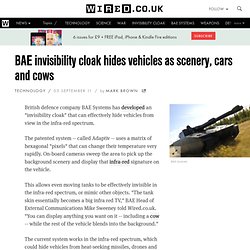
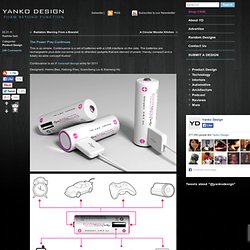
The patented system -- called Adaptiv -- uses a matrix of hexagonal "pixels" that can change their temperature very rapidly. On-board cameras sweep the area to pick up the background scenery and display that infra-red signature on the vehicle. This allows even moving tanks to be effectively invisible in the infra-red spectrum, or mimic other objects. "The tank skin essentially becomes a big infra red TV," BAE Head of External Communications Mike Sweeney told Wired.co.uk. Wacom Americas. 'Mind-reading machine' can convert thoughts into speech. Continuance – Rechargeable Battery with USB Interface by Haimo Bao, Hailong Piao, Yuancheng Liu & Xiameng Hu. The Power Play Continues.
Apple manufacturer Foxconn replaces staff with robots. 6 Creepy New Weapons the Police and Military Use To Subdue Unarmed People. August 1, 2011 | Like this article?
Join our email list: Stay up to date with the latest headlines via email. This article has been updated. 11 cheap gifts guaranteed to impress science geeks. Science comes up with a lot of awesome stuff, and you don't need a Ph.D, a secret lab, or government funding to get your hands on some of the coolest discoveries.

We've got a list of 11 mostly affordable gifts that are guaranteed to blow your mind, whether or not you're a science geek. Click on any image to see it enlarged. 1. Keeping demonstrators safe, mobile & informed. Theta Wave Brain Synchronization. Bees Solve Complex Problems Faster Than Supercomputers. In a new study, researchers report that bumblebees were able to figure out the most efficient routes among several computer-controlled "flowers," quickly solving a complex problem that even stumps supercomputers.
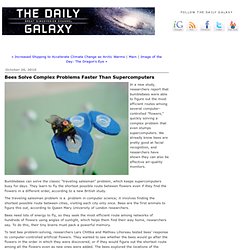
We already know bees are pretty good at facial recognition, and researchers have shown they can also be effective air-quality monitors. Bumblebees can solve the classic "traveling salesman" problem, which keeps supercomputers busy for days. They learn to fly the shortest possible route between flowers even if they find the flowers in a different order, according to a new British study.
The traveling salesman problem is a problem in computer science; it involves finding the shortest possible route between cities, visiting each city only once. Bees are the first animals to figure this out, according to Queen Mary University of London researchers. Anthropomorphic-futuristic-fantastic-floating-homes/ Wind Power Without the Blades: Big Pics. Scientists Develop Affordable Solar Panels That Work In The Dark.
It's about damn time, don't you think?
Scientists at Lawrence Berkeley National Laboratory announced Wednesday that they have been able to confirm a new high-efficiency solar cell design that utilizes nearly the entire solar spectrum. Translation: They figured out a way to make solar panels generate electricity in the dark. Turn Steel Into Solar Panels With Photovoltaic Spray Paint. No, it's not a joke or a crazy awesome futuristic concept . It's real. Tata Steel Europe (formerly Corus) and Swansea University in Wales, UK are collaborating to develop a spray-on technology that would transform steel sheets into solar panels. Earth and Industry says , The technology has significant applications since it is highly efficient even in diffused sunlight.
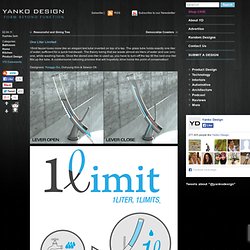
Therefore, countries at higher latitudes or those with limited solar energy resource can generate significant amounts of solar-powered electricity with going for large-scale power plants. If extended, the technology can find its way to the automobile industry where photo-sensitive dyes can be applied to cars to generate electricity to split water into hydrogen and oxygen for fuel cells. Imagine the applications of such a product. 1ℓimit – Faucet Design by Yonggu Do, Dohyung Kim & Sewon Oh. One Liter Limited.
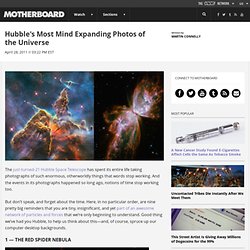
Fuck_the_future.jpg (752×1897) Solar Forest Keeps Cars Cool And Juiced. Hubble's Most Mind Expanding Photos of the Universe. The just-turned-21 Hubble Space Telescope has spent its entire life taking photographs of such enormous, otherworldly things that words stop working.
Sending big files the easy way - WeTransfer. Starlite, the nuclear blast-defying plastic that could change the world. Shocking Twist: Airport Body Scanners Alter Unborn Babies’ Gender. Instant sex-reassignment… Courtesy of your friendly airport security staff? 100+ Google Tricks That Will Save You Time in School – Eternal Code. The 15 Funniest Autocorrects.
Bento Laptop Tablet Hybrid by René Woo-Ram Lee.