
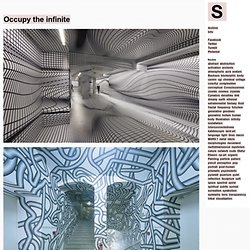
Brown,quotes,words,keep,in,mind,so,true,,life-4f0a48891cb10fa262b59461563434e3_h.jpg (JPEG Image, 417x500 pixels) Animal did you knows. Quote Vs Reality. Crazy paper thing. Occupy the infinite. External Stimuli : Peter Kogler works.
Super Sprayer. Your Age on Other Worlds. Want to melt those years away?
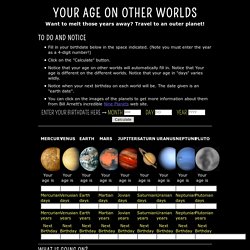
Travel to an outer planet! <div class="js-required"><hr> This Page requires a Javascript capable browser <hr></div> Fill in your birthdate below in the space indicated. (Note you must enter the year as a 4-digit number!) Click on the "Calculate" button. The Days (And Years) Of Our Lives Looking at the numbers above, you'll immediately notice that you are different ages on the different planets. The earth is in motion. The top-like rotation of the earth on its axis is how we define the day. The revolution of the earth around the sun is how we define the year. We all learn in grade school that the planets move at differing rates around the sun. Why the huge differences in periods? Johannes Kepler Tycho Brahe Kepler briefly worked with the great Danish observational astronomer, Tycho Brahe. Here you see a planet in a very elliptical orbit.
Kepler's third law is the one that interests us the most. The Gravity Of The Situation Isaac Newton ©2000 Ron Hipschman. Before I Die. What matters most to you Interactive public art project that invites people to share their personal aspirations in public.
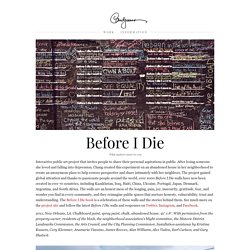
After losing someone she loved and falling into depression, Chang created this experiment on an abandoned house in her neighborhood to create an anonymous place to help restore perspective and share intimately with her neighbors. The project gained global attention and thanks to passionate people around the world, over 1000 Before I Die walls have now been created in over 70 countries, including Kazakhstan, Iraq, Haiti, China, Ukraine, Portugal, Japan, Denmark, Argentina, and South Africa. The walls are an honest mess of the longing, pain, joy, insecurity, gratitude, fear, and wonder you find in every community, and they reimagine public spaces that nurture honesty, vulnerability, trust and understanding. The Before I Die book is a celebration of these walls and the stories behind them. 2011, New Orleans, LA. Cordoba, Argentina. Najaf, Iraq. Brooklyn, NY.
SolarBeat. Space Shuttle Discovery - 360VR Images. Sistine Chapel. Scientists Discover The Oldest, Largest Body Of Water In Existence. Scientists have found the biggest and oldest reservoir of water ever--so large and so old, it’s almost impossible to describe.

The water is out in space, a place we used to think of as desolate and desert dry, but it's turning out to be pretty lush. Researchers found a lake of water so large that it could provide each person on Earth an entire planet’s worth of water--20,000 times over. Yes, so much water out there in space that it could supply each one of us all the water on Earth--Niagara Falls, the Pacific Ocean, the polar ice caps, the puddle in the bottom of the canoe you forgot to flip over--20,000 times over. The water is in a cloud around a huge black hole that is in the process of sucking in matter and spraying out energy (such an active black hole is called a quasar), and the waves of energy the black hole releases make water by literally knocking hydrogen and oxygen atoms together. The new cloud of water is enough to supply 28 galaxies with water. Chromoscope - View the Universe in different wavelengths.